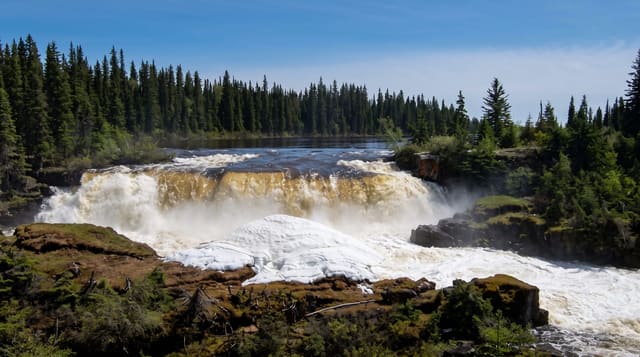
Shoshone Falls
A Snake River waterfall higher than Niagara, whose flow depends entirely on how much water irrigation upstream has left.
Updated 20 October 2026
The falls drop about sixty-five metres over a rim some three hundred metres wide - higher than Niagara, though nothing like the volume - into the Snake River canyon. What the visit depends on entirely is upstream irrigation: the Snake is heavily diverted for agriculture across southern Idaho, and in a dry summer the falls can be reduced to a trickle over bare rock, while a wet spring with high runoff produces the full curtain. The Bureau of Reclamation and local agencies publish flow figures and it is worth checking before driving out. The falls were the upstream limit for salmon migration before the dams. Evel Knievel tried to jump the canyon about a mile west of the falls in 1974, and failed when his parachute opened too early.
What you'll find
- A drop of about sixty-five metres - higher than Niagara.
- Flow governed by irrigation - full in spring, often dry by August.
- The Snake River canyon - about three hundred metres wide here.
- The Knievel jump site - nearby, where the 1974 attempt failed.
When to go
April to June, when runoff is highest; check published flow first. Two hours.
Practical notes
In late summer there is frequently almost no water - this is the single most common disappointment. Flow data is published and should be checked. A vehicle fee applies in season. The viewing area is small and crowds in spring.
Nearby
Twin Falls is west; the Snake River canyon rim trail runs both ways.
Key facts
Source: Wikidata, item Q1635297, read on 18 October 2026.
What to pack for Shoshone Falls
Chosen from what this place is for. Tap a kit for the full checklist.
- Broken-in walking shoes or boots - Grip and ankle support matter more than looks; never hike in brand-new boots. Find on Amazon
- Layers + a waterproof shell - Mountain weather turns fast; a packable rain jacket saves the day. Find on Amazon
- Daypack with rain cover - 20-30 litres holds water, snacks, layers and a first-aid kit. Find on Amazon
- Offline maps + a power bank - Download the trail before you lose signal; carry backup charge. Find on Amazon
Some links on this page are Amazon affiliate links - if you buy through them we may earn a small commission at no extra cost to you.
All packing kitsPlan your trip
Where to start if Shoshone Falls is going on the list.
Booking links on this page are affiliate links - if you book through them we may earn a small commission at no extra cost to you. It never changes what we write about a place.
Opening times, ticket prices and seasonal closures change - check the official source before you go: official site.