Papahānaumokuākea
One of the largest protected areas on the planet, a chain of remote atolls northwest of Hawaii that almost nobody is permitted to visit.
Updated 18 October 2026
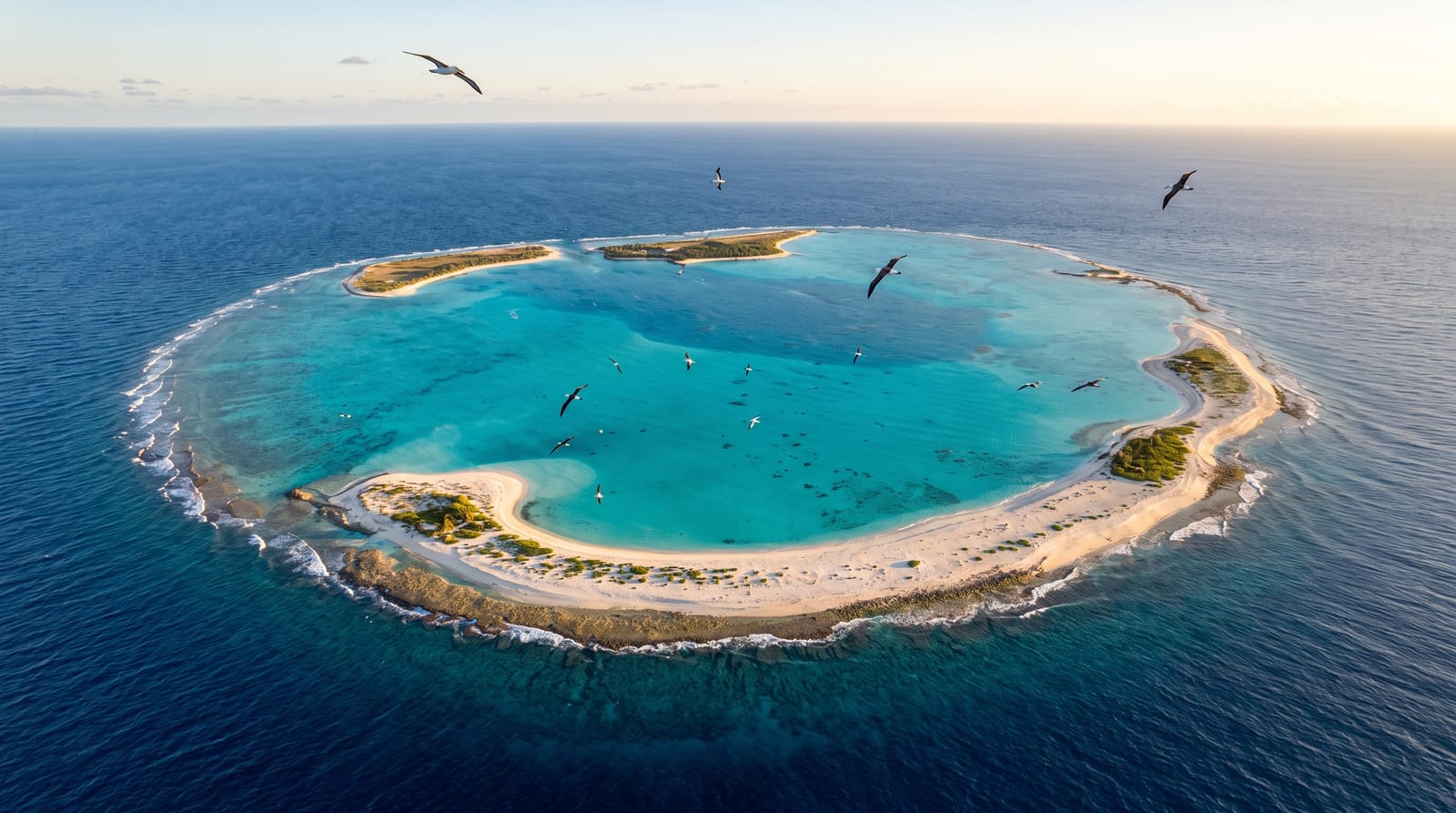
AI illustration
UNESCO World Heritage
Northwest of the main Hawaiian islands the chain continues for nearly two thousand kilometres as low atolls, reefs and single rocks, and the marine area around them is one of the largest protected places on earth, larger than all the national parks of the mainland combined. It carries a rare mixed World Heritage listing, recognised for nature and for culture together: Nihoa and Mokumanamana hold ceremonial sites and the region is central to Native Hawaiian accounts of ancestry, its name referring to the union of the earth mother and sky father. The wildlife is extraordinary, with about three-quarters of all Hawaiian monk seals, millions of nesting seabirds and green turtles. General visits are not permitted, which is the point of it.
History
For Native Hawaiians the Northwestern Hawaiian Islands embody the kinship of nature and people, the place where life begins and returns after death, and archaeological remains survive on Nihoa and Mokumanamana. After Hawaii was annexed, Theodore Roosevelt created the Hawaiian Islands Bird Reservation on 3 February 1909 against the over-harvesting of seabirds, Franklin D. Roosevelt made it a national wildlife refuge in 1940, and Bill Clinton established a coral reef ecosystem reserve on 4 December 2000. George W. Bush created the marine national monument in 2006 over 140,000 square miles, Barack Obama extended it to the limit of the exclusive economic zone in 2016, more than four times larger, and it is a World Heritage Site (Wikipedia, Papahānaumokuākea Marine National Monument).
What's there
- The listing itself - a rare mixed site, valued for nature and culture together.
- The wildlife - monk seals, green turtles and millions of nesting seabirds.
- Nihoa and Mokumanamana - ancient ceremonial sites on remote rock islands.
- Bishop Museum, Honolulu - where the region can actually be seen and understood.
When to go
There is no visitor season, because there is no general access. The realistic way to engage with it is on Oahu, at the Bishop Museum and the monument's education programmes, or through the documentary and research material published about the reserve.
Before you go
This is on the list because it matters, not because you can go. Permits are issued for research, resource management and Native Hawaiian cultural practice, and tourism is not among the permitted uses; occasional limited access to Midway Atoll has been offered in the past and has been suspended for years. Treat any operator selling trips here with deep suspicion.
Nearby
Honolulu and the Bishop Museum are the practical starting point.
Key facts
Source: Wikidata, item Q787425, read on 18 October 2026.
What to pack for Papahānaumokuākea
Chosen from what this place is for. Tap a kit for the full checklist.
- Reef-safe sunscreen - High SPF that will not bleach the coral you are swimming over. Find on Amazon
- Binoculars - The single best wildlife tool - even a compact pair transforms a sighting. Find on Amazon
- Quick-dry towel - A microfibre towel packs small and dries in minutes. Find on Amazon
- A zoom camera or long lens - Animals rarely come close; reach beats megapixels. Find on Amazon
Some links on this page are Amazon affiliate links - if you buy through them we may earn a small commission at no extra cost to you.
All packing kitsPlan your trip
Where to start if Papahānaumokuākea is going on the list.
Booking links on this page are affiliate links - if you book through them we may earn a small commission at no extra cost to you. It never changes what we write about a place.
Opening times, ticket prices and seasonal closures change - check the official source before you go: official site.