Hawaii Volcanoes National Park
Two of the world's most active volcanoes on the Big Island - lava, steaming craters and new land being born, a UNESCO site.
Updated 16 October 2026
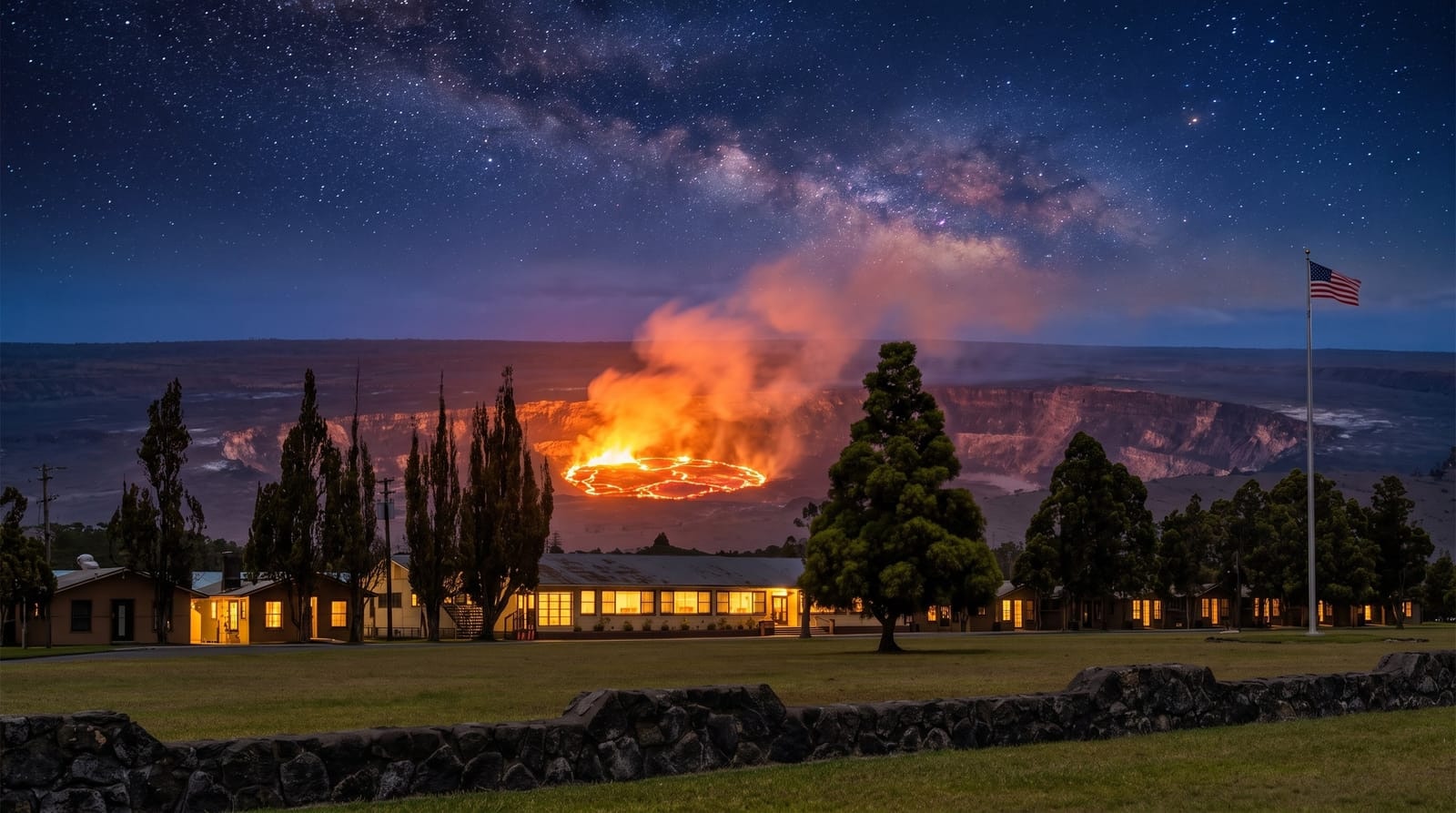
AI illustration
UNESCO World Heritage
On the Big Island of Hawaii, this UNESCO park contains two of the most active volcanoes on earth, Kilauea and the massive Mauna Loa, where you can watch the raw process of creation: steaming craters, lava tubes, hardened lava fields and, during eruptions, the glow of molten rock. It is a landscape of new land being born.
Background
The park began on August 1, 1916, as Hawaii National Park, which was later divided into this park and Haleakalā National Park. It covers 354461 acres, from sea level to the 13679 feet summit of Mauna Loa, the largest shield volcano on Earth, and around half of it (130790 acres) became the Hawaii Volcanoes Wilderness area in 1978. It was named an International Biosphere Reserve in 1980 and a World Heritage Site in 1987. On May 11, 2018, explosions, toxic ash clouds and earthquakes closed the Kīlauea summit area, and the damaged Jaggar Museum and Hawaiian Volcano Observatory buildings were torn down in 2024. Since December 20, 2020, Halemaʻumaʻu crater has erupted on and off.
Source: Wikipedia, "Hawaiʻi Volcanoes National Park"
What you'll find
- Kilauea caldera - the great steaming crater, glowing at night during eruptions.
- Chain of Craters Road - the drive down old lava fields to the sea.
- Thurston lava tube - the walk-through tunnel left by flowing lava.
- Steam vents and craters - the geothermal features of the summit area.
When to go
Year-round, since the tropics keep it open, though eruptions come and go unpredictably. Night is best to see any lava glow. Check the volcano's current activity before visiting.
Before you go
Whether you see actual lava depends entirely on the volcano's mood, which is unpredictable, so eruptions cannot be guaranteed. Volcanic gas and closures can affect access, so check conditions. It is a sacred place to Native Hawaiians, so treat it with respect.
Nearby
Hilo and the Big Island's beaches and Mauna Kea are around; the black-sand beaches lie down the coast.
Key facts
Source: Wikidata, item Q205952, read on 18 October 2026.
What to pack for Hawaii Volcanoes National Park
Chosen from what this place is for. Tap a kit for the full checklist.
- Broken-in walking shoes or boots - Grip and ankle support matter more than looks; never hike in brand-new boots. Find on Amazon
- Reef-safe sunscreen - High SPF that will not bleach the coral you are swimming over. Find on Amazon
- Head torch + spare batteries - Hands-free light is essential; caves are truly dark. Find on Amazon
- Binoculars - The single best wildlife tool - even a compact pair transforms a sighting. Find on Amazon
Some links on this page are Amazon affiliate links - if you buy through them we may earn a small commission at no extra cost to you.
All packing kitsPlan your trip
Where to start if Hawaii Volcanoes National Park is going on the list.
Booking links on this page are affiliate links - if you book through them we may earn a small commission at no extra cost to you. It never changes what we write about a place.
Opening times, ticket prices and seasonal closures change - check the official source before you go: official site.