Everglades National Park
A vast, slow-moving river of grass in south Florida - a subtropical wilderness of alligators, wading birds and mangroves, a UNESCO site.
Updated 16 October 2026
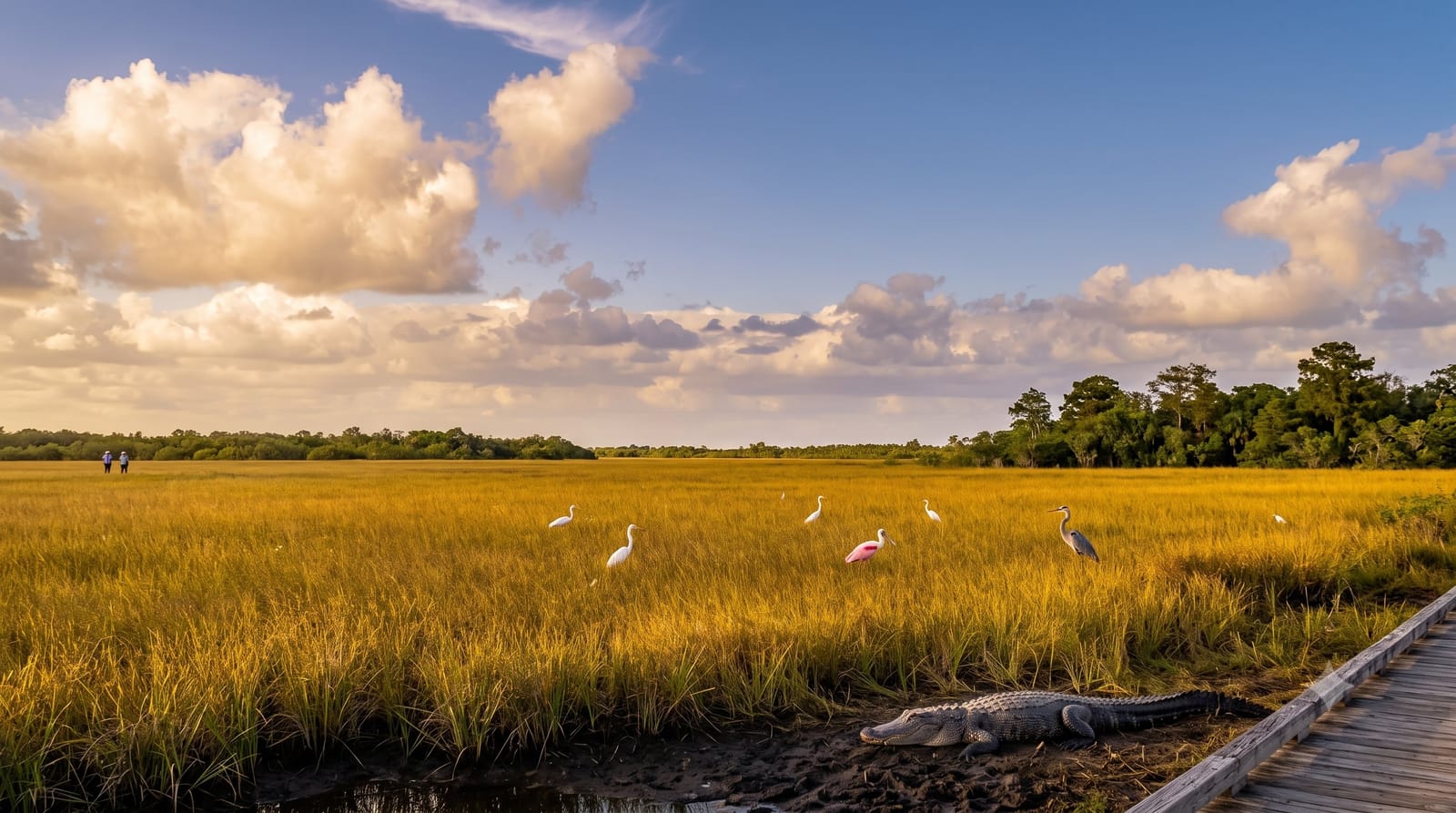
AI illustration
UNESCO World Heritage
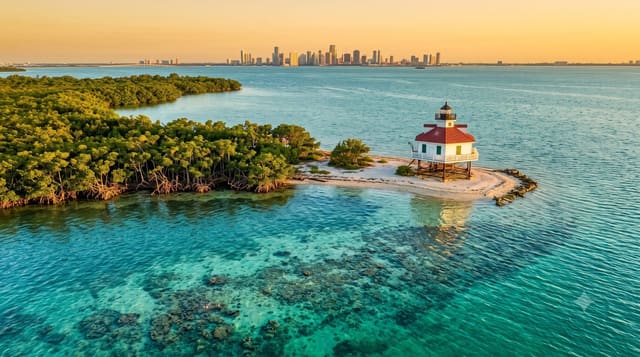
The Everglades is a vast, shallow river of sawgrass creeping across the flat tip of Florida to the sea, a subtropical wilderness unlike anywhere else in the country. Home to alligators and rare crocodiles, manatees, panthers and clouds of wading birds, laced with mangroves and cypress, it is a UNESCO site and a fragile natural treasure.
Background
The park covers 1,508,976 acres in Dade, Monroe and Collier counties and protects the southern twenty percent of the Everglades as they once were. Only Death Valley and Yellowstone are larger among national parks in the contiguous United States. It was established in 1934 and dedicated in 1947, the first national park set up to protect a fragile ecosystem. UNESCO declared a biosphere reserve here in 1976 and made it a World Heritage Site in 1979, and it joined the Ramsar list in 1987. Water creeps 0.25 miles per day from Lake Okeechobee southwest to Florida Bay. The park holds the Western Hemisphere's largest mangrove ecosystem, along with 350 species of birds and 300 species of fish.
Source: Wikipedia, "Everglades National Park"
The landscape
- The Anhinga Trail - the boardwalk teeming with alligators, birds and turtles.
- Airboat and canoe - exploring the sawgrass and mangrove waterways.
- Wading birds - herons, egrets, spoonbills and the great winter bird gatherings.
- Shark Valley - the tram and cycle loop with its observation tower over the grass.
When to go
The dry winter season from December to April, when wildlife concentrates around the shrinking water and mosquitoes are bearable; the summer wet season is hot, buggy and stormy.
Things to know
In the summer wet season the mosquitoes are ferocious and wildlife disperses, so winter is really the only comfortable time. It is flat and subtle rather than dramatic, so its magic is the wildlife and the sense of wilderness. Airboats are noisy and best chosen carefully for wildlife impact.
Nearby
Miami and the Florida Keys are close; Big Cypress and the Gulf coast spread west.
Key facts
Source: Wikidata, item Q274131, read on 18 October 2026.
What to pack for Everglades National Park
Chosen from what this place is for. Tap a kit for the full checklist.
- Broken-in walking shoes or boots - Grip and ankle support matter more than looks; never hike in brand-new boots. Find on Amazon
- Quick-dry clothing - Board shorts or synthetics that shrug off spray and dry fast. Find on Amazon
- Binoculars - The single best wildlife tool - even a compact pair transforms a sighting. Find on Amazon
- Layers + a waterproof shell - Mountain weather turns fast; a packable rain jacket saves the day. Find on Amazon
Some links on this page are Amazon affiliate links - if you buy through them we may earn a small commission at no extra cost to you.
All packing kitsPlan your trip
Where to start if Everglades National Park is going on the list.
Booking links on this page are affiliate links - if you book through them we may earn a small commission at no extra cost to you. It never changes what we write about a place.
Opening times, ticket prices and seasonal closures change - check the official source before you go: official site.