The Gobbins
An Edwardian cliff path of bridges and tunnels bolted to a basalt face, abandoned for sixty years and rebuilt in 2015.
Updated 20 October 2026
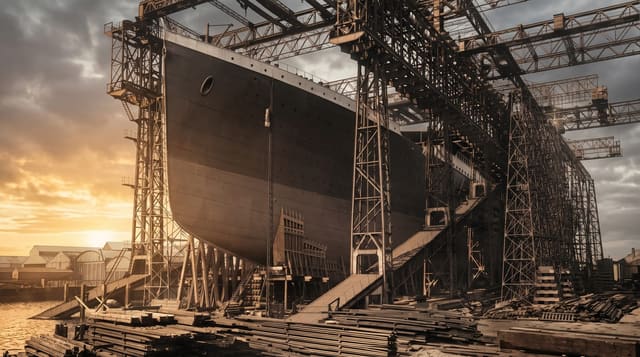
AI illustration
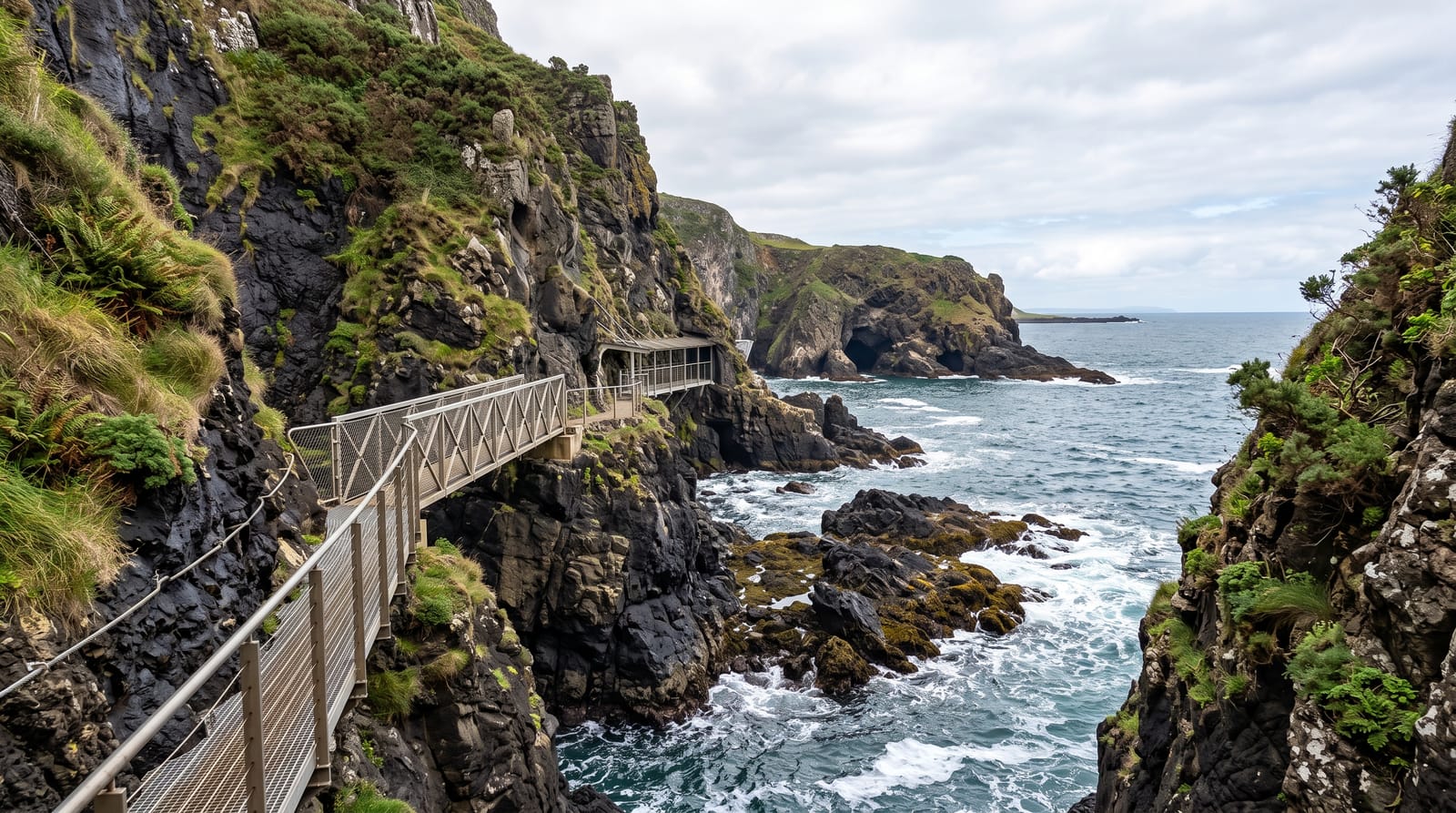
Berkeley Deane Wise, an engineer for the Belfast and Northern Counties Railway, built the path, opened in August 1902, to draw rail passengers to Islandmagee: a route hung directly on the basalt cliff face at sea level, using iron bridges, cut tunnels, staircases and a tubular bridge, so that walkers pass through caves and over inlets with the sea directly below. It drew wide acclaim, but upkeep slipped in the 1930s and, after a brief reopening, the path closed in 1954. A reconstruction opened in 2015 following the original line where possible. Access is by guided tour only, with helmets, and the path closes in swell or high wind. The cliffs are known for their rich birdlife, and the rock is full of caves.
What you'll find
- The bridges on the cliff face - iron spans hung at sea level over inlets.
- The tunnels and caves - cut passages and natural caverns on the route.
- The Edwardian engineering - Wise's 1902 line, rebuilt in 2015.
- The seabirds - cliffs known for their rich birdlife.
When to go
April to October; tours run to a timetable and must be booked, and the path closes frequently for sea conditions. Seabirds are on the cliffs from spring to midsummer.
What to expect
Closures for weather and swell are frequent and can be decided on the morning. The tour involves steep steps, low tunnels and a two to three hour walk, with a fitness requirement stated at booking. Helmets are compulsory and children under a set height are excluded.
Nearby
Larne is a short drive; the Antrim coast road runs north from there.
Key facts
Source: Wikidata, item Q5575420, read on 18 October 2026.
What to pack for The Gobbins
Chosen from what this place is for. Tap a kit for the full checklist.
- Head torch + spare batteries - Hands-free light is essential; caves are truly dark. Find on Amazon
- Binoculars - The single best wildlife tool - even a compact pair transforms a sighting. Find on Amazon
- Comfortable walking shoes - Sightseeing means kilometres of pavement and cobbles daily. Find on Amazon
- Grippy closed shoes - Cave floors are wet, muddy and slick with formations. Find on Amazon
Some links on this page are Amazon affiliate links - if you buy through them we may earn a small commission at no extra cost to you.
All packing kitsPlan your trip
Where to start if The Gobbins is going on the list.
Booking links on this page are affiliate links - if you book through them we may earn a small commission at no extra cost to you. It never changes what we write about a place.
Opening times, ticket prices and seasonal closures change - check the official source before you go: official site.