Regent's Park and Primrose Hill
A Nash-planned royal park with the largest rose garden in London, and a hill just north giving the classic skyline view.
Updated 4 September 2026
AI illustration
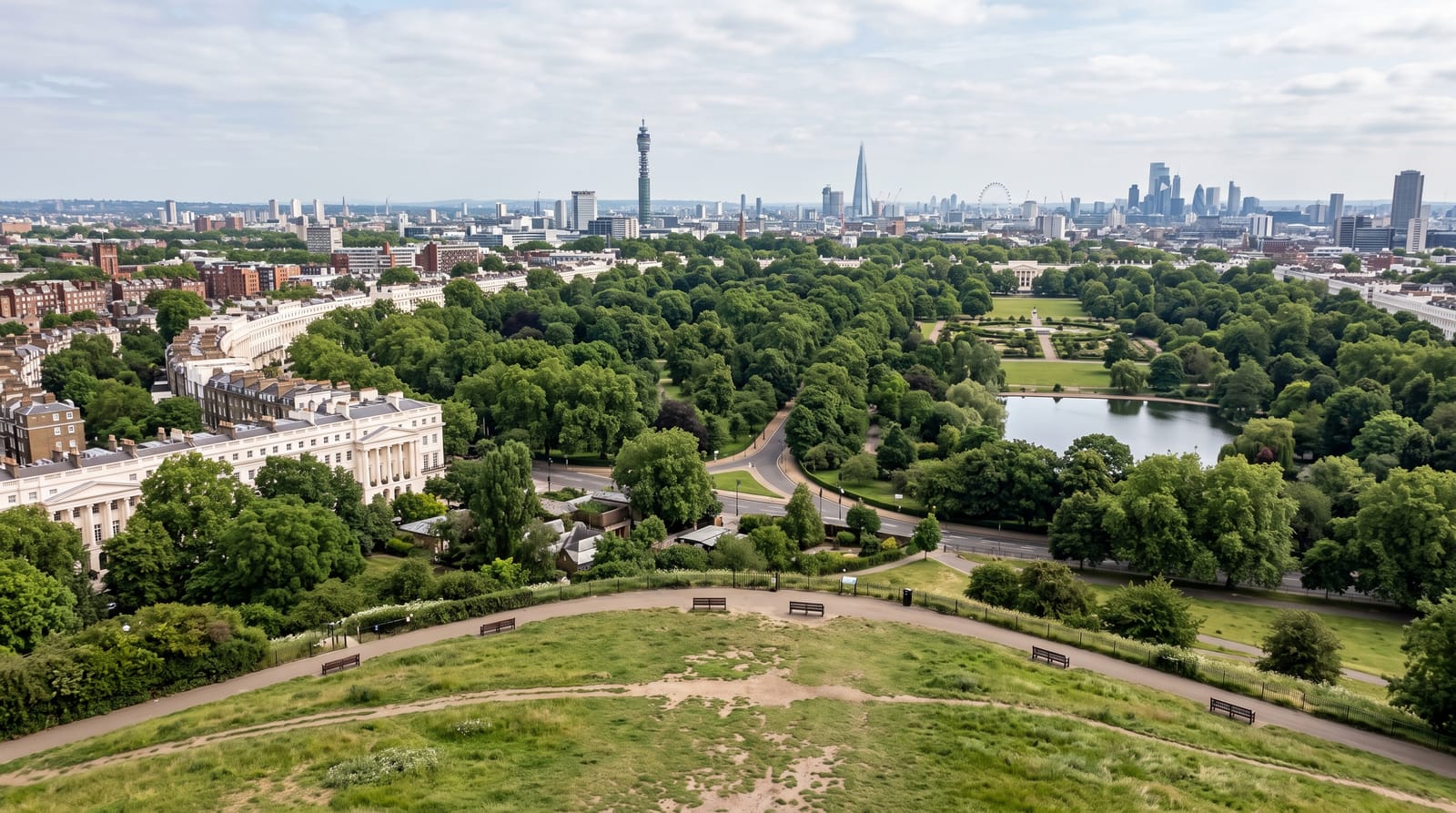
John Nash laid out Regent's Park from 1811 as part of a scheme linking the Prince Regent's Carlton House to a new palace that was never built, ringing the park with stuccoed terraces that still stand. Queen Mary's Gardens in the Inner Circle hold around twelve thousand roses of some four hundred varieties, the largest collection in London, at their peak in June. The Open Air Theatre has staged plays there each summer since 1932. London Zoo occupies the northern edge, and the Regent's Canal runs along it. Primrose Hill, just north across the canal, rises to sixty-three metres and gives the view of the whole city skyline that appears in a great many films, with a protected sightline preventing building in the way.
What's there
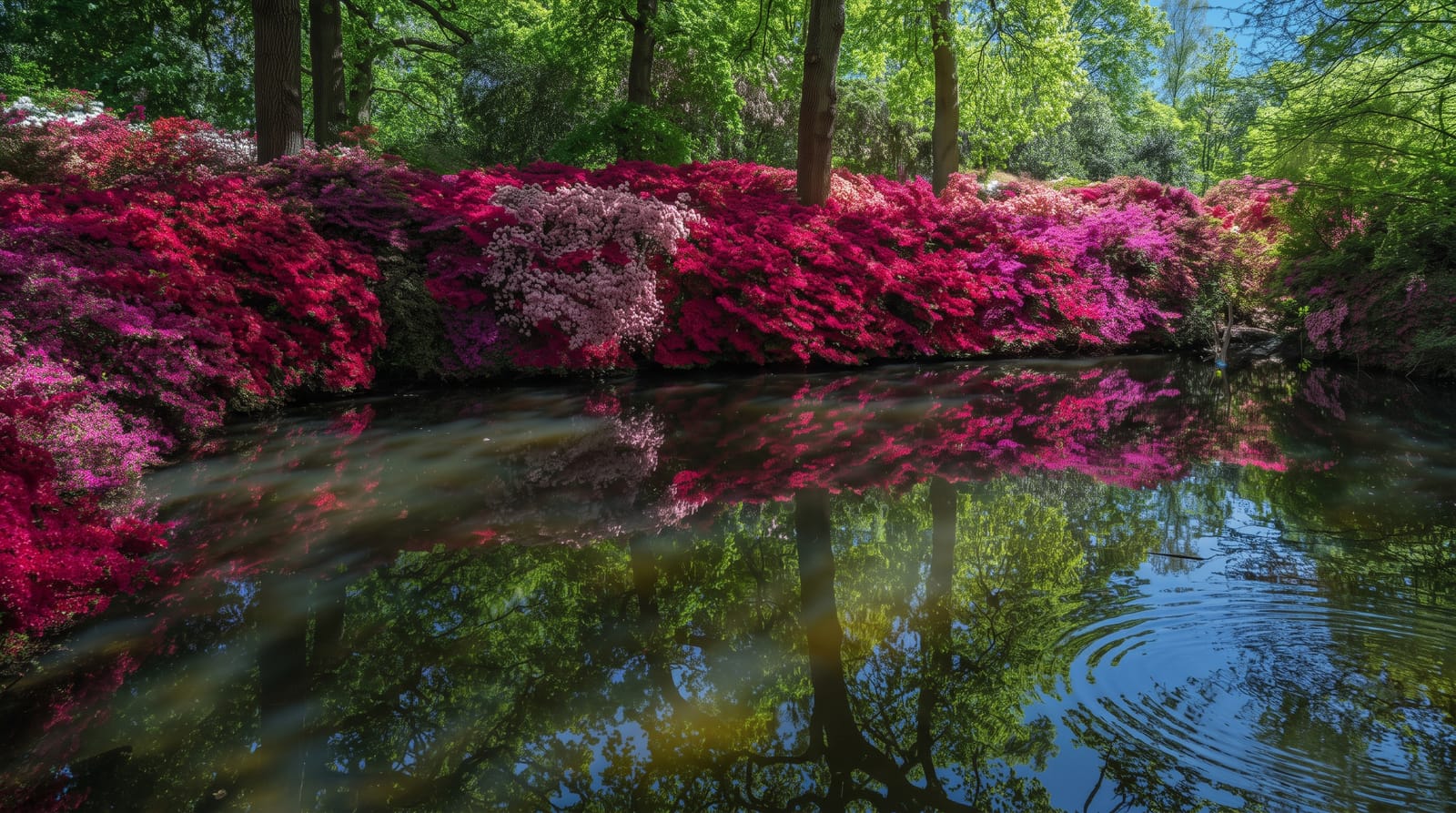
- Queen Mary's Gardens - twelve thousand roses at their best in June.
- The Nash terraces - stuccoed Regency crescents ringing the park.
- The Open Air Theatre - summer productions running since 1932.
- Primrose Hill - a protected view over the whole London skyline.
When to go
June for the roses, which is the park's set piece; April to September for the Open Air Theatre. Primrose Hill works year-round and is busiest at sunset and on Bonfire Night, when it is closed for crowd control.
What to expect
The rose gardens peak for a few weeks and are ordinary outside them. Primrose Hill is crowded at sunset in summer and has had antisocial behaviour problems leading to overnight closures. Open Air Theatre performances go ahead in rain.
Nearby
London Zoo is in the park; Camden Market lies east along the canal.
What to pack for Regent's Park and Primrose Hill
Chosen from what this place is for. Tap a kit for the full checklist.
- Broken-in walking shoes or boots - Grip and ankle support matter more than looks; never hike in brand-new boots. Find on Amazon
- Shelter suited to the place - Tent, tarp or hut booking - match it to the terrain and rules. Find on Amazon
- Layers + a waterproof shell - Mountain weather turns fast; a packable rain jacket saves the day. Find on Amazon
- A warm sleeping bag + mat - Rated a little colder than you expect the nights to be. Find on Amazon
Some links on this page are Amazon affiliate links - if you buy through them we may earn a small commission at no extra cost to you.
All packing kitsPlan your trip
Where to start if Regent's Park and Primrose Hill is going on the list.
Booking links on this page are affiliate links - if you book through them we may earn a small commission at no extra cost to you. It never changes what we write about a place.
Opening times, ticket prices and seasonal closures change - check the official source before you go: official site.