Durham Cathedral
The Norman masterpiece on its wooded peninsula - pioneering rib vaults of 1093, the shrine of St Cuthbert and the tomb of Bede above the River Wear.
Updated 18 October 2026

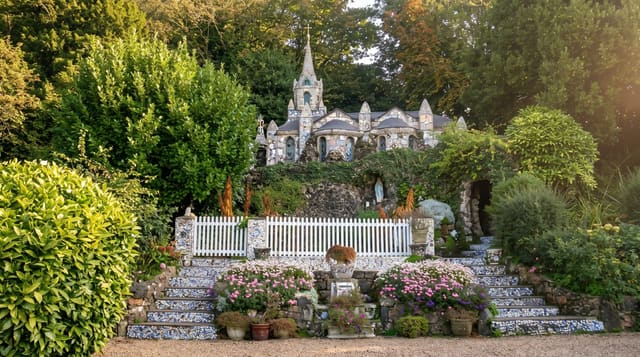
AI illustration
UNESCO World Heritage
Durham Cathedral rises where the River Wear loops almost back on itself, sharing its rocky peninsula with the castle in a composition UNESCO inscribed in 1986 and painters have worked ever since. Begun in 1093 to house the shrine of St Cuthbert - the north's beloved saint, carried here by monks fleeing Viking raids on Lindisfarne - it is widely counted the finest Norman building in England, and its structural daring changed architecture: the nave's stone rib vaults, carried on massive drum piers incised with chevrons and spirals, are among the earliest in Europe and point straight toward Gothic. Cuthbert still lies behind the high altar, the Venerable Bede - the first historian of the English - rests in the Galilee Chapel, and the cloister below doubled as Hogwarts corridors on film. Climbing the central tower's 325 steps earns the whole peninsula, river gorge and city in one view.
History
The see began at Lindisfarne, founded by Saint Aidan around 635, where Saint Cuthbert was bishop from 685 until his death in 687; Viking raids drove the monks away in 875 with his relics, they settled at Chester-le-Street in 882, and in 995 they moved again and, legend says, followed two milkmaids looking for a dun cow to this loop of the River Wear, where Cuthbert's coffin would go no further. In 1083 Bishop William de St-Calais founded a Benedictine priory here, replacing the secular canons with monks from Wearmouth and Jarrow, and built the present cathedral, which also holds the shrine of Bede. It remained a monastery until 1541, has since been run by a dean and chapter, and with the castle forms a World Heritage Site (Wikipedia, Durham Cathedral).
What you'll find
- The nave vaults - pioneering stone ribs on chevron-carved drum piers.
- St Cuthbert's shrine - the north's saint behind the high altar.
- Bede's tomb - the first English historian in the Galilee Chapel.
- The tower climb - 325 steps to the peninsula panorama.
When to go
Open year-round, and evensong gives the building its intended soundtrack most days. Summer brings coach crowds mid-morning; early or late visits keep the nave quiet.
Practical notes
Entry is free but the cathedral asks donations with feeling, and the tower and exhibition tickets add up. It remains a working church - visiting closes around services, and photography rules apply inside. The cobbled peninsula climb is steep for some.
Nearby
Durham Castle across Palace Green, the riverbanks walk and the old city's cobbled bailey.
Key facts
Source: Wikidata, item Q746207, read on 18 October 2026.
What to pack for Durham Cathedral
Chosen from what this place is for. Tap a kit for the full checklist.
- Comfortable walking shoes - Sightseeing means kilometres of pavement and cobbles daily. Find on Amazon
- Modest clothing - Shoulders and knees covered - the single most common requirement. Find on Amazon
- A slim anti-theft daypack - Zips that close properly; keep it in front in crowds and on transit. Find on Amazon
- A scarf or shawl - To cover the head or shoulders on entry; women especially at mosques. Find on Amazon
Some links on this page are Amazon affiliate links - if you buy through them we may earn a small commission at no extra cost to you.
All packing kitsPlan your trip
Where to start if Durham Cathedral is going on the list.
Booking links on this page are affiliate links - if you book through them we may earn a small commission at no extra cost to you. It never changes what we write about a place.
Opening times, ticket prices and seasonal closures change - check the official source before you go: official site.