Cutty Sark
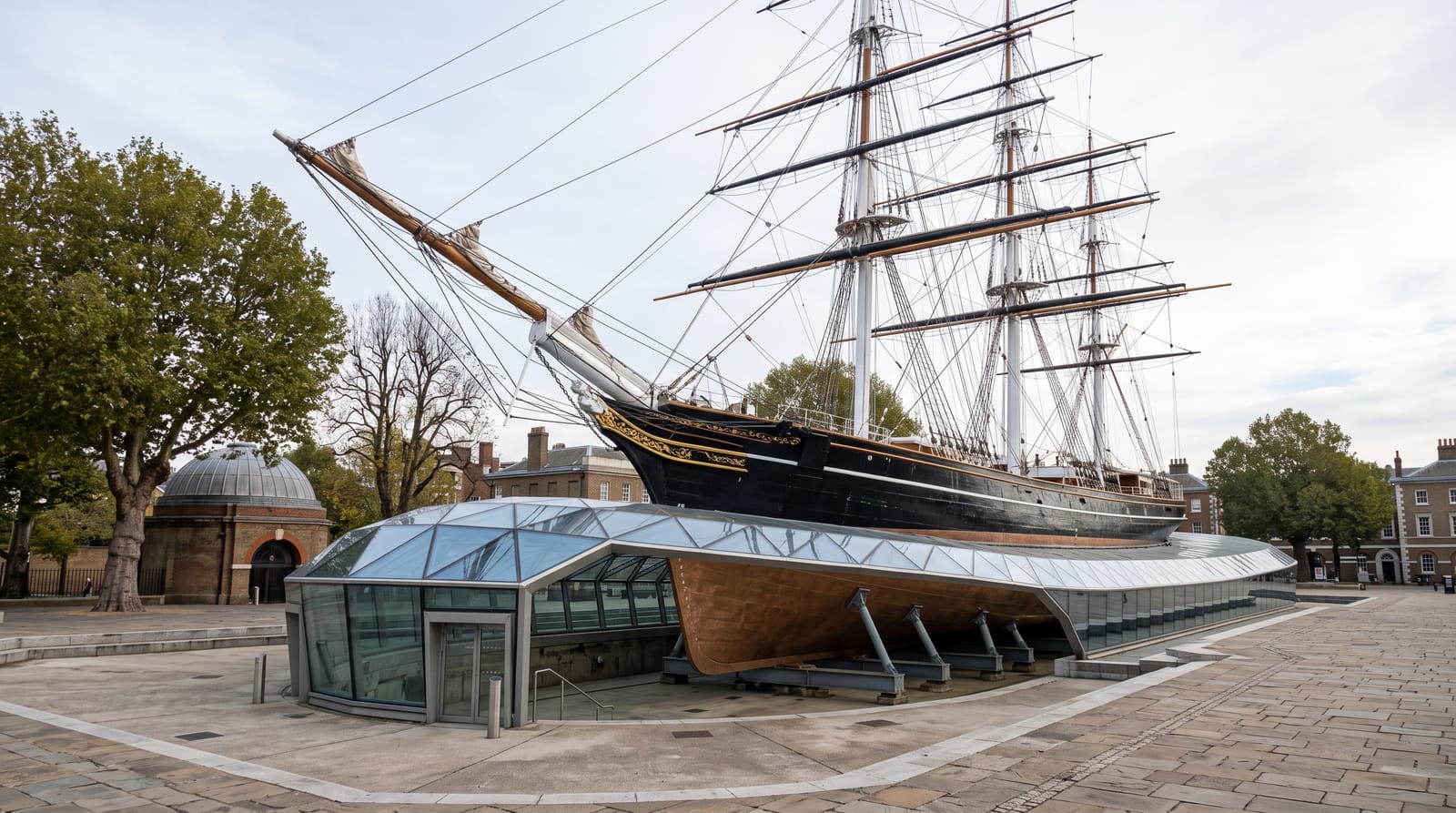
The last surviving tea clipper, raised three metres in dry dock at Greenwich so visitors can walk beneath her hull.
Updated 18 October 2026
AI illustration
UNESCO World Heritage
Cutty Sark was launched at Dumbarton in 1869 for the China tea trade, arriving weeks after the Suez Canal opened and made clippers obsolete on that route; she found her real form on the Australian wool run, where in the 1880s under Captain Woodget she was repeatedly the fastest ship of the season. Her name comes from Burns's poem Tam o' Shanter, and the figurehead is the witch Nannie holding a horse's tail. She came to Greenwich in 1954 and was set in dry dock. A conservation project raised the hull about three metres on supports and glazed the dock over, so visitors walk underneath and see the copper-sheathed lines from below. A fire in 2007 during the works destroyed some fabric but most had been removed for restoration.
History
John Willis ordered her for the China tea trade during the clipper boom of 1865-1869, aiming to beat the record of the new Aberdeen clipper Thermopylae, and Hercules Linton designed and built her at Dumbarton on the Leven, launching her in 1869; her name comes from the witch in Burns's Tam o' Shanter. Her first voyage, under Captain George Moodie, left London on 16 February 1870 and came back from Shanghai with over 590 tonnes of tea, and she sailed eight tea seasons, racing Thermopylae from Shanghai in 1872. The Suez Canal, opened the year she was launched, and more efficient steamships soon took the tea trade, and she turned to carrying wool from Australia (Wikipedia, Cutty Sark).
Highlights
- The hull from below - the ship raised three metres over a glazed dock.
- The figurehead - Nannie the witch with a horse's tail in her hand.
- The cargo decks - holds fitted out with the tea and wool trade explained.
- The figurehead collection - a large group of ships' figureheads under the hull.
When to go
Year-round; the ship is enclosed and unaffected by weather. Weekends and school holidays are busiest. Combined tickets with the Royal Observatory work out cheaper.
What to expect
A great deal of the ship is replacement material, first after decades of decay and again after the 2007 fire, which the museum acknowledges. The visit takes under two hours. The glazing over the dock divides opinion among preservationists.
Nearby
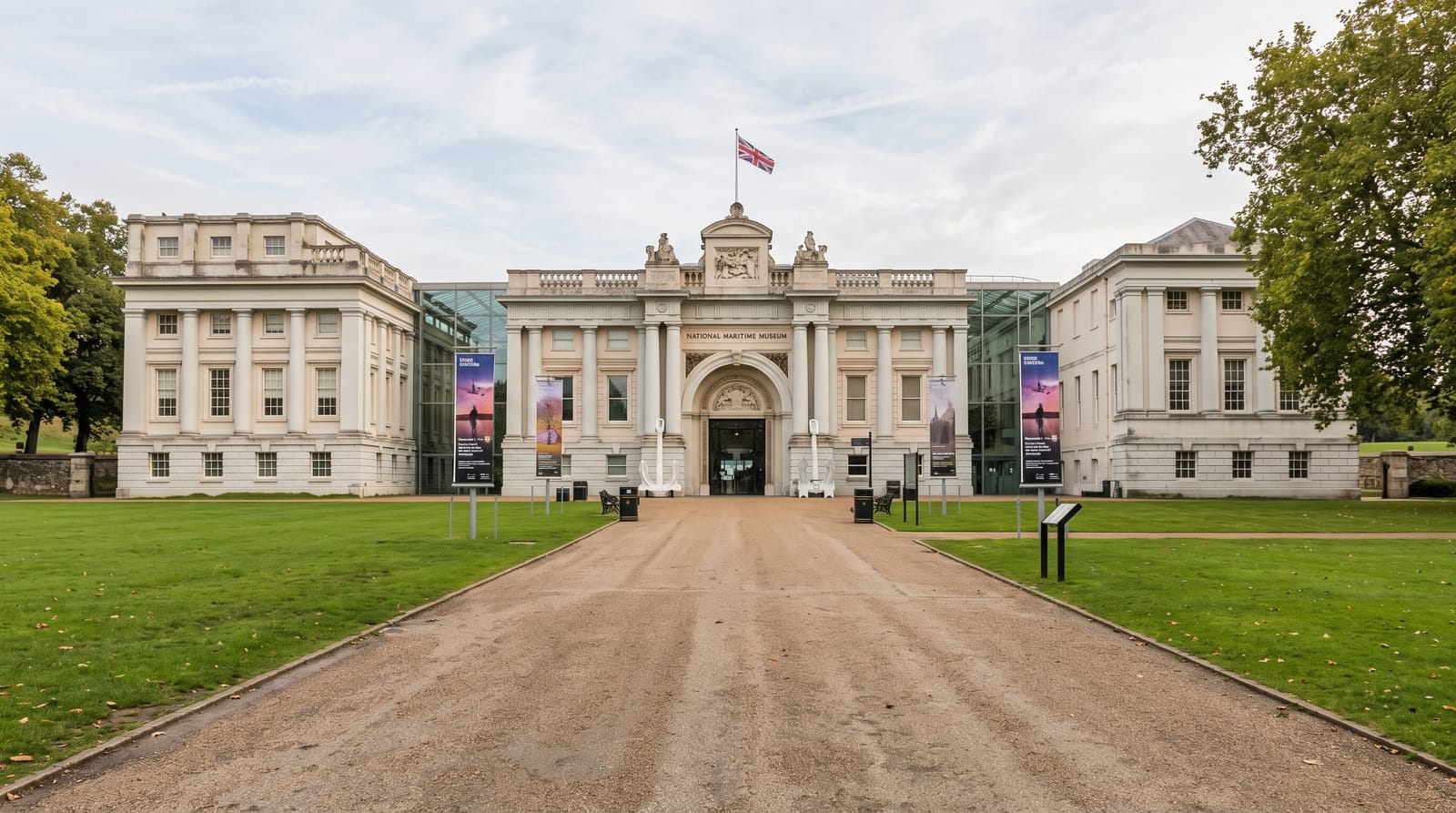
The Old Royal Naval College and the maritime museum are alongside; Greenwich market is a minute away.
Key facts
Source: Wikidata, item Q171255, read on 18 October 2026.
What to pack for Cutty Sark
Chosen from what this place is for. Tap a kit for the full checklist.
- Spare batteries + cards - Cold and long shoots drain power; never run out at the good light. Find on Amazon
- Comfortable walking shoes - Sightseeing means kilometres of pavement and cobbles daily. Find on Amazon
- A compact tripod - Essential for night skies, aurora, waterfalls and low light. Find on Amazon
- A slim anti-theft daypack - Zips that close properly; keep it in front in crowds and on transit. Find on Amazon
Some links on this page are Amazon affiliate links - if you buy through them we may earn a small commission at no extra cost to you.
All packing kitsPlan your trip
Where to start if Cutty Sark is going on the list.
Booking links on this page are affiliate links - if you book through them we may earn a small commission at no extra cost to you. It never changes what we write about a place.
Opening times, ticket prices and seasonal closures change - check the official source before you go: official site.