Covent Garden
London's first public square, laid out by Inigo Jones in the 1630s, now a covered market with licensed street performance.
Updated 4 September 2026
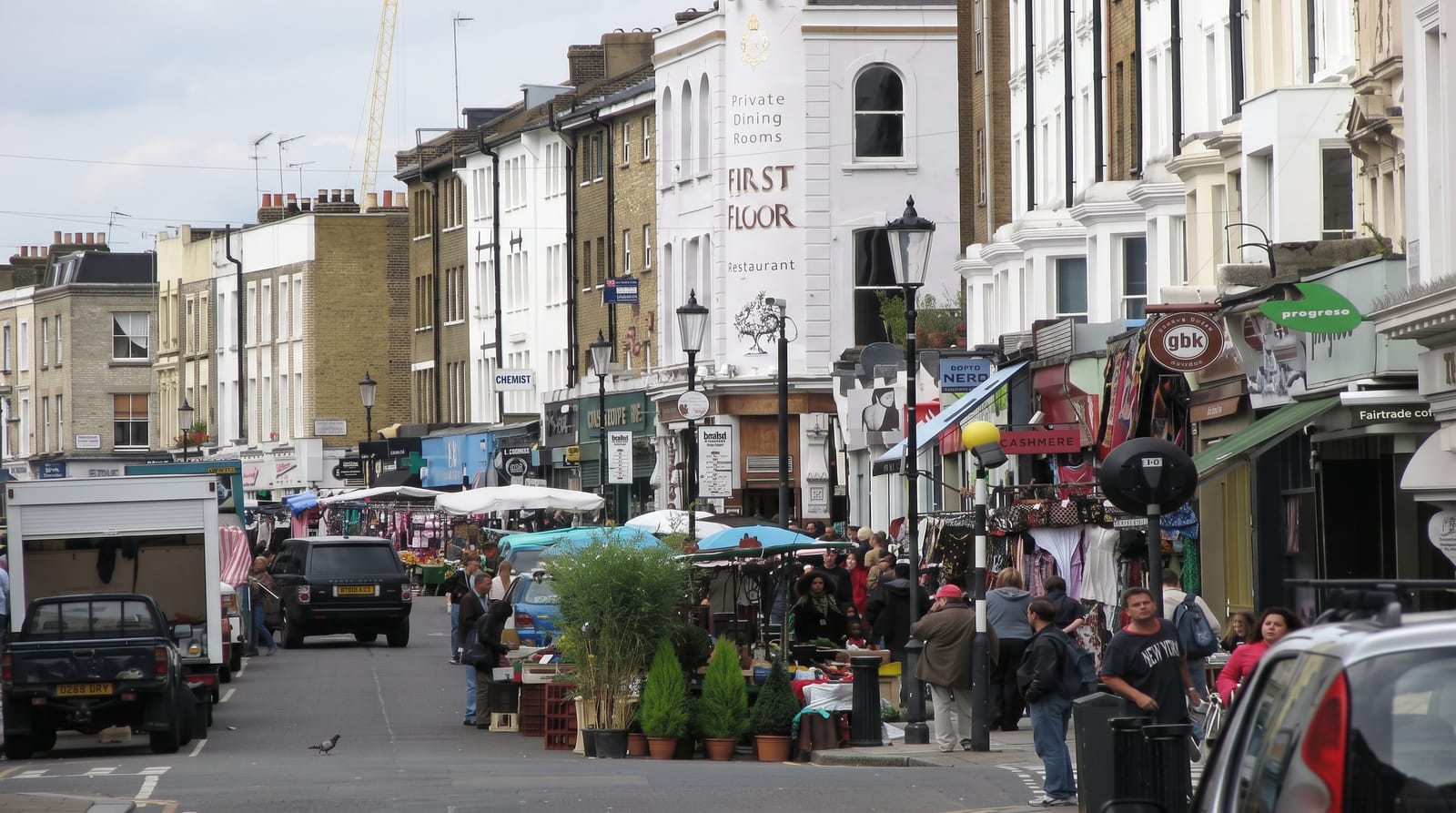
AI illustration
The Earl of Bedford had Inigo Jones lay out a piazza here in the 1630s on the model of an Italian square, the first planned public space of its kind in London, with St Paul's Covent Garden closing the western end; Jones was told to build the church cheaply, replied that it would be the handsomest barn in England, and produced a Tuscan portico that is exactly that. A fruit and vegetable market grew in the square and stayed until 1974, when it moved to Nine Elms and the Victorian market building was saved from demolition and reopened as shops in 1980. Street performance in the piazza is regulated by audition and pitch allocation rather than being informal, a system running since the 1980s. The portico appears in Pygmalion as the spot where Higgins meets Eliza.
Highlights
- The Jones piazza - the first planned public square in London.
- St Paul's portico - the actors' church with its Tuscan front.
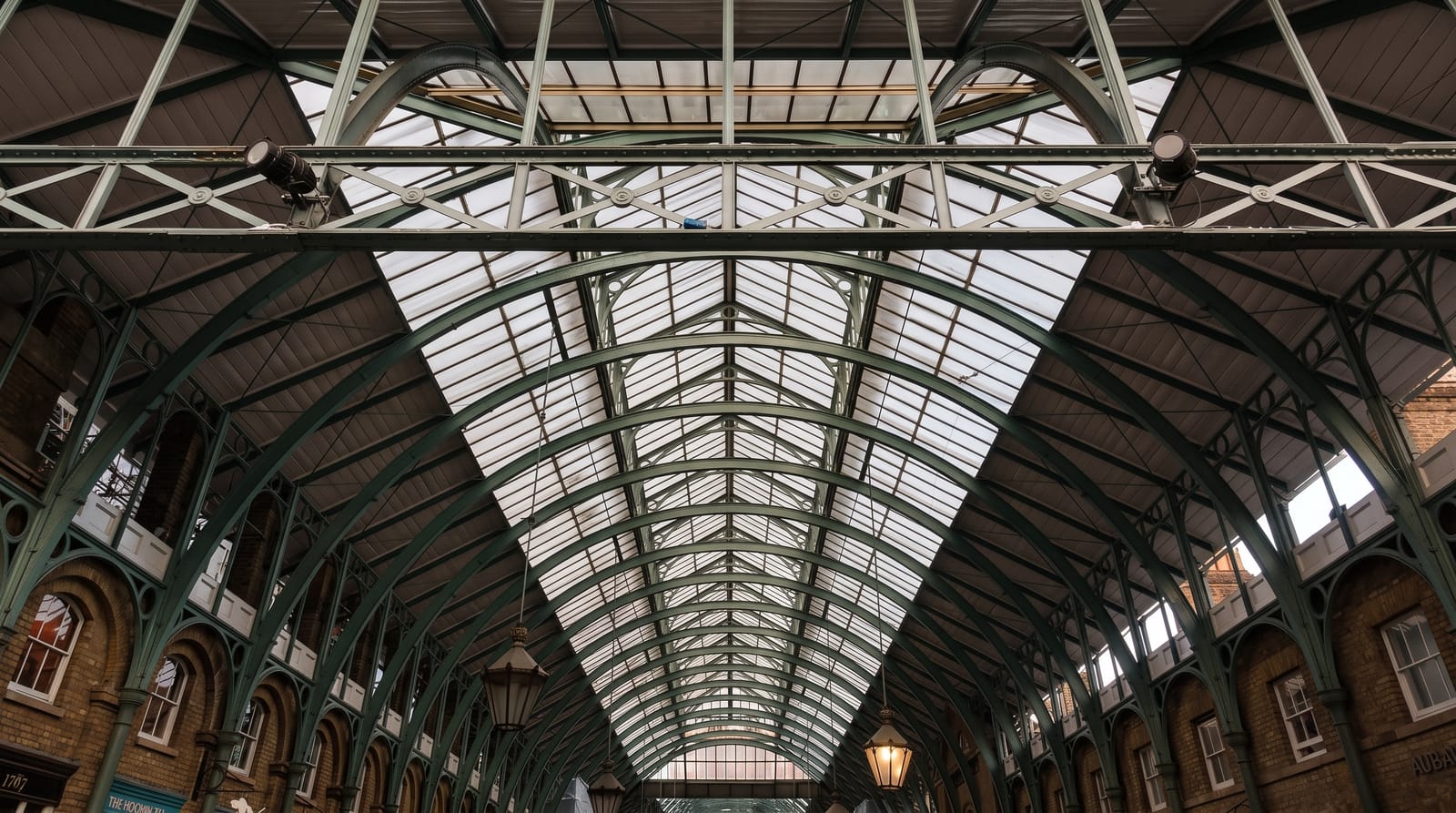
- The Victorian market halls - the 1830 building kept when the market left.
- The licensed pitches - auditioned street performers on allocated spots.
When to go
Year-round; the market is covered so it works in rain. Performances run through the day in the piazza and the lower courtyard. December brings large decorations and heavy crowds.
What to expect
The area is comprehensively touristic, with chain shops in the market halls and prices to match. It is crowded most of the day and severely so at weekends and in December. The real produce market has not been here for fifty years.
Nearby
The Royal Opera House and London Transport Museum are on the piazza; Seven Dials lies north.
What to pack for Covent Garden
Chosen from what this place is for. Tap a kit for the full checklist.
- Comfortable walking shoes - Sightseeing means kilometres of pavement and cobbles daily. Find on Amazon
- A slim anti-theft daypack - Zips that close properly; keep it in front in crowds and on transit. Find on Amazon
- A refillable water bottle - Many cities have public fountains; save money and plastic. Find on Amazon
- A light layer + compact umbrella - For museum air-con and a sudden shower. Find on Amazon
Some links on this page are Amazon affiliate links - if you buy through them we may earn a small commission at no extra cost to you.
All packing kitsPlan your trip
Where to start if Covent Garden is going on the list.
Booking links on this page are affiliate links - if you book through them we may earn a small commission at no extra cost to you. It never changes what we write about a place.
Opening times, ticket prices and seasonal closures change - check the official source before you go: official site.