Kebnekaise
The highest mountain in Sweden - a glaciated Lapland peak whose melting icy summit is slowly ceding the crown to its bare southern neighbour.
Updated 18 October 2026

AI illustration
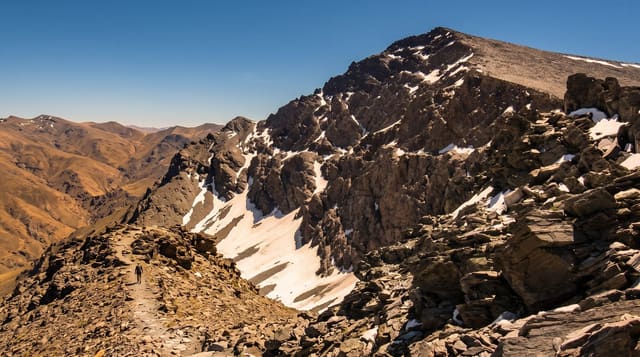
Kebnekaise is the highest mountain in Sweden, a glaciated Lapland peak reached only on foot from the mountain station at its base. Its south summit, capped with a shrinking glacier, has long been the high point, but as the ice melts it is losing height and the crown is passing to the bare rock north summit.
History
The first recorded ascent, on 22 August 1883, was made by an expedition led by the Frenchman Charles Rabot with three local men, Jon Larsson, Hans Monsen and Peder Abrahamsson Lindgren; they set out from the Skjomen fjord in Norway, because the first railway in the region was only built in 1888. The news came out later, and the first Swedish expedition, led by Johan Alfred Björling, drew more attention when it reached the top on 9 July 1889. The mountain lodge opened in 1908 and brought tourism in earnest. The south summit's ice has been measured for over a century: the oldest figure was 2,117 metres, and the top was long quoted at 2,111 metres before the glacier's melting brought it down to the height of the rock north summit (Wikipedia, Kebnekaise).
Background
The name comes from the Sami Giebmegáisi or Giebnegáisi, meaning Cauldron Crest. The massif belongs to the Scandinavian mountain range, with the Arctic Circle about 150 kilometres to the south. The glaciated south peak once stood at 2,120 metres but has lost 24 meters over the last 50 years, so the ice-free north peak, at 2,096.8 metres, is now the high point. Charles Rabot made the first ascent on 22 August 1883. The mountain lodge stands about 19 kilometres from the Nikkaluokta trailhead. From the lodge the western route to the south summit covers about 9 kilometres, and the eastern route, which crosses glaciers and rock, about 10 kilometres.
Source: Wikipedia, "Kebnekaise"
What you'll find
- The two summits - the icy south top and the rocky north top vying for the crown.
- The glacier - the melting summit ice at the heart of the mountain's shrinking height.
- The mountain station - the base lodge for climbers and hikers.
- The Lapland fells - the wild high country all around.
When to go
The summer climbing season from June to September, when the routes are safe and guided ascents run. Weather at the summit is fierce and changeable, so a settled day is essential.
Good to know
Reaching the summit is a serious, long mountain day, often with a guide on the glaciated route, not a walk-up - fitness and preparation are essential. Even the base is a hike from the road. The melting glacier means the exact high point and height keep changing.
Nearby
The Kungsleden trail passes nearby; Kiruna is to the east and the Abisko aurora country to the north.
Key facts
Source: Wikidata, item Q214011, read on 18 October 2026.
What to pack for Kebnekaise
Chosen from what this place is for. Tap a kit for the full checklist.
- Broken-in walking shoes or boots - Grip and ankle support matter more than looks; never hike in brand-new boots. Find on Amazon
- Spare batteries + cards - Cold and long shoots drain power; never run out at the good light. Find on Amazon
- Warm base layers - Merino or synthetic against the skin - never cotton, which chills when damp. Find on Amazon
- Layers for big temperature swings - Warm sun by day, near-freezing at night, even near the equator. Find on Amazon
Some links on this page are Amazon affiliate links - if you buy through them we may earn a small commission at no extra cost to you.
All packing kitsPlan your trip
Where to start if Kebnekaise is going on the list.
Booking links on this page are affiliate links - if you book through them we may earn a small commission at no extra cost to you. It never changes what we write about a place.
Opening times, ticket prices and seasonal closures change - check the official source before you go: official site.