Sigiriya
The Lion Rock - an ancient royal fortress and palace built atop a sheer 180-metre rock rising from the jungle, with frescoes, water gardens and giant lion paws, a UNESCO wonder.
Updated 18 October 2026
AI illustration
UNESCO World Heritage
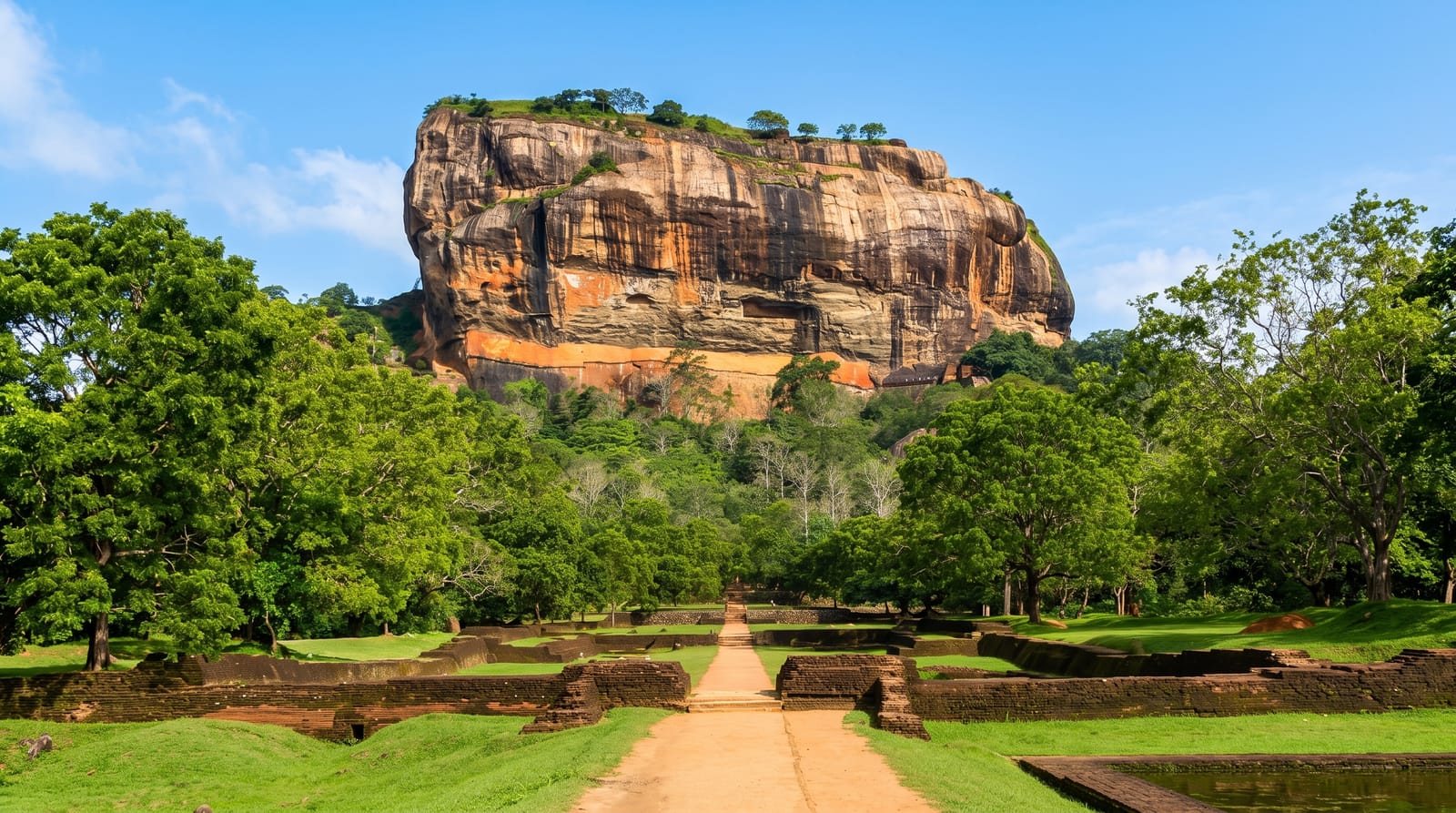
Sigiriya, the Lion Rock, is the most spectacular sight in Sri Lanka, an ancient royal citadel and pleasure palace built in the fifth century atop a sheer column of rock rising some 180 metres from the surrounding jungle. Climbed by a series of stairways past ancient frescoes of celestial maidens and a mirror wall, and through the giant carved paws of a once-colossal lion, it is crowned by palace ruins with breathtaking views, set above beautiful water gardens, a UNESCO wonder.
History
People sheltered under the Aligala rock east of Sigiriya as early as about 3000 BC, and from the 3rd century BC Buddhist monks lived in caves on the surrounding hills, recorded in inscriptions donating the shelters to the monastic order. The Cūḷavaṃsa tells that Kashyapa, son of King Dhatusena by a non-royal consort, seized the throne in 477, killing his father, and, expecting the return of his half-brother Moggallana, who had fled to South India, moved his capital from Anuradhapura to this rock, building a palace on the summit and, halfway up, a gateway in the form of a huge lion that gave the place its name; most of the palaces, gardens and defences date from his reign, from 477 to 495. After his death the capital and palace were abandoned, and the rock served as a Buddhist monastery until the 14th century (Wikipedia, Sigiriya).
Highlights
- The rock summit - the palace ruins and views atop the 180-metre rock.
- The frescoes - the ancient paintings of celestial maidens.
- The lion paws - the giant carved paws at the final stairway.
- The water gardens - the ancient landscaped gardens below.
When to go
December to April, the dry season for this region, for the best weather; climb early in the morning to beat the fierce midday heat and the crowds, as the exposed stairways offer little shade.
Things to know
It is a steep climb of over a thousand steps in the heat, on stairways that can feel exposed and vertiginous, so it is not for those with limited mobility or a strong fear of heights. It is very popular and hot, so go at opening. Wasps occasionally close parts of the climb. The nearby, lower Pidurangala Rock offers a fine view of Sigiriya itself for less effort.
Nearby
The Dambulla cave temple, the ancient cities and Kandy are within the Cultural Triangle.
What to pack for Sigiriya
Chosen from what this place is for. Tap a kit for the full checklist.
- Broken-in walking shoes or boots - Grip and ankle support matter more than looks; never hike in brand-new boots. Find on Amazon
- Head torch + spare batteries - Hands-free light is essential; caves are truly dark. Find on Amazon
- Strong insect repellent - DEET or picaridin; the jungle is where bites and disease risk are highest. Find on Amazon
- Comfortable walking shoes - Sightseeing means kilometres of pavement and cobbles daily. Find on Amazon
Some links on this page are Amazon affiliate links - if you buy through them we may earn a small commission at no extra cost to you.
All packing kitsPlan your trip
Where to start if Sigiriya is going on the list.
Booking links on this page are affiliate links - if you book through them we may earn a small commission at no extra cost to you. It never changes what we write about a place.
Opening times, ticket prices and seasonal closures change - check the official source before you go: official site.