Tapas
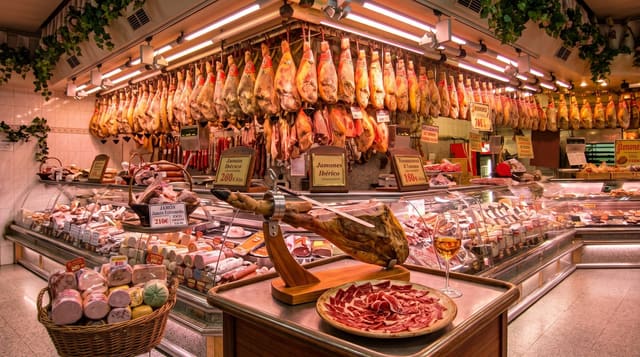
Spain's way of eating - small plates shared over drinks, hopping from bar to bar, from Andalusian olives and ham to Basque pintxos on the counter.
Updated 4 September 2026
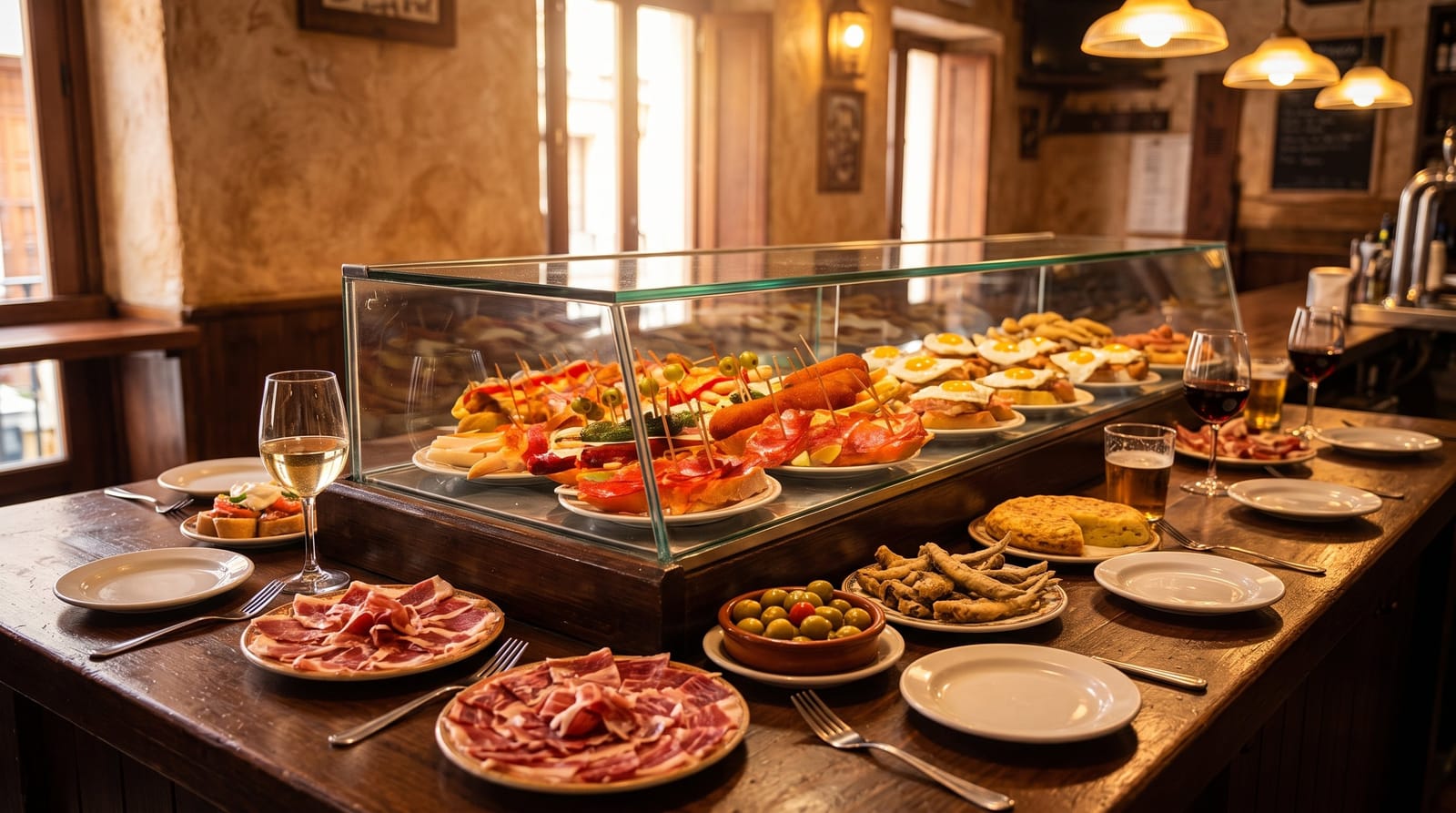
AI illustration
Tapas are less a menu than a way of life in Spain: small plates of food shared over drinks, from olives, ham and cheese to fried fish, patatas bravas and tortilla, eaten standing at a bar and often hopping from one to the next. In Andalusia a tapa may come free with a drink; in the Basque north they become pintxos, elaborate morsels crowding the counter.
The main sights
- The small plates - the shared dishes from ham and olives to fried fish.
- The bar-hop - the tradition of moving from bar to bar.
- Andalusian free tapas - the plate that comes with a drink in the south.
- Basque pintxos - the elaborate counter morsels of the north.
When to go
Year-round; an evening of grazing, best from around eight or nine at night when Spaniards eat. Bar-hopping between several places is the authentic way rather than sitting for one big meal.
What to expect
Spaniards eat late, so bars are quiet before eight or nine in the evening. The custom varies by region, from free tapas in Granada to pay-per-pintxo in the Basque Country. Tourist-area bars can overcharge, so follow the locals to the busy ones.
Nearby
Every Spanish city has its tapas bars; Seville, Granada and San Sebastian are famous for them.
What to pack for Tapas
Chosen from what this place is for. Tap a kit for the full checklist.
- A reusable bag or container - For market produce and cutting down on packaging. Find on Amazon
- Wet wipes + hand sanitiser - Street food and washbasins do not always go together. Find on Amazon
Some links on this page are Amazon affiliate links - if you buy through them we may earn a small commission at no extra cost to you.
All packing kitsPlan your trip
Where to start if Tapas is going on the list.
Booking links on this page are affiliate links - if you book through them we may earn a small commission at no extra cost to you. It never changes what we write about a place.
Opening times, ticket prices and seasonal closures change - check the official source before you go: official site.