San Millan Yuso and Suso
Two linked Riojan monasteries where a monk wrote the earliest known notes in Spanish and Basque in the margins of a Latin text.
Updated 18 October 2026
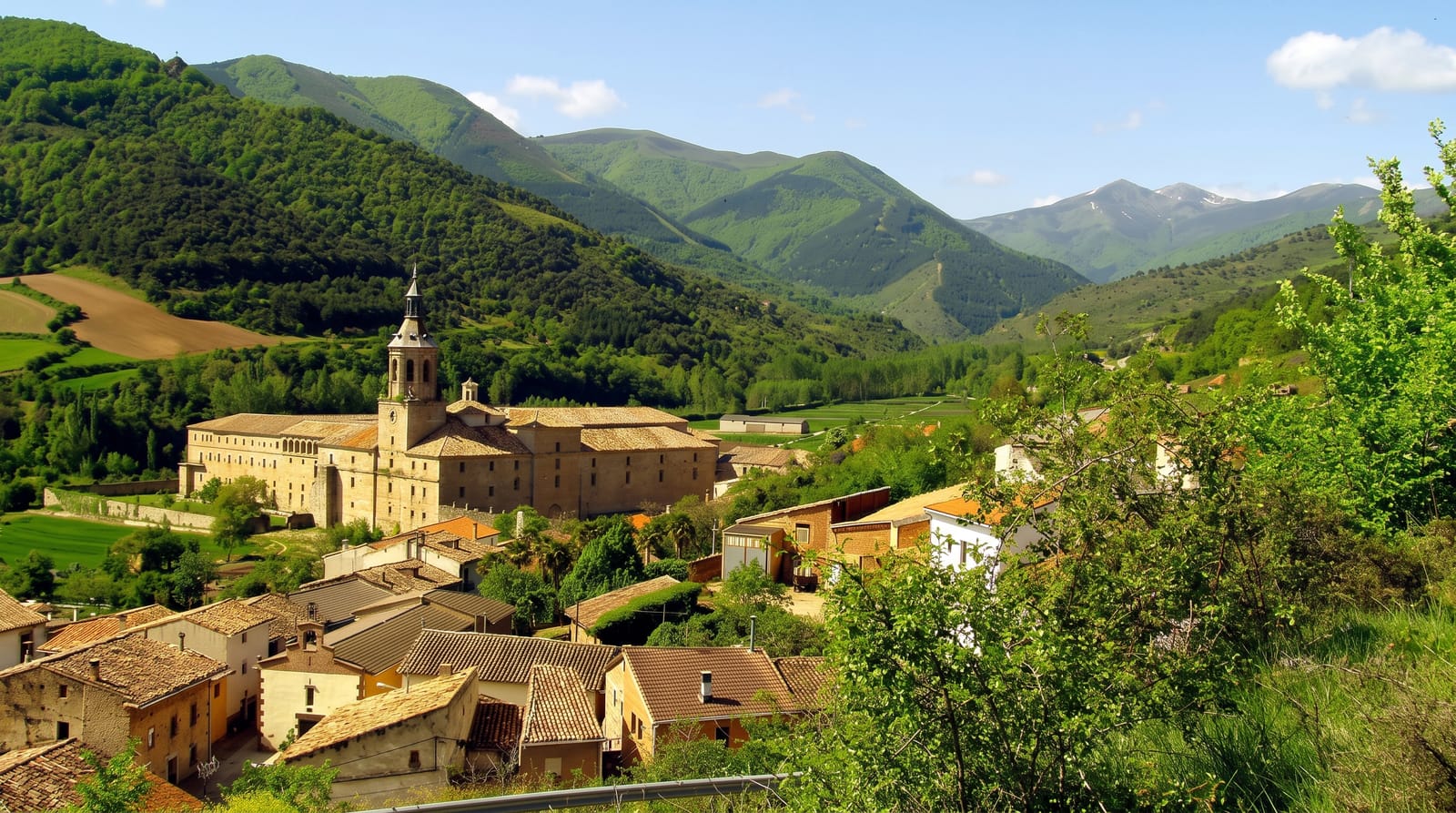
AI illustration
UNESCO World Heritage
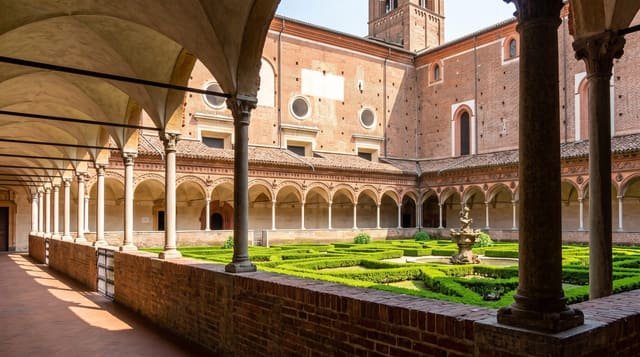
Suso, the upper monastery, grew from caves where the hermit Millan lived in the sixth century, and its church incorporates Visigothic and Mozarabic work with horseshoe arches. In its scriptorium, sometime around the tenth or eleventh century, a monk annotated a Latin codex with glosses explaining difficult words in the vernacular, the Glosas Emilianenses, which include the earliest surviving written passages in a Romance language recognisable as Spanish and two lines in Basque; the manuscript is now in Madrid. Yuso, the lower monastery, was built from the sixteenth century on a far larger scale in Renaissance and baroque style, and holds ivory-plated reliquary chests and a library. UNESCO listed both in 1997. Access to Suso is by shuttle with booking.
History
Christian life has continued here since the time of Saint Emilian, whose hermitage is believed to lie under Suso, the upper monastery of the 6th century, while Yuso, the lower one, was a 16th-century refoundation on a lower site; the change from hermits at Suso to a Benedictine community at Yuso shows, as UNESCO noted, the passage from a solitary to a communal monastic life. The scriptorium produced the second phase of the San Millán Beatus and stayed active under Muslim rule, and it is known for the Glosas Emilianenses, notes on a Latin text holding the first written phrases in Spanish and Basque, though scholars debate whether the Romance words are early Castilian or Navarro-Aragonese. The community came through many troubles, among them a sack by the Black Prince; Suso has stood empty since monastic property was confiscated in the 19th century, a process that began here in the 1820s, Yuso was later reoccupied by Augustinians, and both became a World Heritage Site in December 1997 (Wikipedia, Monasteries of San Millán de la Cogolla).
What to look for
- Suso - a cave-rooted church with Visigothic and Mozarabic arches.
- The Glosas site - the scriptorium where the earliest Spanish was written.
- Yuso - a large Renaissance and baroque monastery with a library.
- The ivory reliquaries - carved chests holding the relics of Saint Millan.
When to go
April to June and September to November; both monasteries are guided-only with set times, and Suso requires a booked shuttle from the village with limited daily places. Winter hours are shorter.
Good to know
Suso can only be reached by a booked minibus and places are limited, selling out in season. Both visits are guided in Spanish. The original manuscript is in Madrid, not here.
Nearby
The Rioja wine country lies north; Santo Domingo de la Calzada and the Camino are close.
Key facts
Source: Wikidata, item Q2284354, read on 18 October 2026.
What to pack for San Millan Yuso and Suso
Chosen from what this place is for. Tap a kit for the full checklist.
- Head torch + spare batteries - Hands-free light is essential; caves are truly dark. Find on Amazon
- Comfortable walking shoes - Sightseeing means kilometres of pavement and cobbles daily. Find on Amazon
- Modest clothing - Shoulders and knees covered - the single most common requirement. Find on Amazon
- Grippy closed shoes - Cave floors are wet, muddy and slick with formations. Find on Amazon
Some links on this page are Amazon affiliate links - if you buy through them we may earn a small commission at no extra cost to you.
All packing kitsPlan your trip
Where to start if San Millan Yuso and Suso is going on the list.
Booking links on this page are affiliate links - if you book through them we may earn a small commission at no extra cost to you. It never changes what we write about a place.
Opening times, ticket prices and seasonal closures change - check the official source before you go: official site.