Monte Santa Trega
An Iron Age castro of hundreds of round stone houses on a hill above the Mino estuary, with Portugal across the water.
Updated 4 September 2026

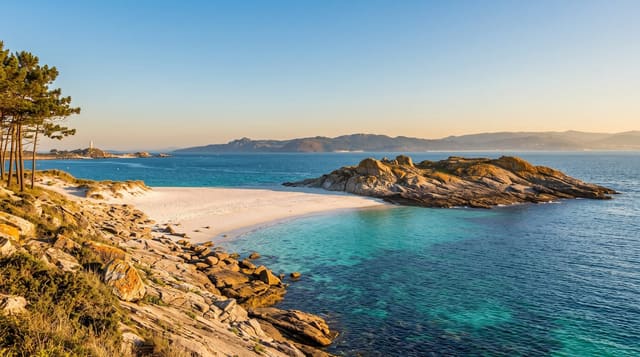
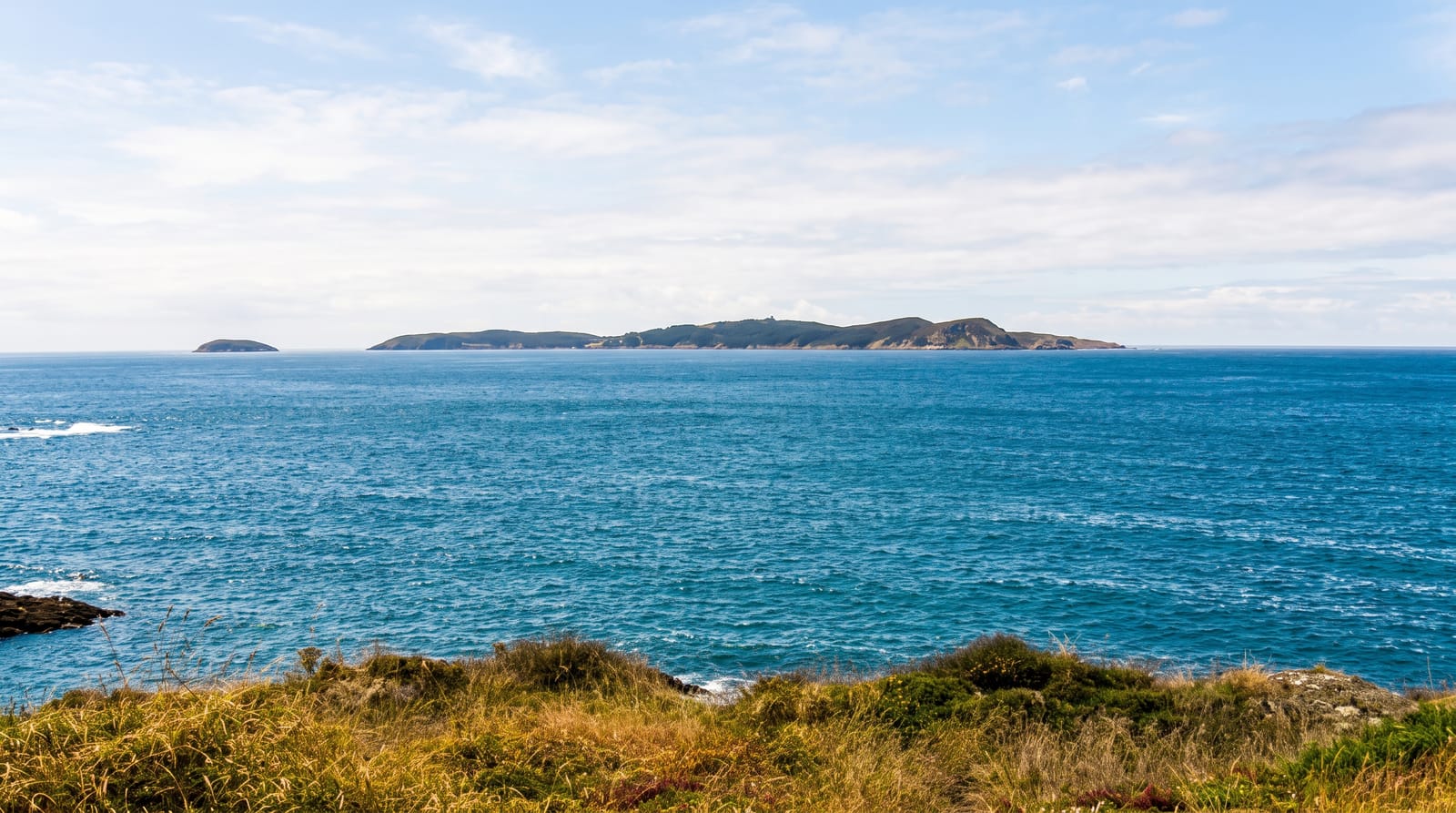
AI illustration
Santa Trega rises about three hundred and forty metres above the mouth of the Mino, and its slopes hold one of the largest and best-known castros in Galicia, an Iron Age hillfort occupied roughly from the first century BC into the Roman period, with several hundred circular stone houses, some reconstructed with conical thatched roofs to show how they looked, laid out within defensive walls. Excavation began in 1913. A museum near the summit holds finds including carved stones and pottery. From the top the view covers the Mino estuary, the Atlantic and the Portuguese bank opposite. A road climbs to the summit, where a chapel and a hermitage stand, and the site is busy on the pilgrimage day in August.
What to look for
- The round houses - hundreds of circular stone dwellings on the slope.
- The reconstructions - a few houses rebuilt with conical thatch.
- The site museum - finds from over a century of excavation.
- The estuary view - the Mino, the Atlantic and Portugal from the summit.
When to go
April to June and September to October; the hill is exposed and often in cloud or rain. The August pilgrimage fills the summit. A road runs to the top, so the site is accessible without a climb.
Practical notes
Only a fraction of the castro has been excavated and the reconstructions are modern interpretations. The museum is small. The summit is developed with a chapel, car park and cafe rather than left bare.
Nearby
A Guarda's fishing port is below; the Portuguese border and Caminha lie across the estuary.
Key facts
Source: Wikidata, item Q3946633, read on 18 October 2026.
What to pack for Monte Santa Trega
Chosen from what this place is for. Tap a kit for the full checklist.
- Broken-in walking shoes or boots - Grip and ankle support matter more than looks; never hike in brand-new boots. Find on Amazon
- Travel rod + reel - A packable multi-piece rod fits in a case and covers most holiday fishing. Find on Amazon
- Comfortable walking shoes - Sightseeing means kilometres of pavement and cobbles daily. Find on Amazon
- Modest clothing - Shoulders and knees covered - the single most common requirement. Find on Amazon
Some links on this page are Amazon affiliate links - if you buy through them we may earn a small commission at no extra cost to you.
All packing kitsPlan your trip
Where to start if Monte Santa Trega is going on the list.
Booking links on this page are affiliate links - if you book through them we may earn a small commission at no extra cost to you. It never changes what we write about a place.
Opening times, ticket prices and seasonal closures change - check the official source before you go: official site.