Horchata and Fartons
A cold drink pressed from tiger nuts, served with soft sugar-glazed buns made for dipping into it.
Updated 4 September 2026
AI illustration
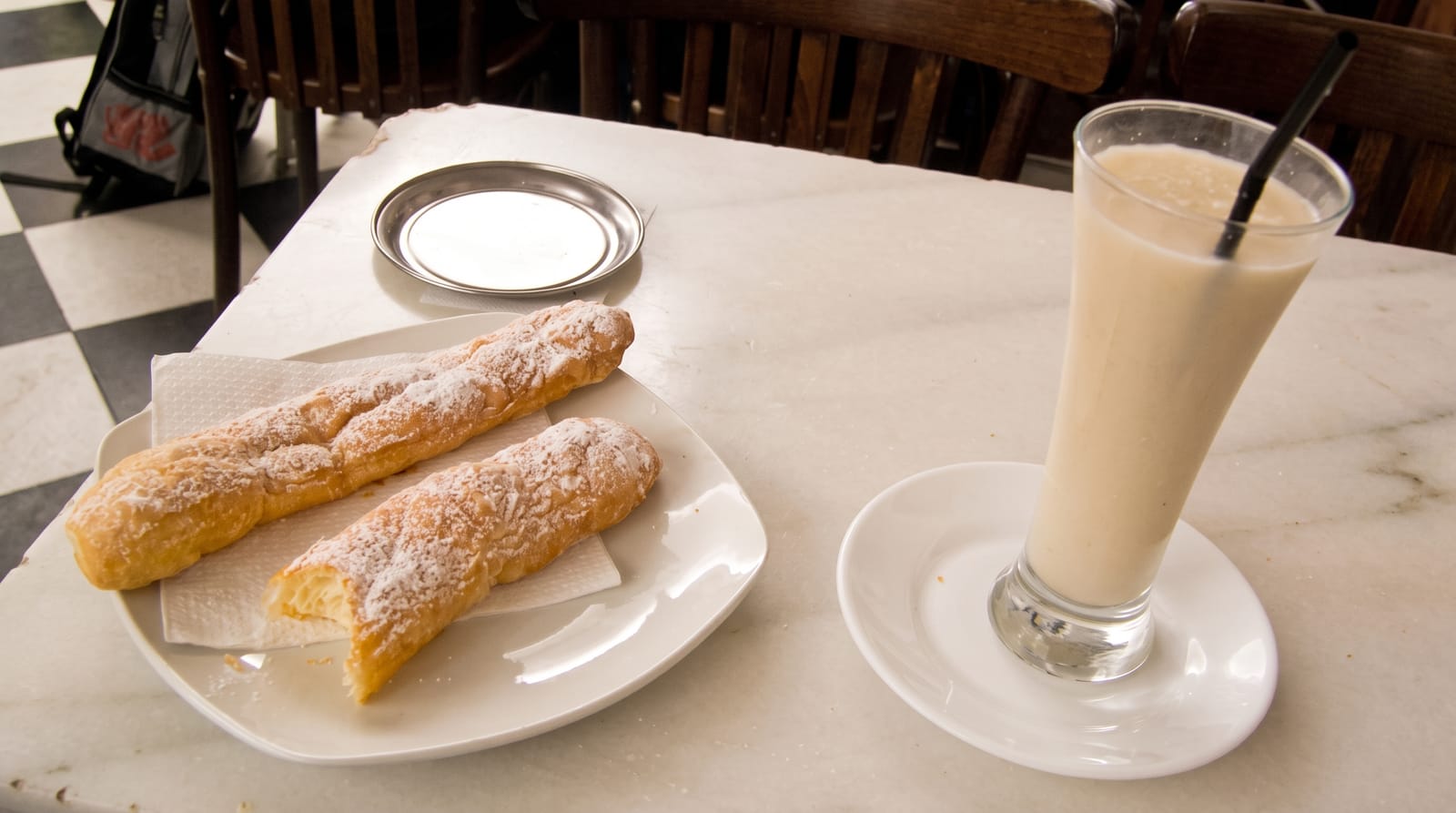
Horchata de chufa is made from tiger nuts, the small tubers of a sedge grown in the huerta around Alboraia just north of Valencia, soaked, ground, pressed and mixed with water and sugar, then served very cold. It is not a nut milk in the usual sense and has a protected designation covering the Valencian growing area. The chufa was introduced under Muslim rule. Fartons are the accompaniment: long soft glazed buns developed in the 1960s in Alboraia specifically to be dipped, absorbing the drink without collapsing immediately. The proper version, horchata natural, is unpasteurised, separates in the glass and must be stirred, and lasts only a day or two, which is why supermarket cartons taste different.
What's there
- The tiger nut fields - chufa grown in the huerta around Alboraia.
- The natural horchata - unpasteurised, separating in the glass, stirred before drinking.
- The fartons - long glazed buns made for dipping.
- The historic horchaterias - long-established cafes in Valencia and Alboraia.
When to go
May to September, the season when horchaterias are busiest and the drink is at its point; many traditional places close or reduce hours in winter. Alboraia's cafes are the source, a short metro ride from Valencia.
Things to know
Pasteurised and carton versions are much sweeter and flatter than the fresh drink, and many places serve them. The natural version separates and must be stirred, which surprises first-timers. It is very sweet.
Nearby
Alboraia is on the Valencia metro; the city's old town horchaterias are central.
What to pack for Horchata and Fartons
Chosen from what this place is for. Tap a kit for the full checklist.
- A reusable bag or container - For market produce and cutting down on packaging. Find on Amazon
- Wet wipes + hand sanitiser - Street food and washbasins do not always go together. Find on Amazon
Some links on this page are Amazon affiliate links - if you buy through them we may earn a small commission at no extra cost to you.
All packing kitsPlan your trip
Where to start if Horchata and Fartons is going on the list.
Booking links on this page are affiliate links - if you book through them we may earn a small commission at no extra cost to you. It never changes what we write about a place.
Opening times, ticket prices and seasonal closures change - check the official source before you go: official site.


