Fabada Asturiana
A stew of large white beans with chorizo, morcilla and cured pork shoulder, the defining dish of Asturias.
Updated 4 September 2026
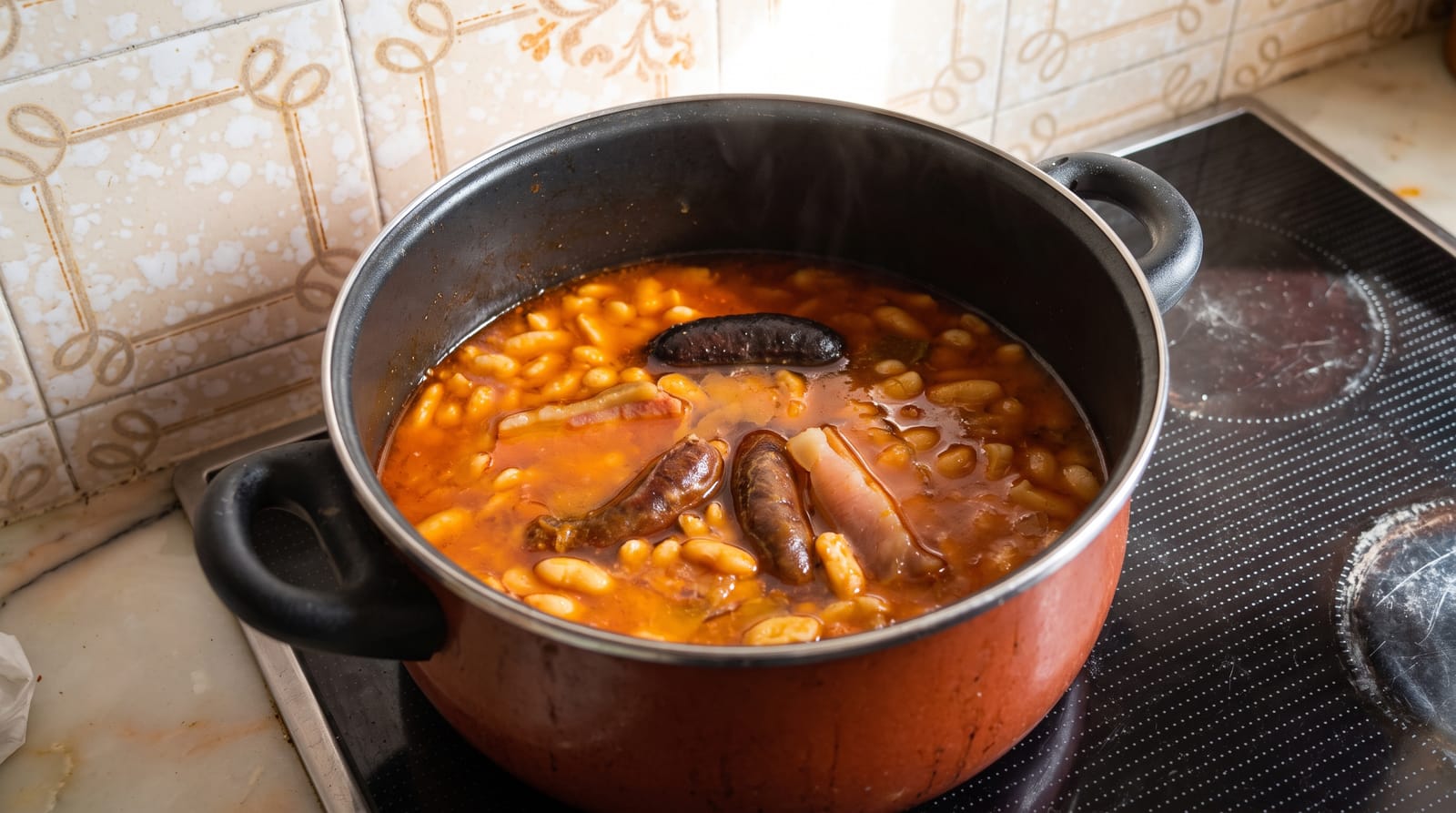
AI illustration
Fabada is built on the faba de la Granja, a large flat white bean with thin skin grown in Asturias and holding a protected designation, cooked slowly with the compango: chorizo, morcilla and lacon or pork shoulder, all smoked, which give the stew its colour and much of its flavour, along with saffron and paprika. It is not an ancient peasant dish as often claimed but appears in the record from the nineteenth century, becoming the region's emblem in the twentieth. The beans are soaked overnight and simmered for hours without stirring, the pot shaken instead so they do not break. It is served with the meats sliced on a separate plate, followed usually by rice pudding, and cider rather than wine.
What to look for
- The faba beans - large thin-skinned white beans with protected status.
- The compango - chorizo, morcilla and cured pork served alongside.
- The slow cooking - hours of simmering with the pot shaken, not stirred.
- The cider pairing - Asturian sidra rather than wine with the meal.
When to go
October to April, when the weather suits it; it is served year-round but is heavy for a summer lunch. Restaurants serve it at midday and portions are large enough that a full menu afterward is optimistic.
What to expect
It is extremely heavy and the afternoon after is usually written off. Cheap versions use inferior beans that break up and industrial compango. There is no vegetarian version of this dish.
Nearby
Sidrerias across Asturias serve it; Oviedo, Gijon and the inland villages all have long-standing places.
What to pack for Fabada Asturiana
Chosen from what this place is for. Tap a kit for the full checklist.
- A reusable bag or container - For market produce and cutting down on packaging. Find on Amazon
- Shelter suited to the place - Tent, tarp or hut booking - match it to the terrain and rules. Find on Amazon
- Wet wipes + hand sanitiser - Street food and washbasins do not always go together. Find on Amazon
- A warm sleeping bag + mat - Rated a little colder than you expect the nights to be. Find on Amazon
Some links on this page are Amazon affiliate links - if you buy through them we may earn a small commission at no extra cost to you.
All packing kitsPlan your trip
Where to start if Fabada Asturiana is going on the list.
Booking links on this page are affiliate links - if you book through them we may earn a small commission at no extra cost to you. It never changes what we write about a place.
Opening times, ticket prices and seasonal closures change - check the official source before you go: official site.