Combarro
A Galician village whose granite horreo granaries stand in a row along the shore, raised on stone legs above the tide line.
Updated 4 September 2026
AI illustration
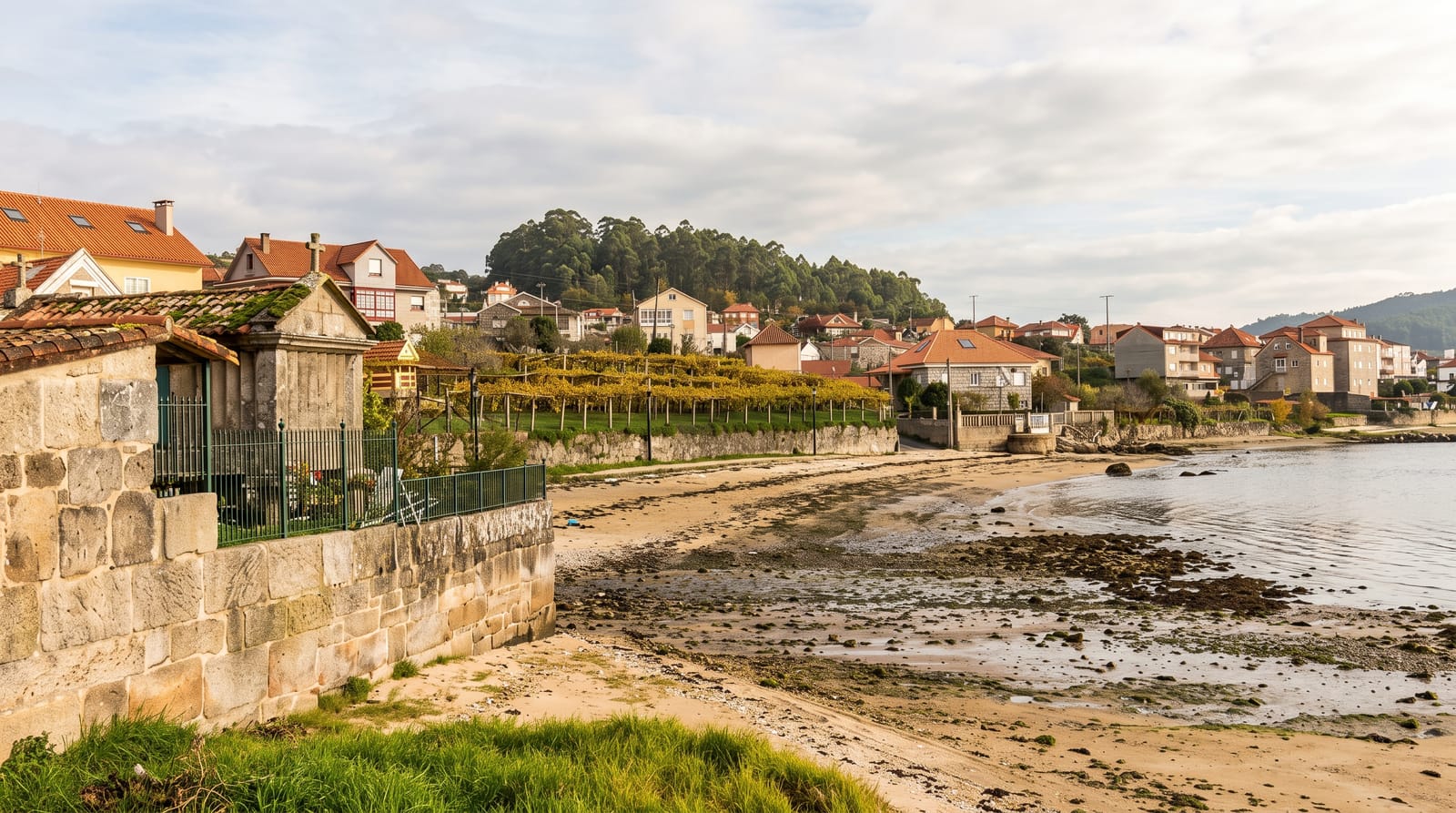
Combarro's distinguishing feature is the row of horreos, granaries raised on stone legs with slotted sides for ventilation and a cross at one gable, built along the waterfront so that they stand almost in the sea at high tide. There are around thirty in the village, mostly eighteenth and nineteenth century, and they were used to store maize above the damp. Behind them run narrow granite lanes with stone crosses, cruceiros, at the corners, and houses built directly onto the rock with outside stairs. The village was declared a historic-artistic site in 1972. It sits on the Pontevedra ria facing the water, and the seafront lanes are now largely occupied by restaurants and shops selling Galician crafts.
Highlights
- The waterfront horreos - around thirty raised granaries along the shore.
- The cruceiros - stone crosses at the corners of the lanes.
- The granite lanes - narrow streets with houses built onto bare rock.
- The ria setting - the village facing the water of the Pontevedra estuary.
When to go
May, June, September and October; August fills the village completely and parking is impossible. Evening light on the horreos from the water side is the best photograph.
Good to know
The village is very small, walked in half an hour, and its seafront is entirely restaurants and souvenir shops. Parking is outside and limited. Rain is frequent in any season.
Nearby
Pontevedra lies seven kilometres east; Sanxenxo and the Salnes beaches are west.
What to pack for Combarro
Chosen from what this place is for. Tap a kit for the full checklist.
- Reef-safe sunscreen - High SPF that will not bleach the coral you are swimming over. Find on Amazon
- Comfortable walking shoes - Sightseeing means kilometres of pavement and cobbles daily. Find on Amazon
- Quick-dry towel - A microfibre towel packs small and dries in minutes. Find on Amazon
- A slim anti-theft daypack - Zips that close properly; keep it in front in crowds and on transit. Find on Amazon
Some links on this page are Amazon affiliate links - if you buy through them we may earn a small commission at no extra cost to you.
All packing kitsPlan your trip
Where to start if Combarro is going on the list.
Booking links on this page are affiliate links - if you book through them we may earn a small commission at no extra cost to you. It never changes what we write about a place.
Opening times, ticket prices and seasonal closures change - check the official source before you go: official site.