Dinka Cattle Camps of Rumbek
Seasonal camps where Dinka herders live with their cattle in the dry season.
Updated 3 September 2026
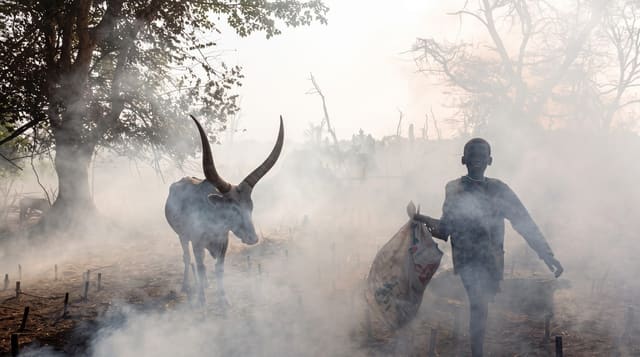
In the dry season Dinka herders around Rumbek move their cattle to camps on the floodplain, and life in those camps runs on the animals: dung fires burn continuously to keep flies off, the ash is rubbed into hides and hair, milk is the main food, and the long-horned Ankole cattle are individually named and sung about. The camps break up when the rains come and the herds move back.
The main sights
- The dung fires - the smoke that keeps flies off the herds.
- The ash-covered cattle - the animals and herders whitened with ash.
- The long-horned cattle - the Ankole herds the camps exist for.
- The seasonal cycle - camps that form in the dry and break in the rains.
When to go
December to March is the dry season when the camps are established. The rains from April break them up. Early morning and evening are when the camps are most active.
Good to know
Visits need permission from the herders and photography rules must be asked about and followed; these are people's homes, not a display. Access needs a guide and four wheel drive. Travel in this region requires arrangement well ahead.
Nearby
Rumbek is nearby, and Lake Yirol is east.
What to pack for Dinka Cattle Camps of Rumbek
Chosen from what this place is for. Tap a kit for the full checklist.
- Comfortable walking shoes - Sightseeing means kilometres of pavement and cobbles daily. Find on Amazon
- A slim anti-theft daypack - Zips that close properly; keep it in front in crowds and on transit. Find on Amazon
- A refillable water bottle - Many cities have public fountains; save money and plastic. Find on Amazon
- A light layer + compact umbrella - For museum air-con and a sudden shower. Find on Amazon
Some links on this page are Amazon affiliate links - if you buy through them we may earn a small commission at no extra cost to you.
All packing kitsPlan your trip
Where to start if Dinka Cattle Camps of Rumbek is going on the list.
Booking links on this page are affiliate links - if you book through them we may earn a small commission at no extra cost to you. It never changes what we write about a place.
Opening times, ticket prices and seasonal closures change - check the official source before you go: official site.