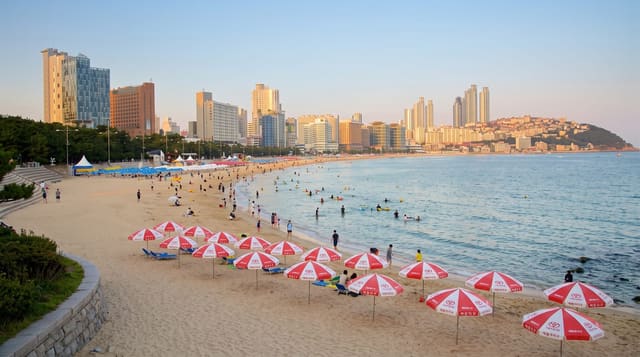
Gwangalli Beach
A Busan city beach facing the Gwangan bridge, which lights up after dark and turns the bay into the city's evening room.
Updated 21 October 2026
Gwangalli is about 1.4 kilometres of sand in the middle of Busan, and what distinguishes it from Haeundae round the headland is the view: the Gwangan bridge, a double-deck suspension crossing seven and a half kilometres long, runs right across the bay in front of it and is lit after dark in changing colours, so the beach functions less as a swimming beach than as the city's evening terrace. The front behind it is solid with cafés, bars and raw-fish restaurants on upper floors positioned for the view, and people sit on the sand with convenience-store beer and fried chicken well past midnight. Drone light shows run over the water on weekend evenings and draw large crowds. The Busan fireworks festival in autumn is staged here and fills the whole bay. Swimming is possible in summer but the water is city water; most people come for the night rather than the day.
The landscape
- The lit bridge - Gwangan across the bay after dark.
- The beach front - cafés and restaurants stacked for the view.
- The drone shows - weekend light displays over the water.
- The evening crowd - the sand as a social space at night.
When to go
Evenings, year-round; April to June and September to October are most comfortable. The fireworks festival in autumn is the peak and packs the bay.
Before you go
It is an urban beach - the water is not clean by resort standards and the appeal is the night view, not the swimming. Weekend evenings are loud and crowded. Restaurant prices on the front carry a view premium.
Nearby
Igidae's coastal walk is round the headland; Haeundae is north-east.
Key facts
Source: Wikidata, item Q495370, read on 18 October 2026.
What to pack for Gwangalli Beach
Chosen from what this place is for. Tap a kit for the full checklist.
- Reef-safe sunscreen - High SPF that will not bleach the coral you are swimming over. Find on Amazon
- Quick-dry towel - A microfibre towel packs small and dries in minutes. Find on Amazon
- Water shoes - Protect your feet on rocky entries, hot sand and sea-urchin spines. Find on Amazon
- Dry bag - Keeps phone, cash and keys safe while you are in the water. Find on Amazon
Some links on this page are Amazon affiliate links - if you buy through them we may earn a small commission at no extra cost to you.
All packing kitsPlan your trip
Where to start if Gwangalli Beach is going on the list.
Booking links on this page are affiliate links - if you book through them we may earn a small commission at no extra cost to you. It never changes what we write about a place.
Opening times, ticket prices and seasonal closures change - check the official source before you go: official site.