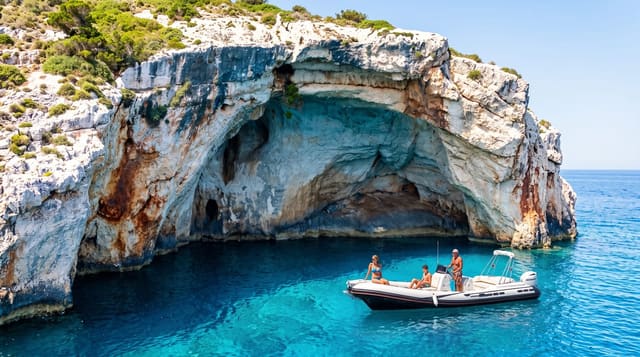
Waenhuiskrans Cave
A sea cave said to be big enough to turn an ox wagon in, reachable only at low tide over sharp rock.
Updated 29 August 2026
Waenhuiskrans means wagon house cliff, and the name is the claim: the sea cave in the limestone cliffs beside Arniston is said to be large enough that a full ox wagon and its span could be turned around inside it. It is reached on foot from the village along the shore and then over rock, and the entrance is only accessible around low tide - the sea fills the approach otherwise, and people have been trapped by a rising tide. Inside, the roof is high and the light comes from the entrance and from the water. The village itself carries both names: Arniston after a troopship wrecked here in 1815 with heavy loss of life, and Waenhuiskrans in Afrikaans. Kassiesbaai, the fishing settlement of whitewashed thatched cottages next to the village, is a national heritage site and still lived in.
What's there
- The wagon claim - a cave said to be large enough to turn an ox wagon inside.
- The tidal access - an entrance open only around low water, and dangerous otherwise.
- The two names - Arniston from an 1815 wreck, Waenhuiskrans from the cave.
- Kassiesbaai - a lived-in fishing village of thatched cottages, a heritage site.
When to go
All year, but only at low tide - check the tide table before walking out. Two hours.
Before you go
People have been cut off by the tide here; do not attempt it on a rising sea. The approach is over sharp, slippery limestone and is not suitable for poor footing. Kassiesbaai is a residential village, not an exhibit - photograph with care and courtesy.
Nearby
De Hoop reserve is west along the coast; Cape Agulhas is south-west.
What to pack for Waenhuiskrans Cave
Chosen from what this place is for. Tap a kit for the full checklist.
- Travel rod + reel - A packable multi-piece rod fits in a case and covers most holiday fishing. Find on Amazon
- Head torch + spare batteries - Hands-free light is essential; caves are truly dark. Find on Amazon
- Comfortable walking shoes - Sightseeing means kilometres of pavement and cobbles daily. Find on Amazon
- A small tackle selection - Hooks, weights, line and a few lures or flies suited to local waters. Find on Amazon
Some links on this page are Amazon affiliate links - if you buy through them we may earn a small commission at no extra cost to you.
All packing kitsPlan your trip
Where to start if Waenhuiskrans Cave is going on the list.
Booking links on this page are affiliate links - if you book through them we may earn a small commission at no extra cost to you. It never changes what we write about a place.
Opening times, ticket prices and seasonal closures change - check the official source before you go: official site.