The Cape of Good Hope
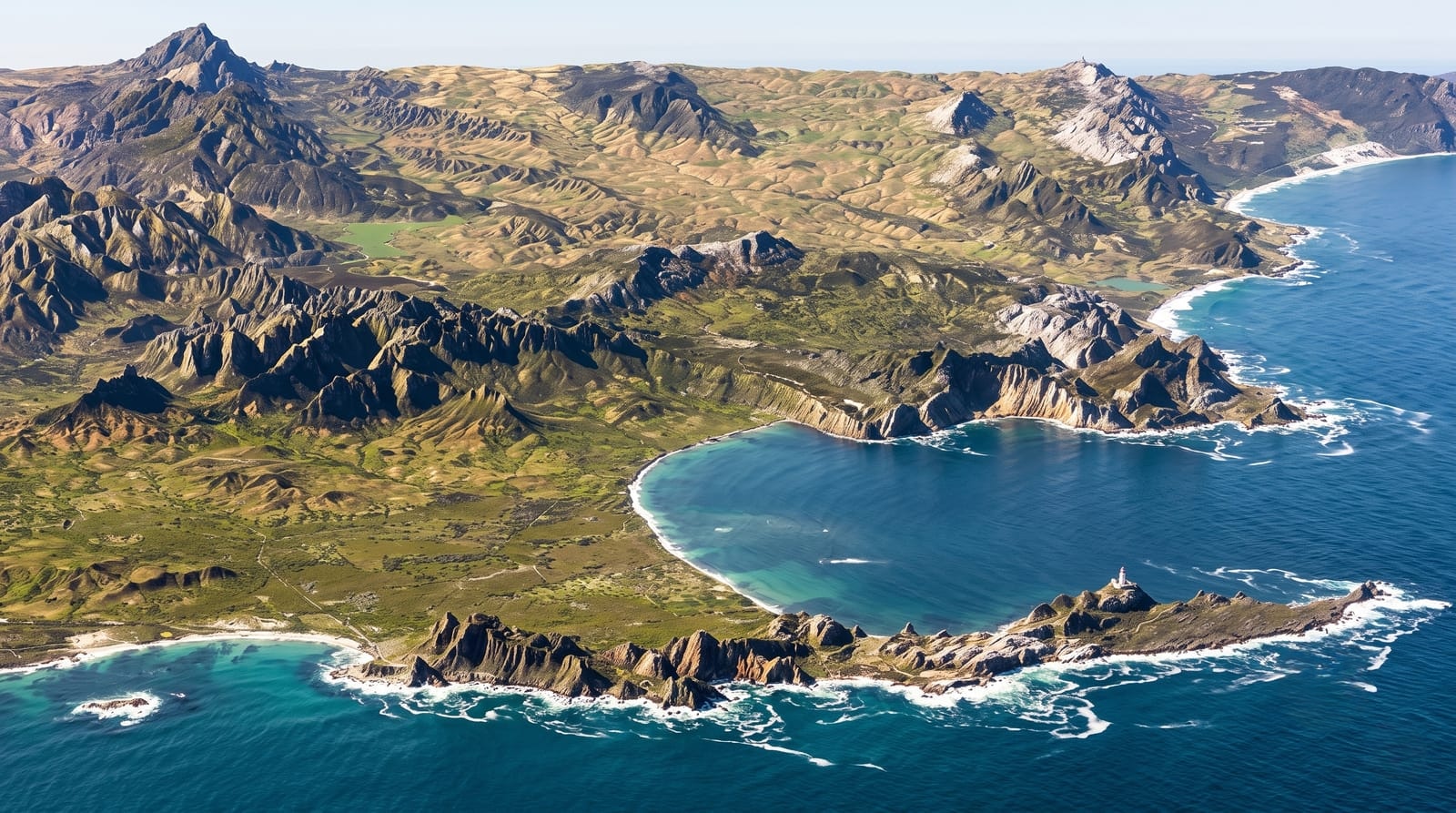
The dramatic tip of the Cape Peninsula - wild cliffs and beaches where two oceans seem to meet, a scenic drive of rugged headlands, baboons and the historic Cape Point lighthouse.
Updated 21 October 2026
AI illustration
UNESCO World Heritage
Getting there
Around The Cape of Good Hope
- By car from Cape Town: about 64 km (40 mi) by road (computed)
- Car park
- Area of the second map
The car park at The Cape of Good Hope
Points on the map
- ACar parkNext to The Cape of Good Hope-34.35697, 18.47359Google Maps
- BThe Cape of Good Hope-34.35715, 18.47396Google Maps
Roads, paths and coordinates as mapped in OpenStreetMap on 16 Nov 2026; distances computed from it. Check signs on site.
Directions to the car park: Google Maps · OpenStreetMap
© OpenStreetMap contributors
The Cape of Good Hope is the dramatic, wild tip of the Cape Peninsula, a rugged headland of towering cliffs, windswept fynbos and pristine beaches near the point where the cold Atlantic and warmer Indian Ocean currents meet. Reached by one of the world's great coastal drives from Cape Town, it is crowned by the old Cape Point lighthouse, roamed by ostriches and baboons, and steeped in the history of the early sea route to the East.
History
Herodotus tells that around 600 BC Necho II sent Phoenicians who sailed for three years from the Red Sea around Africa to the Nile, and that they had the sun on their right as they went west round the south of the continent, the detail that makes the story credible; around 116 BC Eudoxus of Cyzicus, finding a wreck from Gades on the East African coast, set out to sail round Africa himself and was never heard of again. Fra Mauro's map of 1450 tells of a ship from India that sailed past the southern tip around 1420. On 12 March 1488 Bartolomeu Dias became the first European known to reach the cape and called it the Cape of Storms; John II of Portugal renamed it the Cape of Good Hope for the hope of a sea route to India, and in 1652 Jan van Riebeeck set up the Dutch East India Company's supply station in Table Bay, some 50 kilometres north, the start of Cape Town (Wikipedia, Cape of Good Hope).
The landscape
- Cape Point - the dramatic headland and the old lighthouse.
- The Cape of Good Hope - the wild, famous southwestern tip.
- The coastal drive - the scenic route past Chapman's Peak and the coves.
- The wildlife - the ostriches, baboons and fynbos of the reserve.
When to go
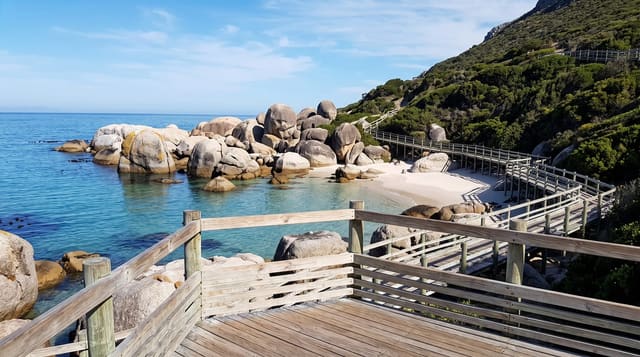
October to April, the warmer summer, for the best weather, though the Cape is famously windy year-round. It combines beautifully with the whole peninsula drive, including the penguins at Boulders and the fishing villages, into a full day.
Things to know
It is often extremely windy and can be cold and misty even in summer, so bring layers. The baboons are wild and bold, and will grab food and raid cars, so keep windows up and never feed them. It is not the southernmost tip of Africa, which is Cape Agulhas further east, a common misconception.
Nearby
Boulders Beach penguins, Simon's Town and the Chapman's Peak drive are along the peninsula.
Key facts
Source: Wikidata, item Q4092, read on 18 October 2026.
Opening times, ticket prices and seasonal closures change - check the official source before you go: official site.
Plan your trip
Where to start if The Cape of Good Hope is going on the list.
Booking links on this page are affiliate links - if you book through them we may earn a small commission at no extra cost to you. It never changes what we write about a place.
What to pack for The Cape of Good Hope
Chosen from what this place is for. Tap a kit for the full checklist.
- Broken-in walking shoes or boots - Grip and ankle support matter more than looks; never hike in brand-new boots. Find on Amazon
- Travel rod + reel - A packable multi-piece rod fits in a case and covers most holiday fishing. Find on Amazon
- Reef-safe sunscreen - High SPF that will not bleach the coral you are swimming over. Find on Amazon
- Binoculars - The single best wildlife tool - even a compact pair transforms a sighting. Find on Amazon
Some links on this page are Amazon affiliate links - if you buy through them we may earn a small commission at no extra cost to you.
All packing kits