Bardejov
A UNESCO-listed medieval town in the far northeast, its square of burgher houses and Gothic church still ringed by walls and bastions.
Updated 21 October 2026
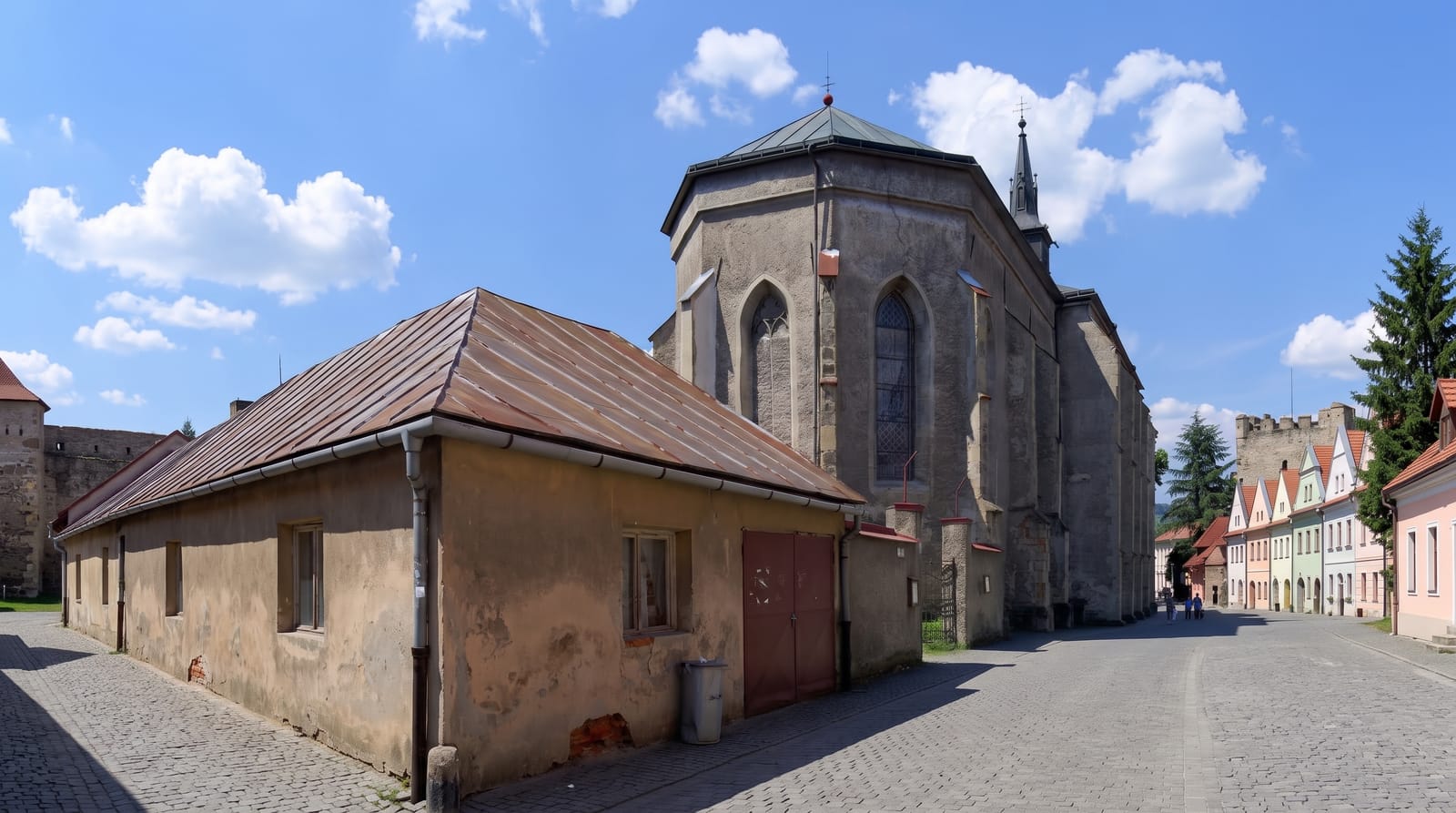
AI illustration
UNESCO World Heritage
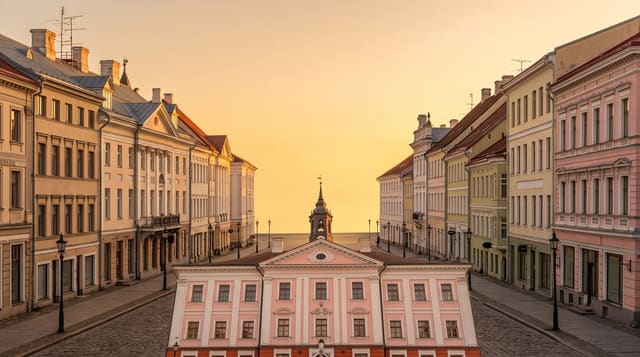
Bardejov grew rich in the Middle Ages on the trade route north into Poland, and it spent that money on a town that has survived almost intact: a long rectangular square lined with tall gabled burgher houses in pastel colours, closed at one end by the fifteenth-century town hall and dominated by the Gothic basilica of Saint Giles, whose interior holds eleven medieval winged altarpieces, one of the largest surviving collections in place anywhere in Europe. Around the whole centre runs a remarkably complete circuit of town walls with bastions and gates. UNESCO listed the town both for this ensemble and for its Jewish suburbium just outside the walls, a rare surviving complex of synagogue, ritual bath and assembly house. A few kilometres north lies Bardejovské Kúpele, a spa in the woods with a fine open-air museum of folk architecture.
History
The town grew from an old Slavic settlement joined, probably in the 13th century, by German settlers, and its name, recorded as Bardujef in 1241, may come from a short form of Bartholomew; it first appears in the 1240s, when its monks complained to King Béla IV of Hungary that Eperjes, today's Prešov, had crossed its borders. Heavily fortified in the 14th century, it became a centre of trade with Poland with more than 50 guilds, a royal town in 1376 and later a free royal town, and in October 1410 the Polish king Władysław II Jagiełło defeated Sigismund of Hungary at the Battle of Bardejov. Its golden age ended in the 16th century amid wars and epidemics; it recovered in the 18th, when Slovaks and Hasidic Jews settled in numbers and a Jewish quarter with a synagogue and ritual baths grew up in the north-western suburbs, and a railway reached it in 1893 (Wikipedia, Bardejov).
The main sights
- The main square - the gabled burgher houses and the old town hall.
- Basilica of Saint Giles - eleven medieval winged altarpieces still in place.
- The town walls - the near-complete circuit of bastions and gates.
- The Jewish suburbium - the synagogue complex outside the walls.
When to go
May to September is warmest and best for walking the walls; the town is quiet year-round, which is much of its appeal. The spa and open-air museum a few kilometres north add a half-day. Winter is cold but the square under snow is lovely.
Good to know
It is a long way from anywhere, in the far northeastern corner near the Polish border, which is exactly why it stayed intact and why few visitors reach it. The town is small and a day covers it comfortably. Some of the museums keep limited hours and close on Mondays. The Jewish suburbium is under long-term restoration and access varies.
Nearby
The wooden churches of the northeast are scattered nearby; Košice is about an hour and a half south.
Key facts
Source: Wikidata, item Q27007, read on 18 October 2026.
What to pack for Bardejov
Chosen from what this place is for. Tap a kit for the full checklist.
- Warm base layers - Merino or synthetic against the skin - never cotton, which chills when damp. Find on Amazon
- Comfortable walking shoes - Sightseeing means kilometres of pavement and cobbles daily. Find on Amazon
- Modest clothing - Shoulders and knees covered - the single most common requirement. Find on Amazon
- An insulated + windproof jacket - A down or synthetic layer under a hard shell handles most cold. Find on Amazon
Some links on this page are Amazon affiliate links - if you buy through them we may earn a small commission at no extra cost to you.
All packing kitsPlan your trip
Where to start if Bardejov is going on the list.
Booking links on this page are affiliate links - if you book through them we may earn a small commission at no extra cost to you. It never changes what we write about a place.
Opening times, ticket prices and seasonal closures change - check the official source before you go: official site.