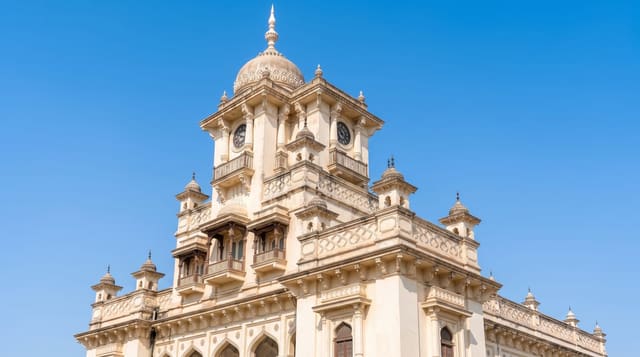
Gatchina Palace
A grey stone palace built like a castle, with an underground passage to a lake and an echo that answers questions.
Updated 18 October 2026
UNESCO World Heritage
Gatchina is the odd one among the imperial suburban palaces: built from 1766 by Antonio Rinaldi for Grigory Orlov in local grey limestone rather than stucco and colour, with towers and a moat, so it reads as a castle rather than a baroque residence. Paul I took it over and made it his principal home, adding a parade ground and a military character that suited him. Later Alexander III lived here for most of his reign, which made Gatchina effectively the seat of government in the 1880s. Under the palace runs a stone passage of about a hundred and thirty metres from the cellars out to the Silver lake, built as a private exit; at its far end is a documented acoustic effect, an echo that returns the last syllables of a word clearly enough that guides ask it questions and it appears to answer. The palace was burned in the war and restoration has run since 1976, room by room, and continues.
History
In 1765 Catherine the Great bought the small Gatchina manor, 40 kilometres south of Saint Petersburg, from Prince Boris Kurakin and gave it to her favourite, Count Grigory Orlov, who had reportedly organised the killing of Peter III that brought her to the throne. Building began on 30 May 1766 on a hill by Lake Serebryany to a design by the Italian architect Antonio Rinaldi, mixing Russian features with those of a medieval castle and an English hunting lodge and faced with local Paritsy limestone and Pudost stone; it was the first palace in the city's suburbs, the main structure stood by the end of 1768, and it was completed in 1781, two years before Orlov died. Catherine then bought it from his heirs for her son, the future Paul I, and it became a favourite residence of the imperial family and an important site of Russian politics in the 19th century; it has been a museum and park since 1917, and in 1990 it became a World Heritage Site (Wikipedia, Great Gatchina Palace).
What's there
- The grey stone castle - a palace in local limestone with towers and a moat.
- The underground passage - a hundred and thirty metres from the cellars to the lake.
- The echo - an acoustic effect at the passage end that returns final syllables.
- The residents - Orlov, then Paul I, then Alexander III for most of his reign.
When to go
May to September for the park and lakes. Half a day. The palace is open year-round but restoration closes rooms.
Good to know
Restoration is ongoing and a substantial part of the palace is still closed - it is much less complete than Peterhof or Tsarskoye Selo. The passage is visited on the guided route only. The park is large and partly unrestored. Fewer facilities than the other palace towns.
Nearby
The Priory Palace is across the park; St Petersburg is north.
Key facts
Source: Wikidata, item Q7461, read on 18 October 2026.
What to pack for Gatchina Palace
Chosen from what this place is for. Tap a kit for the full checklist.
- Head torch + spare batteries - Hands-free light is essential; caves are truly dark. Find on Amazon
- Comfortable walking shoes - Sightseeing means kilometres of pavement and cobbles daily. Find on Amazon
- Grippy closed shoes - Cave floors are wet, muddy and slick with formations. Find on Amazon
- A slim anti-theft daypack - Zips that close properly; keep it in front in crowds and on transit. Find on Amazon
Some links on this page are Amazon affiliate links - if you buy through them we may earn a small commission at no extra cost to you.
All packing kitsPlan your trip
Where to start if Gatchina Palace is going on the list.
Booking links on this page are affiliate links - if you book through them we may earn a small commission at no extra cost to you. It never changes what we write about a place.
Opening times, ticket prices and seasonal closures change - check the official source before you go: official site.