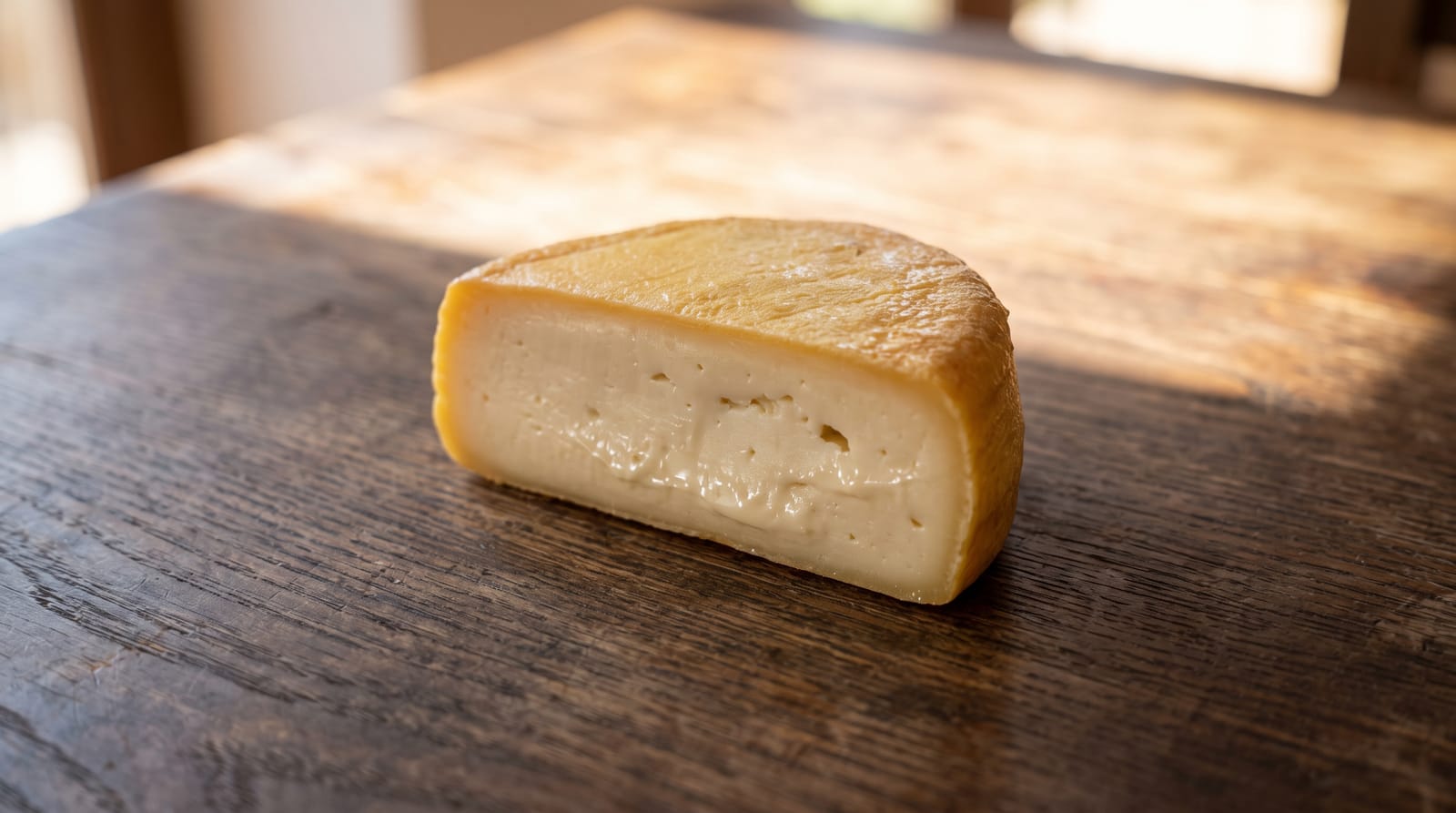
Adyghe Cheese
A fresh soft cheese set with whey rather than rennet, eaten young or smoked over a fire until it turns amber.
Updated 28 August 2026
Adyghe cheese is made by heating milk and curdling it with soured whey rather than rennet, then draining the curd in wicker baskets, which leaves the basket weave printed on the surface - a soft, mild, faintly sour cheese eaten within days, close in character to fresh cheeses across the Caucasus. It is a Circassian food and carries a fair amount of tradition with it, including a legend attaching its invention to a young woman who saved the herds. Two forms are sold: the fresh white one, and the smoked version, hung over a smouldering fire for hours until the outside goes deep amber and hard while the inside stays soft, which keeps far longer and travels. It is used cooked as well as raw, fried in slices or baked in pastry. Roadside stalls across Adygea and the Krasnodar region sell it, and the farm-made version is a different thing from the industrial one.
What to look for
- The basket weave - the pattern printed on the surface by the draining baskets.
- The whey setting - curdled with soured whey rather than rennet.
- The smoked form - hung over a fire until amber outside and soft within.
- The roadside stalls - farm cheese sold along the roads across Adygea.
When to go
All year. An hour to buy and taste. Farm stalls are along the mountain roads.
Practical notes
Fresh cheese keeps only a few days and needs cold; the smoked version travels better. Industrial supermarket versions are blander than farm-made. Roadside stalls vary in hygiene and the milk is often unpasteurised, which matters for some people.
Nearby
Maykop is the regional centre; the Lago-Naki plateau is south in the mountains.
What to pack for Adyghe Cheese
Chosen from what this place is for. Tap a kit for the full checklist.
- A reusable bag or container - For market produce and cutting down on packaging. Find on Amazon
- Wet wipes + hand sanitiser - Street food and washbasins do not always go together. Find on Amazon
Some links on this page are Amazon affiliate links - if you buy through them we may earn a small commission at no extra cost to you.
All packing kitsPlan your trip
Where to start if Adyghe Cheese is going on the list.
Booking links on this page are affiliate links - if you book through them we may earn a small commission at no extra cost to you. It never changes what we write about a place.
Opening times, ticket prices and seasonal closures change - check the official source before you go: official site.