Romanian Cuisine
Hearty, rustic comfort food - the beloved cabbage rolls sarmale, grilled mici sausages, polenta mamaliga and rich stews, shaped by Balkan, Ottoman and Central European traditions.
Updated 31 August 2026
AI illustration
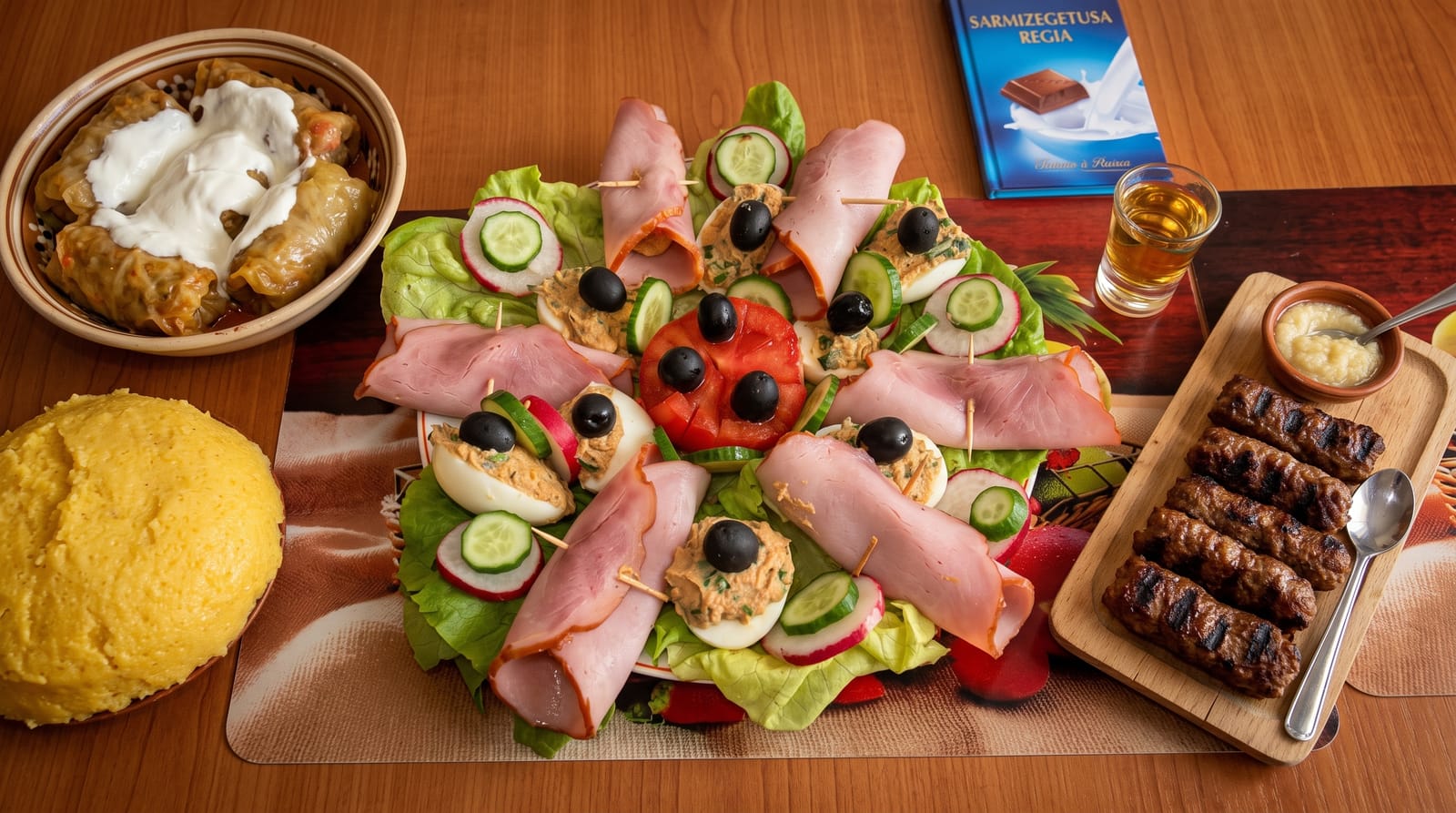
Romanian cuisine is hearty, rustic and comforting, drawing on Balkan, Ottoman, Hungarian and Central European influences and rooted in the country's rich farmland. Its most beloved dish is sarmale, cabbage or vine leaves stuffed with spiced minced meat and rice, traditionally served with polenta, or mamaliga, and a dollop of sour cream. Alongside come the grilled skinless sausages mici, hearty bean and meat soups, rich stews, and the plum brandy tuica, all generous, filling country fare.
What's there
- Sarmale - the stuffed cabbage rolls, the national favourite.
- Mici - the grilled skinless minced-meat sausages.
- Mamaliga - the polenta served with cheese and sour cream.
- The soups and tuica - the hearty sour soups and plum brandy.
When to go
Year-round; the hearty food is especially welcome in the cold months, and traditional taverns and rural guesthouses serve the most authentic home-style cooking, while the plum brandy tuica is the traditional welcome.
Practical notes
Romanian food is hearty, meat-heavy and rich rather than light or varied, so its appeal is comforting country cooking rather than refinement. Portions are generous. The home-style food at rural guesthouses and traditional taverns is far better than tourist-strip restaurants. The tuica plum brandy is potent. It is filling, satisfying and good value.
Nearby
Every region has its specialities; Transylvania shows the Hungarian and Saxon influence.
What to pack for Romanian Cuisine
Chosen from what this place is for. Tap a kit for the full checklist.
- A reusable bag or container - For market produce and cutting down on packaging. Find on Amazon
- Wet wipes + hand sanitiser - Street food and washbasins do not always go together. Find on Amazon
Some links on this page are Amazon affiliate links - if you buy through them we may earn a small commission at no extra cost to you.
All packing kitsPlan your trip
Where to start if Romanian Cuisine is going on the list.
Booking links on this page are affiliate links - if you book through them we may earn a small commission at no extra cost to you. It never changes what we write about a place.
Opening times, ticket prices and seasonal closures change - check the official source before you go: official site.