Purple Island
A mangrove island near Al Khor named for a Bronze Age dye industry found there.
Updated 3 September 2026
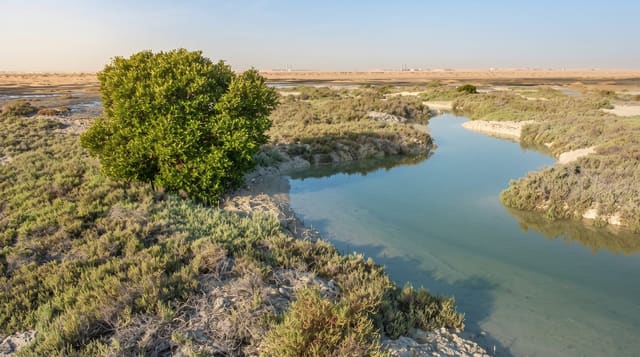
Bin Ghannam island near Al Khor is called Purple Island because excavation found heaps of crushed murex shells there, the remains of a Bronze Age operation extracting purple dye, the same industry the Phoenicians are known for and evidence of it in the Gulf around four thousand years ago. Mangroves surround the island and a causeway reaches it. Herons, flamingos and waders use the channels. The causeway floods at high spring tides, which occasionally strands people who walked out at low water.
What you'll find
- The shell mounds - crushed murex left by Bronze Age dye extraction.
- The mangroves - the stands surrounding the island and its channels.
- The birdlife - herons, flamingos and waders through the winter.
- The causeway - the crossing giving access on foot.
When to go
November to March is comfortable and best for birds. Flamingos are present through the cooler months. Tide determines how much of the channels can be paddled.
Good to know
The archaeology is not presented and there is nothing to see of it beyond shell fragments. Facilities are minimal. Mosquitoes in the mangroves are a real problem at dusk.
Nearby
Al Khor is south, and Al Thakira is north.
What to pack for Purple Island
Chosen from what this place is for. Tap a kit for the full checklist.
- Broken-in walking shoes or boots - Grip and ankle support matter more than looks; never hike in brand-new boots. Find on Amazon
- Quick-dry clothing - Board shorts or synthetics that shrug off spray and dry fast. Find on Amazon
- Binoculars - The single best wildlife tool - even a compact pair transforms a sighting. Find on Amazon
- Layers + a waterproof shell - Mountain weather turns fast; a packable rain jacket saves the day. Find on Amazon
Some links on this page are Amazon affiliate links - if you buy through them we may earn a small commission at no extra cost to you.
All packing kitsPlan your trip
Where to start if Purple Island is going on the list.
Booking links on this page are affiliate links - if you book through them we may earn a small commission at no extra cost to you. It never changes what we write about a place.
Opening times, ticket prices and seasonal closures change - check the official source before you go: official site.