Mona Island
An uninhabited limestone island in the passage west of Puerto Rico, ringed with cliffs and caves, reached only by permit.
Updated 22 October 2026
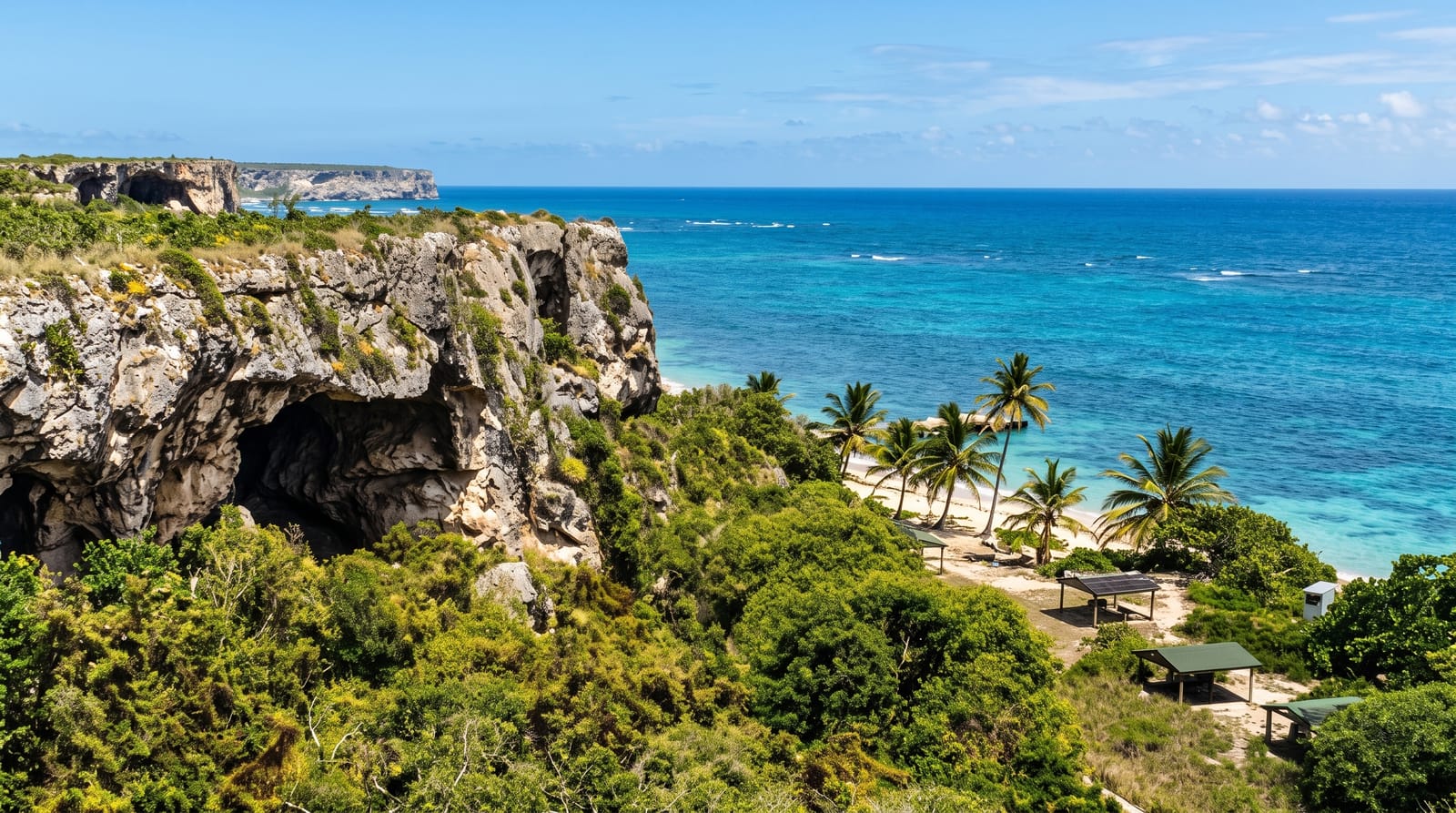
AI illustration
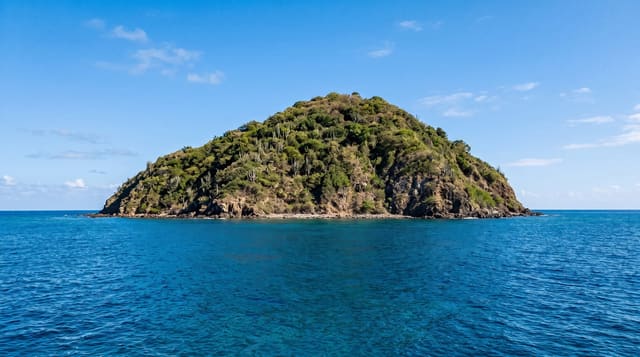
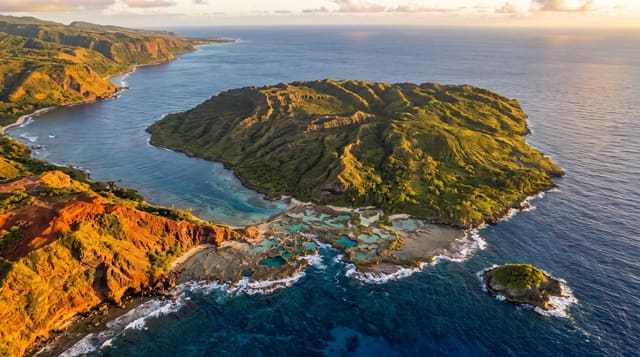
Mona lies about sixty-five kilometres west of Puerto Rico in a passage of open ocean, an uninhabited plateau of limestone ringed by cliffs up to eighty metres high and undercut with caves, and it is often called the Galápagos of the Caribbean for its endemic species: an iguana found nowhere else, a ground boa, seabird colonies and hawksbill turtles nesting on its few beaches. The caves were mined for guano in the nineteenth century and hold Taíno wall markings made centuries earlier, some of the most significant indigenous cave art in the Caribbean. Nobody lives here beyond rotating rangers, there is no accommodation, and everything including water must be carried in. Access is by permit only, allocated by lottery.
History
Stone tools from a rock shelter date from around 3000 BC, and the Taíno lived on the island until the Spanish arrived. Columbus passed it on his second voyage in 1493, Nicolás de Ovando was sent here in 1502 with 2,000 settlers, more than the small island could support, and by 1515 it was an important stop on the routes between Spain and the Americas (Wikipedia, Isla de Mona).
What's there
- The Mona iguana - the large endemic lizard found only on this island.
- The cliffs and caves - eighty-metre limestone walls undercut with cave systems.
- The Taíno cave markings - indigenous drawings deep inside the caves.
- The reefs - clear water and largely unfished coral around the island.
When to go
December to April has the calmest crossing and the driest weather on the island; the passage is notoriously rough and trips are cancelled regularly in wind. Permits are limited and allocated in advance, so the season is effectively decided by when your permit lands.
Good to know
This is a genuine expedition, not a day trip: permits are limited and issued by lottery, you must travel with a licensed operator, camping is the only accommodation, and you carry in all your water and food and carry out all waste. The crossing is four to six hours of open ocean and frequently rough. Anyone wanting a beach day should go to Culebra instead.
Nearby
Cabo Rojo and Mayagüez are the departure points on the west coast.
Key facts
Source: Wikidata, item Q94899, read on 18 October 2026.
What to pack for Mona Island
Chosen from what this place is for. Tap a kit for the full checklist.
- Reef-safe sunscreen - High SPF that will not bleach the coral you are swimming over. Find on Amazon
- Head torch + spare batteries - Hands-free light is essential; caves are truly dark. Find on Amazon
- Binoculars - The single best wildlife tool - even a compact pair transforms a sighting. Find on Amazon
- Shelter suited to the place - Tent, tarp or hut booking - match it to the terrain and rules. Find on Amazon
Some links on this page are Amazon affiliate links - if you buy through them we may earn a small commission at no extra cost to you.
All packing kitsPlan your trip
Where to start if Mona Island is going on the list.
Booking links on this page are affiliate links - if you book through them we may earn a small commission at no extra cost to you. It never changes what we write about a place.
Opening times, ticket prices and seasonal closures change - check the official source before you go: official site.