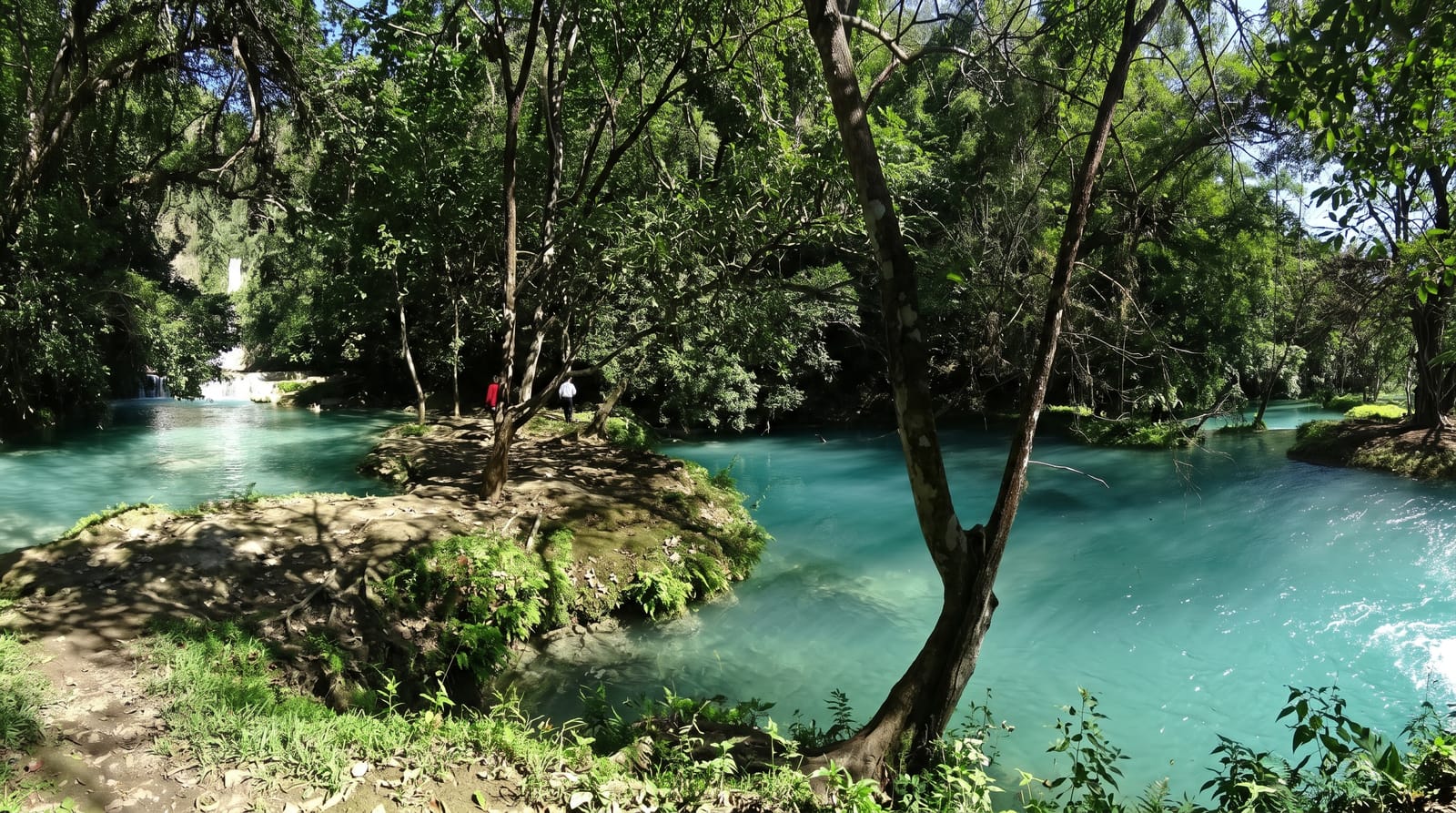
Poço da Alagoinha
A wall of about twenty waterfalls dropping through moss and fern into a green pool on Flores, the wettest Azorean island.
Updated 28 August 2026
Flores gets more rain than anywhere else in the Azores, and the Poço da Alagoinha - also called Poço da Ribeira do Ferreiro - is what that produces: an amphitheatre of basalt where water emerges from the whole face of the cliff and comes down in something like twenty separate falls, some threads and some substantial, into a still green pool at the bottom, with the rock covered in moss, fern and dripping vegetation. It is reached by a path of about twenty minutes from the road near Fajãzinha, largely level but wet and slippery, crossing a stream. Swimming in the pool is discouraged and at times prohibited. The whole western side of Flores is like this on a smaller scale, with the fajãs - flat shelves of land at the cliff base - and waterfalls along the coast road. Flores has few flights and weather cancels them regularly.
What you'll find
- The falls - around twenty separate drops down one basalt amphitheatre.
- The pool - a still green basin at the base of the wall.
- The vegetation - moss, fern and constant dripping across the whole face.
- The rainfall - the wettest island in the Azores, and why this exists.
When to go
May to September for the path and flights; the falls are fullest after rain, which is most of the year. One to two hours including the walk.
What to expect
The path is muddy and slippery in every season. Swimming is discouraged and at times banned. Flores has limited flights and fog cancels them frequently - allow spare days. Facilities near the site are minimal.
Nearby
Fajã Grande is on the coast below; Rocha dos Bordões is south.
What to pack for Poço da Alagoinha
Chosen from what this place is for. Tap a kit for the full checklist.
- Broken-in walking shoes or boots - Grip and ankle support matter more than looks; never hike in brand-new boots. Find on Amazon
- Reef-safe sunscreen - High SPF that will not bleach the coral you are swimming over. Find on Amazon
- Layers + a waterproof shell - Mountain weather turns fast; a packable rain jacket saves the day. Find on Amazon
- Quick-dry towel - A microfibre towel packs small and dries in minutes. Find on Amazon
Some links on this page are Amazon affiliate links - if you buy through them we may earn a small commission at no extra cost to you.
All packing kitsPlan your trip
Where to start if Poço da Alagoinha is going on the list.
Booking links on this page are affiliate links - if you book through them we may earn a small commission at no extra cost to you. It never changes what we write about a place.
Opening times, ticket prices and seasonal closures change - check the official source before you go: official site.