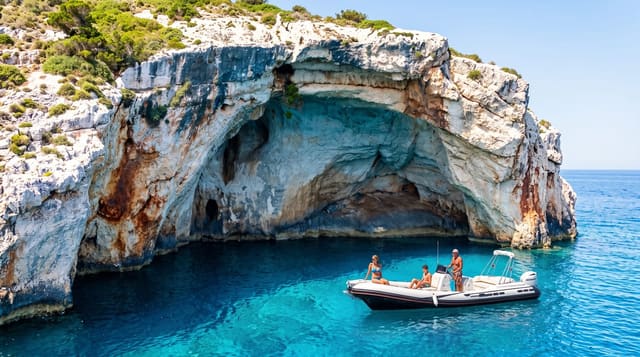
Boca do Inferno
A collapsed sea cave outside Cascais where Atlantic swell drives into an arch and detonates, loudest in winter.
Updated 21 October 2026
The Boca do Inferno is a sea cave in the limestone west of Cascais whose roof has fallen in, leaving a chasm connected to the open Atlantic by an arch. On a calm summer day it is a hole in the rock with green water sloshing through it and people photographing themselves at the railing. In a winter storm it is the reason for the name: swell funnels through the arch and erupts up the shaft, throwing spray over the cliff and the road, with a boom you feel through the ground. Walkways and railings run around the rim. The site has a strange footnote - in 1930 Aleister Crowley faked his own death here with a note left on the rocks, a stunt arranged with the Portuguese poet Fernando Pessoa, and reappeared in Berlin three weeks later. It was also the first sea cave ever filmed, in the 1896 British short A Sea Cave Near Lisbon. There are stalls and a café at the top.
Highlights
- The collapsed cave - a chasm linked to the sea by a rock arch.
- The winter surge - swell erupting up the shaft and over the cliff.
- The walkways - railed paths around the rim of the hole.
- The 1930 hoax - Crowley's staged death, arranged with Pessoa.
When to go
October to March for the dramatic version; summer is calm and much less impressive. Thirty to sixty minutes. Time it with a storm swell for the full effect.
Practical notes
In calm weather it underwhelms - it is simply a hole in the rock. In storms the cliff edge is dangerous; stay behind railings. Crowded with coach stops in season. Persistent souvenir stalls.
Nearby
Cascais is east along the coast road; Guincho and the dunes are west.
Key facts
Source: Wikidata, item Q888949, read on 18 October 2026.
What to pack for Boca do Inferno
Chosen from what this place is for. Tap a kit for the full checklist.
- Broken-in walking shoes or boots - Grip and ankle support matter more than looks; never hike in brand-new boots. Find on Amazon
- Head torch + spare batteries - Hands-free light is essential; caves are truly dark. Find on Amazon
- Loose, light, long clothing - Covering up beats bare skin in the desert - and locals dress this way for a reason. Find on Amazon
- Layers + a waterproof shell - Mountain weather turns fast; a packable rain jacket saves the day. Find on Amazon
Some links on this page are Amazon affiliate links - if you buy through them we may earn a small commission at no extra cost to you.
All packing kitsPlan your trip
Where to start if Boca do Inferno is going on the list.
Booking links on this page are affiliate links - if you book through them we may earn a small commission at no extra cost to you. It never changes what we write about a place.
Opening times, ticket prices and seasonal closures change - check the official source before you go: official site.