Beja Castle
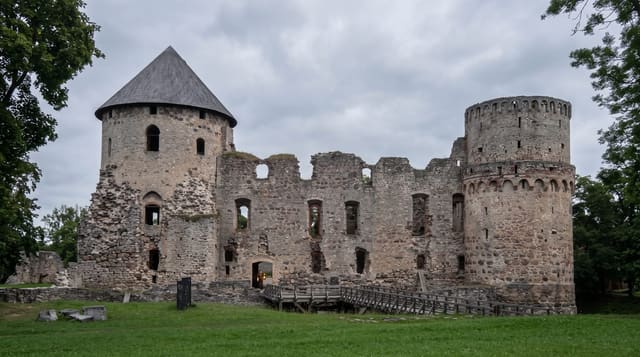
The tallest medieval keep in Portugal, forty metres of marble-trimmed tower over the flat Baixo Alentejo.
Updated 18 October 2026
Beja's castle was rebuilt by Dinis around 1300 on Roman and Moorish foundations, and its keep is the tallest in Portugal at about forty metres - a square tower of stone with marble details, battlemented, with three vaulted floors reached by a spiral stair and a terrace at the top. From it the Baixo Alentejo is spread out flat in every direction, wheat and cork to the horizon with almost nothing to interrupt the view, which is precisely why the tower is that height. The town below was Roman Pax Julia, an important centre, and traces survive along with a Visigothic church at Santo Amaro, one of the few pre-Moorish churches in Portugal, and the Convento da Conceição, associated with the Letters of a Portuguese Nun, a seventeenth-century epistolary sensation whose authorship is still argued about.
History
The walls of Roman Pax Julia went up between the 3rd and 4th centuries, and the town stayed important under the Suebi, the Visigoths and the Moors. Afonso Henriques took it in 1159 but abandoned it four months later. In 1253 Afonso III began rebuilding the fortress, by then badly decayed, and gave the town a charter the next year; King Dinis ordered the keep in 1310, and work on the walls went on from 1347. Manuel I improved the defences in the early 16th century, bastions were added in the 1660s and 1670s, and part of the walls was pulled down in 1790 to make way for a church. In 1808, after Beja resisted Napoleon's army, troops under General Junot killed about 1,200 people in the region. The castle was declared a National Monument in 1910 (Wikipedia, Castle of Beja).
The main sights
- The keep - about forty metres, the tallest medieval tower in Portugal.
- The terrace view - flat Alentejo wheat and cork country to the horizon.
- The vaulted floors - three interior levels on a spiral stair.
- The town - Roman Pax Julia beneath, with a Visigothic church at Santo Amaro.
When to go
March to June and September to November. One to two hours. Beja in July and August regularly exceeds forty degrees.
Things to know
The stair is narrow, steep and spiral, with no lift - it defeats a lot of visitors. Extreme summer heat in this part of the Alentejo. The terrace is exposed and windy. Museum hours in the town vary.
Nearby
The Convento da Conceição museum is in the town; Mértola is south down the Guadiana.
Key facts
Source: Wikidata, item Q5049757, read on 18 October 2026.
What to pack for Beja Castle
Chosen from what this place is for. Tap a kit for the full checklist.
- Comfortable walking shoes - Sightseeing means kilometres of pavement and cobbles daily. Find on Amazon
- A slim anti-theft daypack - Zips that close properly; keep it in front in crowds and on transit. Find on Amazon
- A refillable water bottle - Many cities have public fountains; save money and plastic. Find on Amazon
- A light layer + compact umbrella - For museum air-con and a sudden shower. Find on Amazon
Some links on this page are Amazon affiliate links - if you buy through them we may earn a small commission at no extra cost to you.
All packing kitsPlan your trip
Where to start if Beja Castle is going on the list.
Booking links on this page are affiliate links - if you book through them we may earn a small commission at no extra cost to you. It never changes what we write about a place.
Opening times, ticket prices and seasonal closures change - check the official source before you go: official site.