Wdzydze Open-Air Museum
The oldest open-air museum in Poland, started in 1906 by a village teaching couple in their own cottage.
Updated 29 August 2026
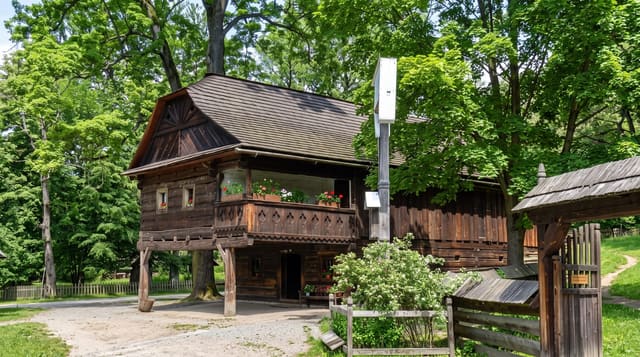
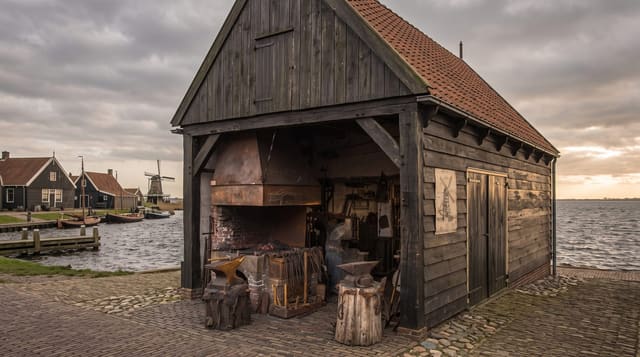
Izydor and Teodora Gulgowski were teachers in Wdzydze who began in 1906 to fill their own cottage with Kashubian furniture, tools, pottery and textiles and to open it to visitors, and that makes this the first open-air museum in Poland and one of the earliest in Europe. It grew after their deaths into a site of about twenty-two hectares with around fifty buildings brought from across Kashubia and the neighbouring Kociewie region: cottages, a manor, granaries, a windmill, a smithy, a school, and two wooden churches, one of them with a painted interior. The interiors are furnished by household and date. It sits on the shore of Lake Wdzydze, a large lake formed of four connected basins in the shape of a cross, in the middle of the Kashubian lake district. Craft demonstrations, especially weaving and pottery, run in season, and there is an annual harvest event.
What's there
- Poland's first skansen - begun in 1906 in a teaching couple's own cottage.
- Around fifty buildings - cottages, manor, mill, school and two wooden churches.
- Furnished interiors - arranged by household and by date.
- A cross-shaped lake - four connected basins, at the museum's edge.
When to go
May to September. Half a day.
Things to know
Open seasonally with little winter access. Some buildings are opened only with a guide. The site involves a lot of walking. The village has limited services.
Nearby
Wdzydze lake and the Kashubian lake district are around it; Chmielno is north.
What to pack for Wdzydze Open-Air Museum
Chosen from what this place is for. Tap a kit for the full checklist.
- Comfortable walking shoes - Sightseeing means kilometres of pavement and cobbles daily. Find on Amazon
- A slim anti-theft daypack - Zips that close properly; keep it in front in crowds and on transit. Find on Amazon
- A refillable water bottle - Many cities have public fountains; save money and plastic. Find on Amazon
- A light layer + compact umbrella - For museum air-con and a sudden shower. Find on Amazon
Some links on this page are Amazon affiliate links - if you buy through them we may earn a small commission at no extra cost to you.
All packing kitsPlan your trip
Where to start if Wdzydze Open-Air Museum is going on the list.
Booking links on this page are affiliate links - if you book through them we may earn a small commission at no extra cost to you. It never changes what we write about a place.
Opening times, ticket prices and seasonal closures change - check the official source before you go: official site.