Lidzbark Warminski Castle
The best-preserved bishops' castle in the north, with a two-storey Gothic cloister and Copernicus in its history.
Updated 29 August 2026
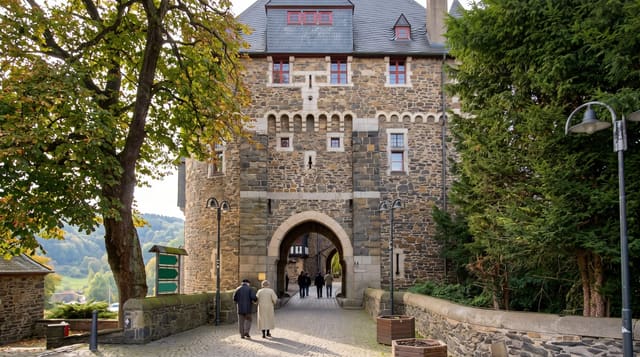
Lidzbark was the main residence of the prince-bishops of Warmia from 1350 to 1795 and the castle they built is the most complete of its kind in northern Poland: a square brick block around a courtyard with a corner tower, a drawbridge and outer ward, and inside, a two-storey cloister of star-vaulted Gothic arcades running round all four sides of the courtyard, which is the thing that survives nowhere else at this quality. There are wall paintings of the fourteenth and fifteenth centuries in the chapel and the great refectory. Nicolaus Copernicus lived here for several years from 1503 as physician and secretary to his uncle, Bishop Lucas Watzenrode, and worked on the ideas that became his book while in residence. The castle is a branch of the Olsztyn museum with painting, icons and Warmian material. A rococo orangery of the 1720s stands in the grounds.
Highlights
- A two-storey Gothic cloister - star vaults round all four sides of the courtyard.
- Medieval wall paintings - in the chapel and the great refectory.
- Copernicus's residence - years spent here as his uncle's physician and secretary.
- A rococo orangery - of the 1720s, in the grounds.
When to go
April to October. Half a day.
What to expect
The museum is regional in scale and the labelling mostly Polish. Closed Mondays. Winter hours are short. The town around it has little else.
Nearby
Swieta Lipka is south-east; Olsztyn is south.
What to pack for Lidzbark Warminski Castle
Chosen from what this place is for. Tap a kit for the full checklist.
- Comfortable walking shoes - Sightseeing means kilometres of pavement and cobbles daily. Find on Amazon
- A slim anti-theft daypack - Zips that close properly; keep it in front in crowds and on transit. Find on Amazon
- A refillable water bottle - Many cities have public fountains; save money and plastic. Find on Amazon
- A light layer + compact umbrella - For museum air-con and a sudden shower. Find on Amazon
Some links on this page are Amazon affiliate links - if you buy through them we may earn a small commission at no extra cost to you.
All packing kitsPlan your trip
Where to start if Lidzbark Warminski Castle is going on the list.
Booking links on this page are affiliate links - if you book through them we may earn a small commission at no extra cost to you. It never changes what we write about a place.
Opening times, ticket prices and seasonal closures change - check the official source before you go: official site.