Calauit Safari Park
An island off Busuanga where giraffes and zebras brought from Kenya in 1977 graze alongside native Palawan wildlife.
Updated 21 October 2026
AI illustration
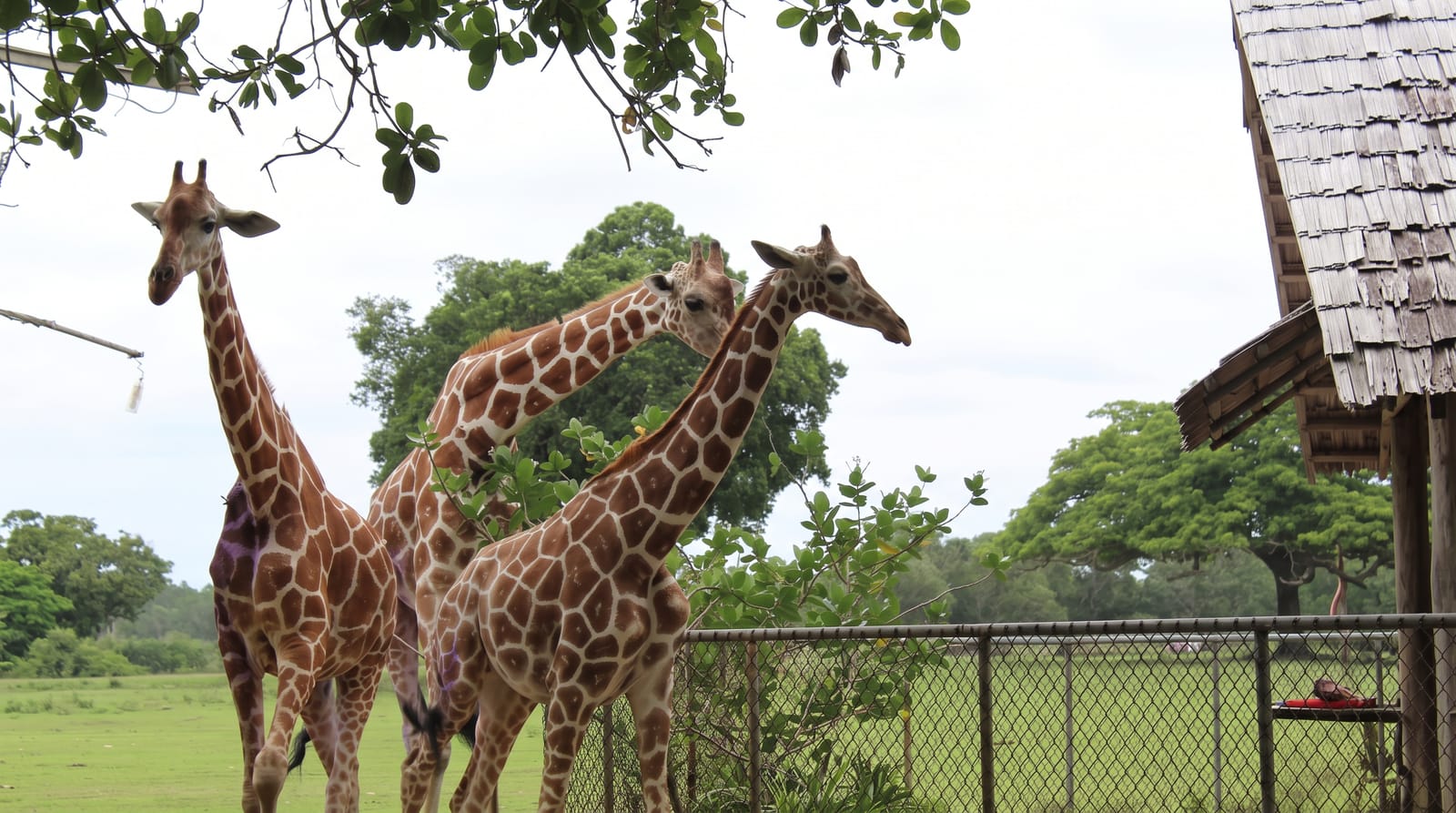
Calauit is an island at the northwestern corner of Busuanga where, in 1977, a consignment of African animals - giraffe, zebra, waterbuck, eland, impala - was released onto grassland as part of a conservation transfer from Kenya. Several of the species bred and their descendants still graze there, which produces the odd sight of giraffes against Palawan scrub. The park also holds native animals: Calamian deer, found nowhere else, Palawan bearcat, porcupine and mouse deer, mostly in enclosures near the visitor area. The visit is a guided circuit by truck across the grassland, a stop where giraffes come to be hand-fed leaves, and a walk through the native section. Getting there is most of the day.
History
The island was declared a game preserve and wildlife sanctuary on 31 August 1976. Between May 1976 and August 1977, 104 African animals of eight species, among them 15 giraffes and 15 zebras, were brought here, and with no predators their numbers grew to 201 within five years; today reticulated giraffes and Grévy's zebras still roam the park alongside native Calamian deer (Wikipedia, Calauit Safari Park).
Highlights
- The giraffes - descendants of the 1977 transfer, coming to the feeding platform for leaves.
- The zebra and antelope herds - grazing the open grassland on the truck circuit.
- The Calamian deer - the endemic deer found only in this island group.
- The native enclosures - bearcat, porcupine and mouse deer in the section near the entrance.
When to go
November to May is the dry season, when the road across Busuanga is passable and the crossing calm. Tours leave Coron town very early because of the travel time, and the animals are most active in the morning before the heat. The wet season turns the last stretch of road to mud and trips are often abandoned.
Practical notes
Two to three hours each way on a rough road for perhaps ninety minutes in the park is a poor ratio, and it consumes a full day of a Coron trip. The native-animal enclosures are small and dated and some visitors find them uncomfortable. The giraffe feeding is a managed set piece rather than a wild encounter. Costs are high because transfers dominate the price.
Nearby
Coron town and the Busuanga hot springs are on the way back.
Key facts
Source: Wikidata, item Q1026285, read on 18 October 2026.
What to pack for Calauit Safari Park
Chosen from what this place is for. Tap a kit for the full checklist.
- Binoculars - The single best wildlife tool - even a compact pair transforms a sighting. Find on Amazon
- Comfortable walking shoes - Sightseeing means kilometres of pavement and cobbles daily. Find on Amazon
- Swimwear - Needed at most public thermal pools; some traditional baths are nude and single-sex. Find on Amazon
- A zoom camera or long lens - Animals rarely come close; reach beats megapixels. Find on Amazon
Some links on this page are Amazon affiliate links - if you buy through them we may earn a small commission at no extra cost to you.
All packing kitsPlan your trip
Where to start if Calauit Safari Park is going on the list.
Booking links on this page are affiliate links - if you book through them we may earn a small commission at no extra cost to you. It never changes what we write about a place.
Opening times, ticket prices and seasonal closures change - check the official source before you go: official site.