Boljoon Church
A fortified coral-stone church on Cebu's southeast coast, one of the best-preserved colonial church complexes on the island.
Updated 21 October 2026
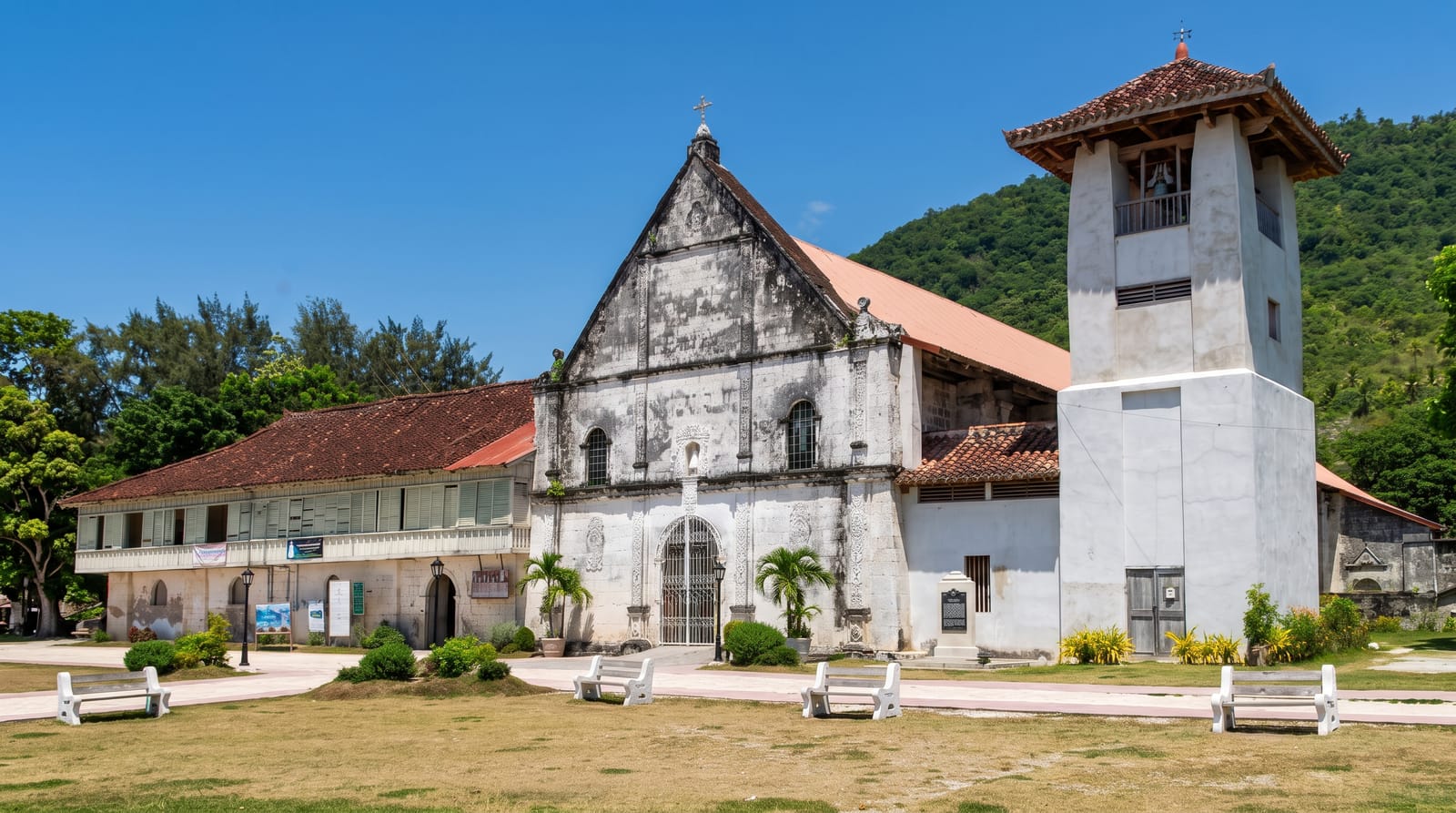
AI illustration
Patrocinio de María at Boljoon was begun in 1783, after pirates destroyed the earlier buildings in 1782, and completed under Father Julián Bermejo, and it is one of the most complete Spanish colonial church complexes left on Cebu - a National Cultural Treasure comprising the coral-stone church itself, a convent, a school building, the remains of a defensive wall and a watchtower, all built as a fortified settlement against raids from the sea, which struck this coast repeatedly through the colonial period. The church has a carved wooden ceiling, a stone pulpit and retablos, and a bell tower that doubled as a lookout; the convent houses a small museum of religious art and objects from the parish. It sits directly on the shore with the sea behind it and the mountains rising inland, which is part of why the site reads so clearly as a defended place. The town is small and the coastal road passes straight through, so most visitors stop for an hour between Cebu City and Oslob.
What to look for
- The coral-stone church - the fortified building begun in 1783.
- The carved ceiling - painted and carved woodwork inside.
- The defensive remains - wall sections and the watchtower.
- The convent museum - parish art and objects.
When to go
December to May for dry travel on the coastal road. Weekday mornings for a quiet church; it is a working parish.
Before you go
The museum keeps limited hours. The church closes to sightseeing during services. Boljoon has few facilities beyond the roadside; most people pass through rather than stay.
Nearby
Argao is up the coast; Oslob's whale sharks and Tumalog Falls are south.
Key facts
Source: Wikidata, item Q18750187, read on 18 October 2026.
What to pack for Boljoon Church
Chosen from what this place is for. Tap a kit for the full checklist.
- Binoculars - The single best wildlife tool - even a compact pair transforms a sighting. Find on Amazon
- Comfortable walking shoes - Sightseeing means kilometres of pavement and cobbles daily. Find on Amazon
- Modest clothing - Shoulders and knees covered - the single most common requirement. Find on Amazon
- A zoom camera or long lens - Animals rarely come close; reach beats megapixels. Find on Amazon
Some links on this page are Amazon affiliate links - if you buy through them we may earn a small commission at no extra cost to you.
All packing kitsPlan your trip
Where to start if Boljoon Church is going on the list.
Booking links on this page are affiliate links - if you book through them we may earn a small commission at no extra cost to you. It never changes what we write about a place.
Opening times, ticket prices and seasonal closures change - check the official source before you go: official site.