Hanuabada Village
A Motu village of houses on stilts over Port Moresby harbour, occupied since long before the city grew around it.
Updated 21 October 2026
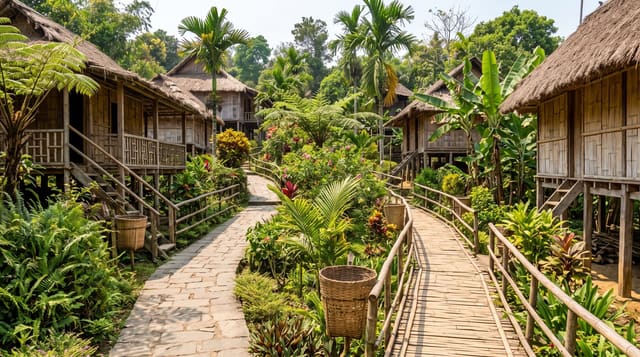
Hanuabada, the big village, is the principal Motu settlement on Port Moresby harbour and predates the colonial town by a long way; the Motu were the traders of this coast, sailing the annual hiri voyages west to the Gulf to exchange clay pots for sago in large multi-hulled lakatoi. The village is built out over the water on stilts with plank walkways linking the houses, several hundred dwellings in clusters belonging to different clans, and it was rebuilt after a fire in the 1940s. It remains a working community rather than a display, and visiting means going with someone from the village or a guide who has arranged it.
What you'll find
- The stilt houses - the dwellings built out over the harbour water.
- The plank walkways - the linked paths between the houses.
- The Motu community - the working village and its clan clusters.
- The harbour - Port Moresby's water in front of the village.
When to go
May to October in the drier season. The Hiri Moale festival in September brings the lakatoi and the village's traditions into public view. Visits should be arranged with a local contact rather than made unannounced.
Practical notes
This is a lived-in village, not an attraction; arriving unannounced is not appropriate and a local contact is needed. Photography requires asking. Walkways are in variable repair. Getting around Port Moresby means arranged transport rather than walking between districts.
Nearby
Ela Beach lies southeast; central Port Moresby is behind the village.
Key facts
Source: Wikidata, item Q5651329, read on 18 October 2026.
What to pack for Hanuabada Village
Chosen from what this place is for. Tap a kit for the full checklist.
- Comfortable walking shoes - Sightseeing means kilometres of pavement and cobbles daily. Find on Amazon
- A slim anti-theft daypack - Zips that close properly; keep it in front in crowds and on transit. Find on Amazon
- A refillable water bottle - Many cities have public fountains; save money and plastic. Find on Amazon
- A light layer + compact umbrella - For museum air-con and a sudden shower. Find on Amazon
Some links on this page are Amazon affiliate links - if you buy through them we may earn a small commission at no extra cost to you.
All packing kitsPlan your trip
Where to start if Hanuabada Village is going on the list.
Booking links on this page are affiliate links - if you book through them we may earn a small commission at no extra cost to you. It never changes what we write about a place.
Opening times, ticket prices and seasonal closures change - check the official source before you go: official site.