Tjuvholmen
A dense modern harbour quarter of galleries, canals and a small city beach at the end of Aker Brygge.
Updated 4 September 2026

AI illustration
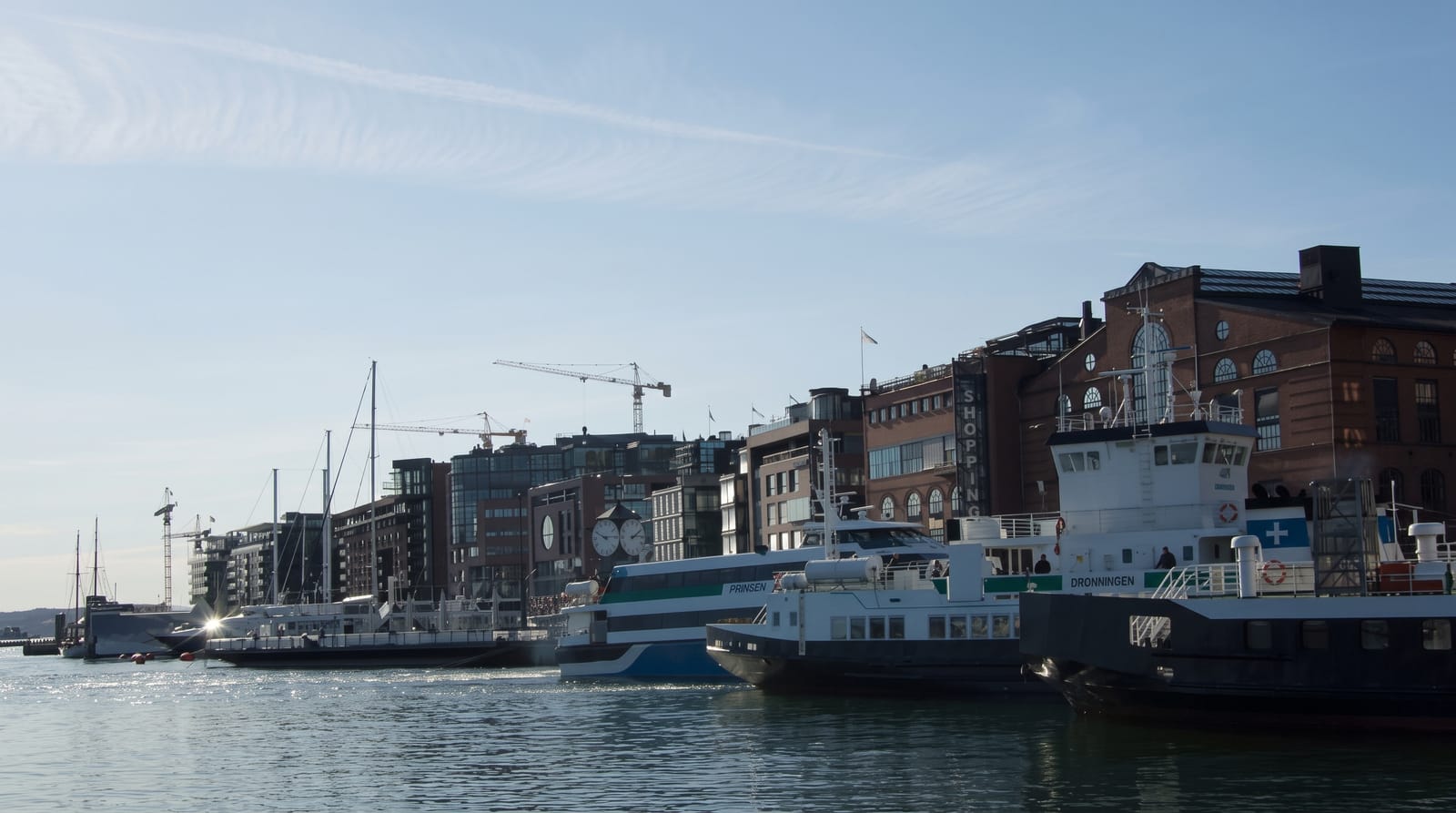
Tjuvholmen, thief islet, takes its name from a place of execution used in the eighteenth century; it was later industrial and was redeveloped between 2005 and 2014 as a dense quarter of apartments, offices, galleries and restaurants by a group of architects working to a common plan, cut by canals and connected by footbridges. The Astrup Fearnley Museum by Renzo Piano anchors the outer end, with a sculpture park beside it holding works by Louise Bourgeois, Anish Kapoor and Franz West. At the tip is Tjuvholmen city beach, a small artificial beach and diving area where people swim in the fjord in summer. Around a dozen commercial galleries occupy ground-floor spaces, making it Oslo's densest concentration of contemporary art dealers.
Highlights
- The Astrup Fearnley Museum - Renzo Piano's glass-roofed contemporary art museum.
- The sculpture park - works along the waterfront outside the museum.
- The city beach - a small artificial beach and diving spot at the tip.
- The canals and bridges - a dense quarter cut by water and footbridges.
When to go
May to September for the beach, terraces and outdoor sculpture; the museum and galleries work year-round. Warm evenings fill the beach and the diving platforms.
What to expect
The beach is small and packed on hot days, and the water is cold. Prices in the restaurants are high even by Oslo standards. The architecture divides opinion, and the quarter can feel corporate outside summer.
Nearby
Aker Brygge adjoins it; City Hall, the National Museum and the harbour promenade are close.
Key facts
Source: Wikidata, item Q7810647, read on 18 October 2026.
What to pack for Tjuvholmen
Chosen from what this place is for. Tap a kit for the full checklist.
- Your own mask + snorkel - A well-fitting mask is the single biggest comfort upgrade underwater. Find on Amazon
- Comfortable walking shoes - Sightseeing means kilometres of pavement and cobbles daily. Find on Amazon
- Rash guard or thin wetsuit - Sun cover on the surface and warmth on longer or deeper dives. Find on Amazon
- A slim anti-theft daypack - Zips that close properly; keep it in front in crowds and on transit. Find on Amazon
Some links on this page are Amazon affiliate links - if you buy through them we may earn a small commission at no extra cost to you.
All packing kitsPlan your trip
Where to start if Tjuvholmen is going on the list.
Booking links on this page are affiliate links - if you book through them we may earn a small commission at no extra cost to you. It never changes what we write about a place.
Opening times, ticket prices and seasonal closures change - check the official source before you go: official site.