Lom Stave Church
A large dragon-headed stave church in a Gudbrandsdal mountain village, rebuilt into a cross plan in the 1600s.
Updated 21 October 2026
AI illustration
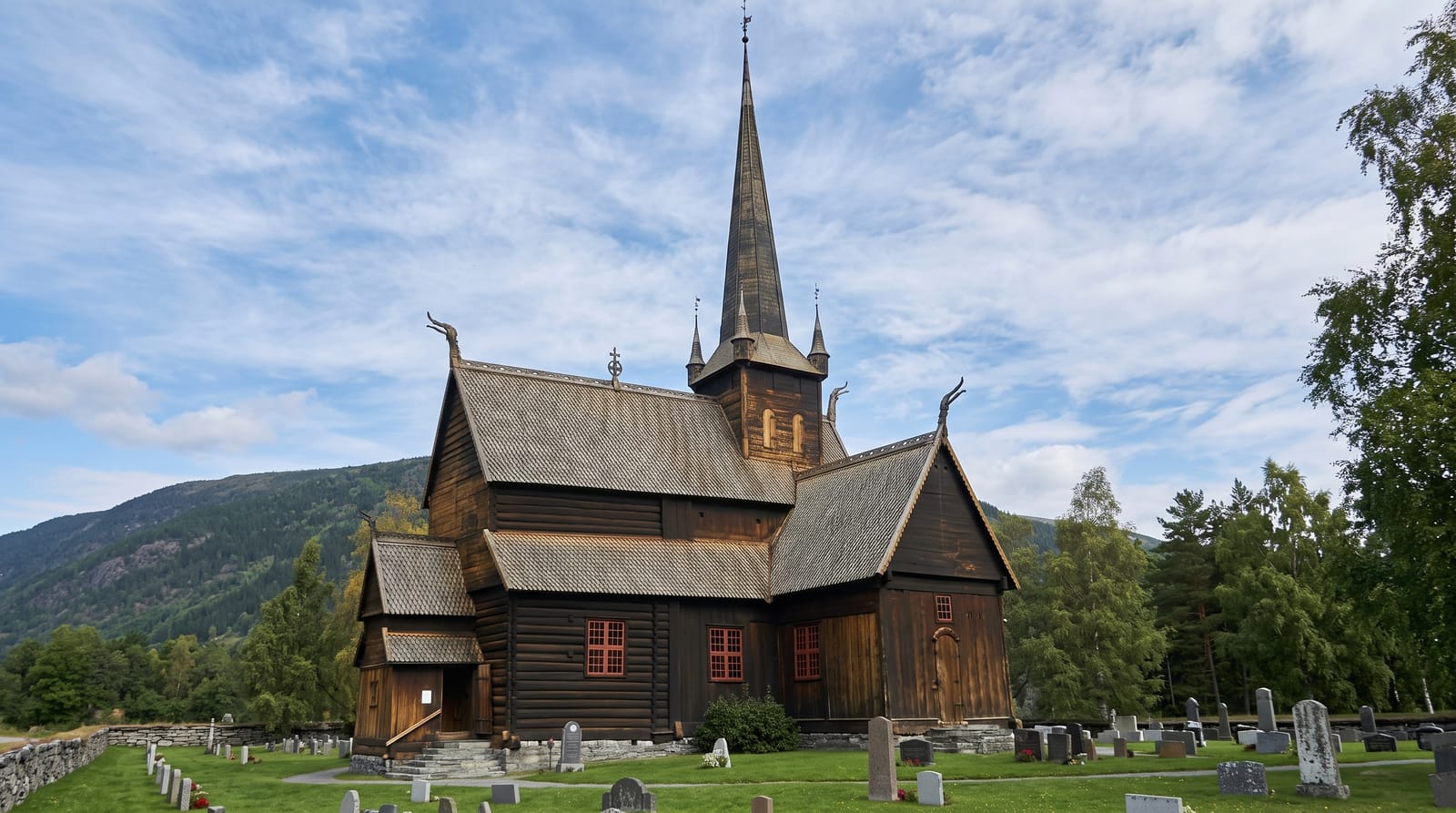
Lom stave church was built in the second half of the twelfth century and remains one of the largest and most complete, standing in the centre of a mountain village at the junction of the roads to Jotunheimen and the Sognefjell pass. Unlike most survivors it was expanded rather than reduced: transepts were added in the 1660s to make a cross plan, and a spire and dragon heads crown the roofs. The interior mixes medieval structure with baroque furnishing, including painting by Eggert Munch, an ancestor of Edvard, and a pulpit of 1669 carved with acanthus in 1793. Dendrochronology dated the timber to around 1158. The church is still in parish use and sits above the Bovra river with the Jotunheimen peaks beyond.
History
A small wooden post church of the 11th century stood here first, found beneath the floor in 1973, and the stave church that replaced it was built of timber felled around 1157-1158. In 1634 the nave was extended to the west, and in 1663 the master builder Werner Olsen added transepts to make a cross plan; excavations during the 1973 renovation turned up more than 2,000 coins (Wikipedia, Lom Stave Church).
What's there
- The cross plan - medieval nave with seventeenth-century transepts.
- The dragon heads - carved ornament on the gables and spire.
- The baroque interior - painting and an altarpiece within a medieval frame.
- The mountain setting - the church above the river with Jotunheimen behind.
When to go
May to September for interior visits; the village is a summer crossroads for Jotunheimen and Sognefjell traffic, so mornings are quieter. Winter closes the interior to casual visitors.
Good to know
The church is on a busy village junction rather than in isolation, with traffic and coaches close by. Opening is seasonal and closes for services. Much of the visible interior is post-medieval.
Nearby
The Sognefjell road climbs west; Jotunheimen, Galdhopiggen and the Otta valley are close.
Key facts
Source: Wikidata, item Q2007206, read on 18 October 2026.
What to pack for Lom Stave Church
Chosen from what this place is for. Tap a kit for the full checklist.
- Comfortable walking shoes - Sightseeing means kilometres of pavement and cobbles daily. Find on Amazon
- A slim anti-theft daypack - Zips that close properly; keep it in front in crowds and on transit. Find on Amazon
- A refillable water bottle - Many cities have public fountains; save money and plastic. Find on Amazon
- A light layer + compact umbrella - For museum air-con and a sudden shower. Find on Amazon
Some links on this page are Amazon affiliate links - if you buy through them we may earn a small commission at no extra cost to you.
All packing kitsPlan your trip
Where to start if Lom Stave Church is going on the list.
Booking links on this page are affiliate links - if you book through them we may earn a small commission at no extra cost to you. It never changes what we write about a place.
Opening times, ticket prices and seasonal closures change - check the official source before you go: official site.