Jotunheimen National Park
The Home of the Giants - the highest mountains in Northern Europe, a park of peaks over two thousand metres, glaciers, ridges and turquoise lakes.
Updated 16 October 2026

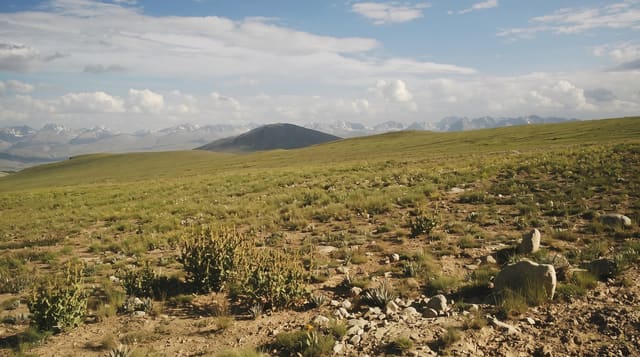
AI illustration
Jotunheimen, the Home of the Giants, holds the highest mountains in Norway and all of Northern Europe, more than two hundred and fifty peaks above 1,900 metres, including Galdhopiggen. It is the heartland of Norwegian hiking, laced with glaciers, sharp ridges like Besseggen, turquoise lakes and a network of mountain huts.
Background
The park covers 1,151 square kilometres in Innlandet and Vestland and holds the three highest peaks in Northern Europe, Galdhøpiggen at 2,469 metres, Glittertind at 2,452 metres and Store Skagastølstind at 2,405 metres. Geologically it is a Precambrian province, where glaciers carved valleys and peaks from hard gabbro. Lynx, moose, red deer, reindeer, roe deer and wolverine live here, and most lakes and rivers hold trout. The high pastures have served as seters for at least 1000 years. The poet Aasmund Olavsson Vinje coined the name Jotunheimen in 1862, adapting Keilhau's Jotunfjellene, the mountains of the giants. The Norwegian Mountain Touring Association built its first hut on Lake Tyin in 1869, and the national park was created in December 1980.
Source: Wikipedia, "Jotunheimen National Park"
What you'll find
- Galdhopiggen - the highest peak in Northern Europe, climbed with a guide over the glacier.
- Besseggen ridge - the classic knife-edge hike between two lakes.
- Turquoise glacier lakes - the milky blue-green tarns fed by the ice.
- The hut network - the staffed and self-service huts that make long treks possible.
When to go
The short alpine summer from late June to September, when trails and huts are open and the high routes are safe. Even then, snow can linger and weather turns fast, so come prepared.
What to expect
This is serious high-mountain country where hikes are demanding and the weather dangerous, so it rewards fitness, preparation and respect rather than a casual visit. The season is short and huts book up. Lower valleys and viewpoints give a taste for those not tackling the peaks.
Nearby
Lom with its stave church is a northern gateway; the Sognefjellet road, the highest in Northern Europe, crosses the range.
Key facts
Source: Wikidata, item Q1578584, read on 18 October 2026.
What to pack for Jotunheimen National Park
Chosen from what this place is for. Tap a kit for the full checklist.
- Broken-in walking shoes or boots - Grip and ankle support matter more than looks; never hike in brand-new boots. Find on Amazon
- Binoculars - The single best wildlife tool - even a compact pair transforms a sighting. Find on Amazon
- Warm base layers - Merino or synthetic against the skin - never cotton, which chills when damp. Find on Amazon
- Shelter suited to the place - Tent, tarp or hut booking - match it to the terrain and rules. Find on Amazon
Some links on this page are Amazon affiliate links - if you buy through them we may earn a small commission at no extra cost to you.
All packing kitsPlan your trip
Where to start if Jotunheimen National Park is going on the list.
Booking links on this page are affiliate links - if you book through them we may earn a small commission at no extra cost to you. It never changes what we write about a place.
Opening times, ticket prices and seasonal closures change - check the official source before you go: official site.