Hamar Cathedral Ruins
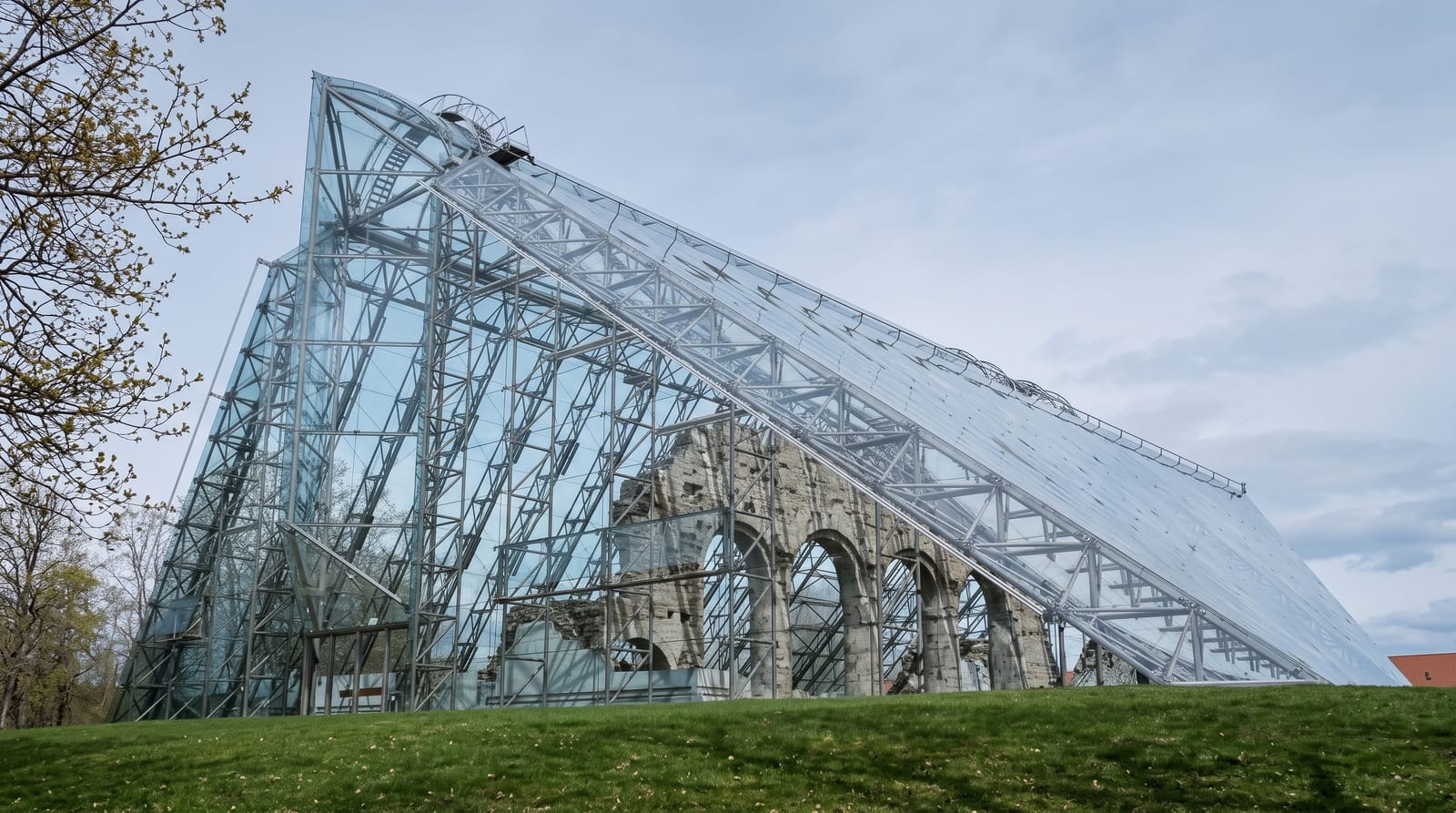
The arcades of a twelfth-century cathedral standing under a vast glass and steel canopy beside Lake Mjosa.
Updated 21 October 2026
AI illustration
Hamar was a bishop's seat from 1152, and its cathedral stood on a headland in Lake Mjosa until war and fire in the sixteenth century left it a ruin; what survives is a section of the nave arcade, four arches of grey stone on massive piers, which stood open to the weather for four hundred years. In 1998 a protective structure designed by Kjell Lund was completed over them: a glass and steel canopy fifty metres long enclosing the ruin entirely, so the arches stand in a lit, weatherproof volume that is used for concerts and weddings. The surrounding Domkirkeodden site includes the Hedmark Museum, with a building by Sverre Fehn inserted into a medieval fortified farm, and an open-air collection of historic buildings.
History
Building was begun by Bishop Arnaldur, appointed the first Bishop of Hamar in 1150 on his return from Gardar in Greenland, and the cathedral was finished around the time of Bishop Paul (1232-52), Romanesque at first and later converted to Gothic. After the Reformation it became Hamarhus, the sheriff's residence, and it fell into ruin after the Swedish army took Hamar in 1567 during the Northern Seven Years' War; work on the protective structure over the arches began in 1987 and was completed in 1998 (Wikipedia, Cathedral Ruins in Hamar).
What's there
- The arcade ruins - four surviving arches of the medieval cathedral.
- The glass canopy - a fifty-metre protective structure enclosing them.
- The Fehn museum building - a modernist insertion into a medieval farm.
- The lakeside site - a headland in Mjosa with an open-air building collection.
When to go
May to September, when the whole site including the open-air museum is open; the glass hall hosts concerts and is closed to visitors during events. Winter opening is limited to certain days.
What to expect
The ruin itself is a fragment, four arches rather than a building, and the interest is as much the modern canopy as the medieval stone. Entry covers the whole museum site, which takes longer than the ruin alone. Events close the hall without much notice.
Nearby
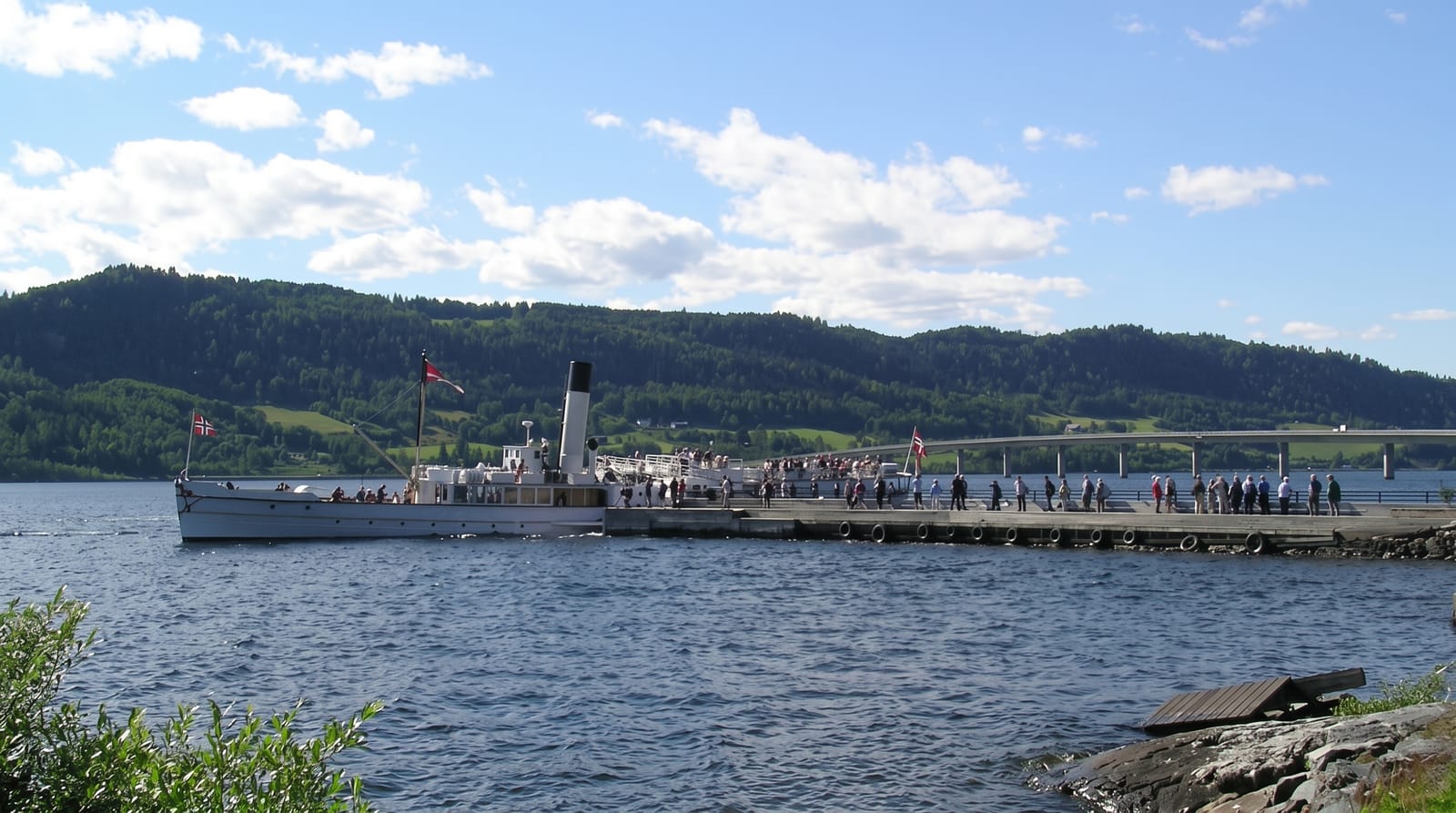
Hamar town and Lake Mjosa are alongside; the Skibladner paddle steamer calls at the town quay.
Key facts
Source: Wikidata, item Q1238684, read on 18 October 2026.
What to pack for Hamar Cathedral Ruins
Chosen from what this place is for. Tap a kit for the full checklist.
- Quick-dry clothing - Board shorts or synthetics that shrug off spray and dry fast. Find on Amazon
- Comfortable walking shoes - Sightseeing means kilometres of pavement and cobbles daily. Find on Amazon
- Modest clothing - Shoulders and knees covered - the single most common requirement. Find on Amazon
- Secure water shoes or reef boots - Grip on slippery launches and protection on rocky shores. Find on Amazon
Some links on this page are Amazon affiliate links - if you buy through them we may earn a small commission at no extra cost to you.
All packing kitsPlan your trip
Where to start if Hamar Cathedral Ruins is going on the list.
Booking links on this page are affiliate links - if you book through them we may earn a small commission at no extra cost to you. It never changes what we write about a place.
Opening times, ticket prices and seasonal closures change - check the official source before you go: official site.