Thames School of Mines
A Victorian mining school left as it was when teaching stopped in 1954, with the mineral collection still in its cases.
Updated 28 August 2026
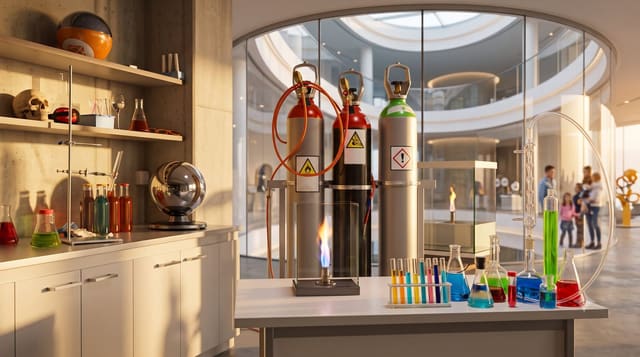
Thames was a gold town of some size in the 1870s - briefly with more people than Auckland - and it needed trained mine workers, so a School of Mines opened in 1886 to teach assaying, metallurgy, geology and surveying to men working the field. It ran until 1954 and then simply stopped, and what makes the site remarkable is that very little was cleared out afterwards: the laboratory has its benches and apparatus, the assay furnaces are in place, the lecture rooms have their fittings, and the mineralogical museum holds several thousand specimens in the original wooden cases with handwritten labels. It is one of the more complete surviving nineteenth-century technical schools anywhere. The buildings include one of the oldest in Thames, a chapel of 1868. It is small, quiet, and considerably more interesting than the description suggests if you have any interest in how the gold came out of the ground.
What to look for
- The assay laboratory - benches, furnaces and apparatus in place.
- The mineral collection - thousands of specimens in original cases.
- The lecture rooms - fitted as they were when teaching ended in 1954.
- The 1868 chapel - among the oldest buildings in Thames.
When to go
Any season. Opening days are limited, particularly outside summer - check before travelling. Ticketed.
What to expect
It is small and specialised; visitors without an interest in mining or Victorian technical education find an hour is plenty. Opening hours are restricted and seasonal.
Nearby
The Thames goldmine experience is up the hill; the Coromandel coast road runs north.
Key facts
Source: Wikidata, item Q7709906, read on 18 October 2026.
What to pack for Thames School of Mines
Chosen from what this place is for. Tap a kit for the full checklist.
- Comfortable walking shoes - Sightseeing means kilometres of pavement and cobbles daily. Find on Amazon
- A slim anti-theft daypack - Zips that close properly; keep it in front in crowds and on transit. Find on Amazon
- A refillable water bottle - Many cities have public fountains; save money and plastic. Find on Amazon
- A light layer + compact umbrella - For museum air-con and a sudden shower. Find on Amazon
Some links on this page are Amazon affiliate links - if you buy through them we may earn a small commission at no extra cost to you.
All packing kitsPlan your trip
Where to start if Thames School of Mines is going on the list.
Booking links on this page are affiliate links - if you book through them we may earn a small commission at no extra cost to you. It never changes what we write about a place.
Opening times, ticket prices and seasonal closures change - check the official source before you go: official site.