Westkapelle
The heaviest sea dyke in the country, at the corner of Walcheren where the island is most exposed.
Updated 29 August 2026
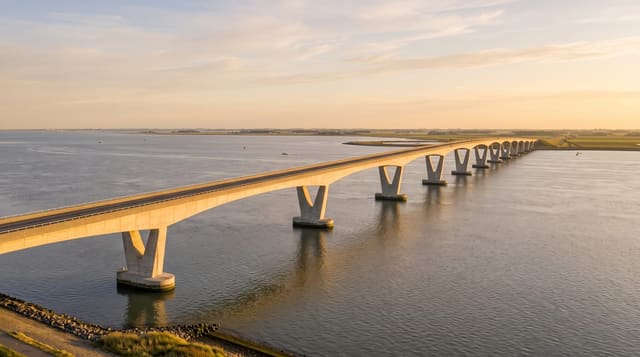
Westkapelle sits at the exposed western corner of Walcheren, where the dunes give out and the sea comes at the land directly, and the answer has been the Westkappelse Zeedijk - a dyke rebuilt repeatedly since the Middle Ages and now a massive stone and asphalt structure several kilometres long, one of the heaviest sea defences in the country, walked and cycled along the crest. The village behind it has two lighthouses: the Hoge Licht, a converted church tower of the fifteenth century whose nave was demolished, painted white with a light in the top, and the Lage Licht, a cast-iron tower on the dyke. In October 1944 the dyke was bombed deliberately by the Allies to flood Walcheren and force out the German garrison controlling the Scheldt approach to Antwerp; the village was destroyed and the breach took a year to close. That history is documented locally.
Highlights
- A massive sea dyke - stone and asphalt, walked along the crest for kilometres.
- A church tower as a lighthouse - the fifteenth-century Hoge Licht with its nave removed.
- A cast-iron lower light - the Lage Licht standing on the dyke itself.
- The 1944 breach - the dyke bombed to flood the island, documented in the village.
When to go
April to October. Half a day.
Good to know
The dyke crest is fully exposed to wind and there is no shelter. The lighthouse opens seasonally on limited hours. The village is small. The 1944 history involves the deliberate destruction of the place.
Nearby
Domburg is north along the coast; Middelburg is inland.
What to pack for Westkapelle
Chosen from what this place is for. Tap a kit for the full checklist.
- Loose, light, long clothing - Covering up beats bare skin in the desert - and locals dress this way for a reason. Find on Amazon
- Comfortable walking shoes - Sightseeing means kilometres of pavement and cobbles daily. Find on Amazon
- A wide-brim hat + sunglasses - Shade for your face and eyes where there is none overhead. Find on Amazon
- A slim anti-theft daypack - Zips that close properly; keep it in front in crowds and on transit. Find on Amazon
Some links on this page are Amazon affiliate links - if you buy through them we may earn a small commission at no extra cost to you.
All packing kitsPlan your trip
Where to start if Westkapelle is going on the list.
Booking links on this page are affiliate links - if you book through them we may earn a small commission at no extra cost to you. It never changes what we write about a place.
Opening times, ticket prices and seasonal closures change - check the official source before you go: official site.