Sidi Ifni
A Spanish art deco town on an Atlantic clifftop, built in the 1930s and handed over in 1969, now faded blue and white.
Updated 20 October 2026
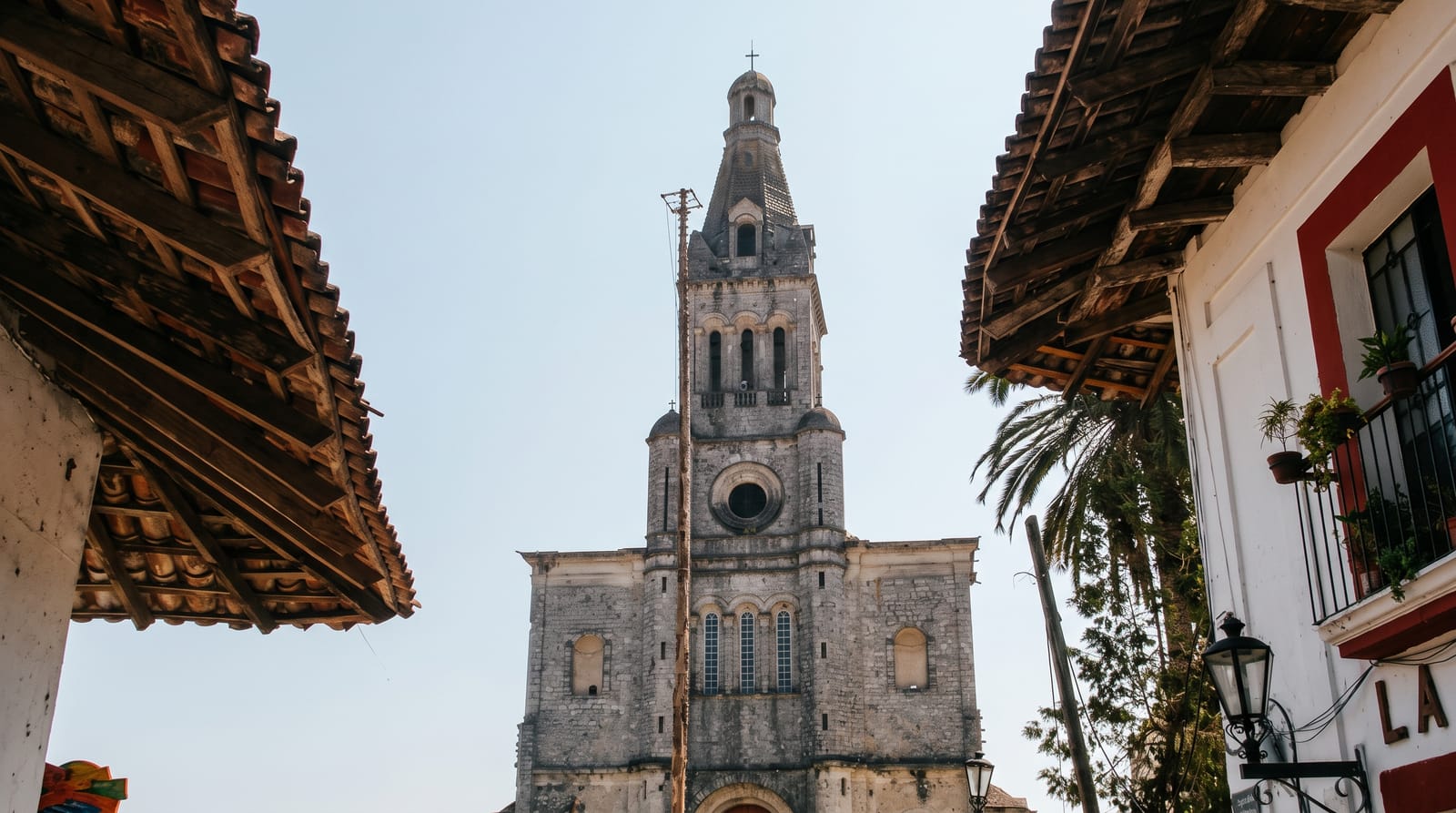
Sidi Ifni was a Spanish enclave and was built out as a small colonial town from the 1930s, which is why an isolated Atlantic clifftop in southern Morocco has a coherent quarter of art deco - the old Spanish consulate, the church, the town hall, the lighthouse, the cinema, houses with curved corners and porthole windows, painted white with blue trim and arranged around Place Hassan II, which was the plaza de España and still has its Spanish-era layout. It was transferred to Morocco in 1969. The town declined afterwards and much of the fabric is worn; some buildings are being repaired and others are shuttered. Below the cliff is a long beach with heavy Atlantic surf, and the remains of an aerial cableway that once loaded ships offshore because there was no harbour. Fog rolls in from the ocean often and the light is particular.
History
The Aït Baâmrane have long lived in the area, trading with Europeans and with northern Morocco as intermediaries in the trans-Saharan trade. Sidi Ifni is claimed as the site of Santa Cruz de la Mar Pequeña, a small coastal fort built by Spain in the 15th century, though historians have never fixed its exact place on the coast, and in 2000 a large fishing port was completed here (Wikipedia, Sidi Ifni).
The main sights
- A coherent deco quarter - consulate, church, town hall and houses from the 1930s.
- A Spanish plaza - Place Hassan II with its colonial-era layout intact.
- The cableway remains - structures from a system that loaded ships offshore.
- A worn townscape - much of the fabric faded, some repaired, some shut.
When to go
September to May; summer is busy with domestic visitors. A day.
What to expect
Many buildings are shuttered or decaying and interiors are not accessible. Atlantic fog is frequent and can sit over the town for days. The beach has strong currents and limited lifeguarding. Accommodation is basic.
Nearby
Mirleft and Legzira are north; Guelmim is inland to the south-east.
Key facts
Source: Wikidata, item Q632361, read on 18 October 2026.
What to pack for Sidi Ifni
Chosen from what this place is for. Tap a kit for the full checklist.
- Travel rod + reel - A packable multi-piece rod fits in a case and covers most holiday fishing. Find on Amazon
- Quick-dry clothing - Board shorts or synthetics that shrug off spray and dry fast. Find on Amazon
- Loose, light, long clothing - Covering up beats bare skin in the desert - and locals dress this way for a reason. Find on Amazon
- Comfortable walking shoes - Sightseeing means kilometres of pavement and cobbles daily. Find on Amazon
Some links on this page are Amazon affiliate links - if you buy through them we may earn a small commission at no extra cost to you.
All packing kitsPlan your trip
Where to start if Sidi Ifni is going on the list.
Booking links on this page are affiliate links - if you book through them we may earn a small commission at no extra cost to you. It never changes what we write about a place.
Opening times, ticket prices and seasonal closures change - check the official source before you go: official site.