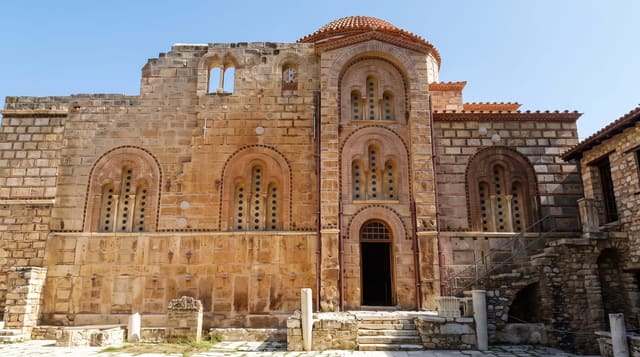
Manzushir Monastery
The ruins of a large monastery in a wooded valley on Bogd Khan's southern slopes, destroyed in 1937.
Updated 20 October 2026
Manzushir was founded in 1733 and grew into a complex of some twenty temples housing several hundred monks in a wooded valley on the southern side of Bogd Khan mountain. It was destroyed in 1937, and what remains is foundations, walls and a single restored temple that now functions as a small museum. The setting does much of the work: granite boulders, pine and birch, a stream, and rock paintings of Buddhist figures on the boulders above the ruins. A huge bronze cauldron cast in 1726, capable of boiling meat for hundreds, stands in the open. Walking routes continue up over the mountain towards Ulaanbaatar on the far side. It is a quiet, melancholy place, close enough to the capital for a half-day.
History
The monk Luvsanjambaldanzan founded the monastery in 1733, dedicated to Mañjuśrī, the bodhisattva of wisdom, and in 1750 it came under the personal administration of the Jebtsundamba Khutuktu. It grew to 20 temples and more than 300 monks, with ceremonies often drawing over 1000, and it kept rare scriptures, among them texts in golden script on silver leaf (Wikipedia, Manjusri Monastery).
What's there
- The ruined complex - foundations and walls of the destroyed temples.
- The restored temple museum - the one rebuilt building with displays.
- Rock paintings - Buddhist images on boulders above the site.
- The bronze cauldron - the 1726 vessel standing in the open.
When to go
May to October; the valley is snowbound and cold in winter though accessible. Autumn colour among the birches is good. Weekends bring visitors from the capital. Mornings are quiet.
Things to know
Almost nothing survives standing, so the visit is about ruins and setting rather than architecture. The museum is small. The track in from Zuunmod is rough. Facilities are minimal, with a ger camp nearby. Walking over the mountain to the city side is a serious full day.
Nearby
Zuunmod is south; Bogd Khan summit and Ulaanbaatar lie over the mountain.
Key facts
Source: Wikidata, item Q148612, read on 18 October 2026.
What to pack for Manzushir Monastery
Chosen from what this place is for. Tap a kit for the full checklist.
- Comfortable walking shoes - Sightseeing means kilometres of pavement and cobbles daily. Find on Amazon
- Modest clothing - Shoulders and knees covered - the single most common requirement. Find on Amazon
- A slim anti-theft daypack - Zips that close properly; keep it in front in crowds and on transit. Find on Amazon
- A scarf or shawl - To cover the head or shoulders on entry; women especially at mosques. Find on Amazon
Some links on this page are Amazon affiliate links - if you buy through them we may earn a small commission at no extra cost to you.
All packing kitsPlan your trip
Where to start if Manzushir Monastery is going on the list.
Booking links on this page are affiliate links - if you book through them we may earn a small commission at no extra cost to you. It never changes what we write about a place.
Opening times, ticket prices and seasonal closures change - check the official source before you go: official site.