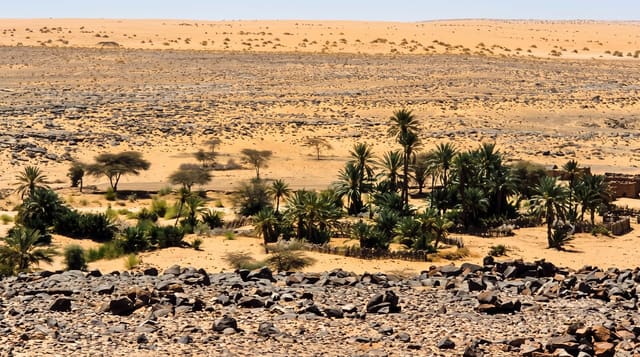
The Richat Structure
The Eye of the Sahara, a ring structure about 40 kilometres across, used as a landmark by astronauts and crossed by 4x4 tracks from Ouadane.
Updated 21 October 2026
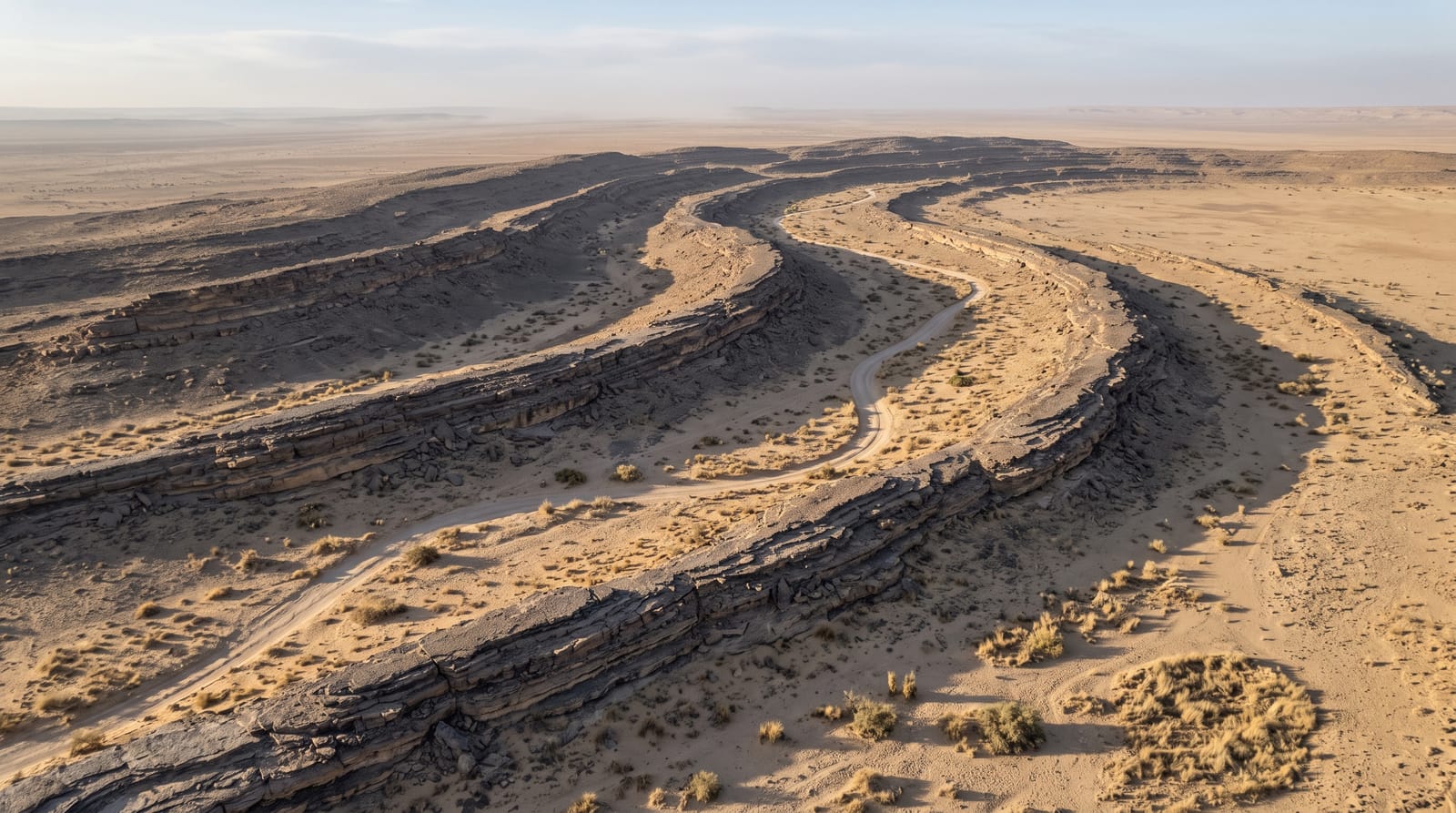
AI illustration
The Richat Structure, Guelb er Richat, is a set of concentric rock rings some forty kilometres across, conspicuous enough from orbit that astronauts used it as a landmark from the early missions. Geologists describe it as an eroded dome rather than an impact crater: rings of resistant rock left standing as softer layers wore away, with details still debated. On the ground the rings become a landscape of ridges, gaps and gravel plains crossed by 4x4 tracks from Ouadane, with camps among the ridges.
What's there
- The ring ridges - concentric rock ridges crossed by the tracks.
- The central dome - the core of the structure.
- The rim viewpoints - the structure's curve read from high ground.
- The desert camps - nights inside the rings.
When to go
November to February for workable temperatures; the structure reads best in low morning and evening light when the ridges shadow. It folds into the Ouadane day or an overnight camp.
Practical notes
At ground level the rings cannot be seen whole - that needs satellite imagery or a drone - and a guide who explains the geology adds a great deal. Standard deep-desert rules: convoy or experienced driver, water margins, no improvising.
Nearby
Ouadane's ksar, the Adrar pistes and Atar.
Key facts
Source: Wikidata, item Q744591, read on 18 October 2026.
What to pack for The Richat Structure
Chosen from what this place is for. Tap a kit for the full checklist.
- Broken-in walking shoes or boots - Grip and ankle support matter more than looks; never hike in brand-new boots. Find on Amazon
- Spare batteries + cards - Cold and long shoots drain power; never run out at the good light. Find on Amazon
- Loose, light, long clothing - Covering up beats bare skin in the desert - and locals dress this way for a reason. Find on Amazon
- Shelter suited to the place - Tent, tarp or hut booking - match it to the terrain and rules. Find on Amazon
Some links on this page are Amazon affiliate links - if you buy through them we may earn a small commission at no extra cost to you.
All packing kitsPlan your trip
Where to start if The Richat Structure is going on the list.
Booking links on this page are affiliate links - if you book through them we may earn a small commission at no extra cost to you. It never changes what we write about a place.
Opening times, ticket prices and seasonal closures change - check the official source before you go: official site.