Saint-Pierre
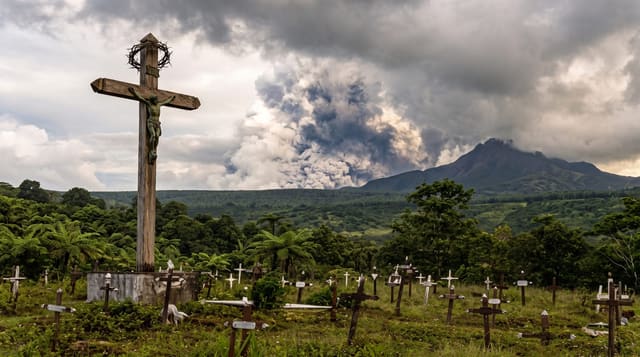
The Pompeii of the Caribbean - the poignant ruined town at the foot of Mount Pelée, once the glittering cultural capital of Martinique before its total destruction in the 1902 eruption, now an atmospheric place of memory, evocative ruins and a moving museum.
Updated 20 October 2026
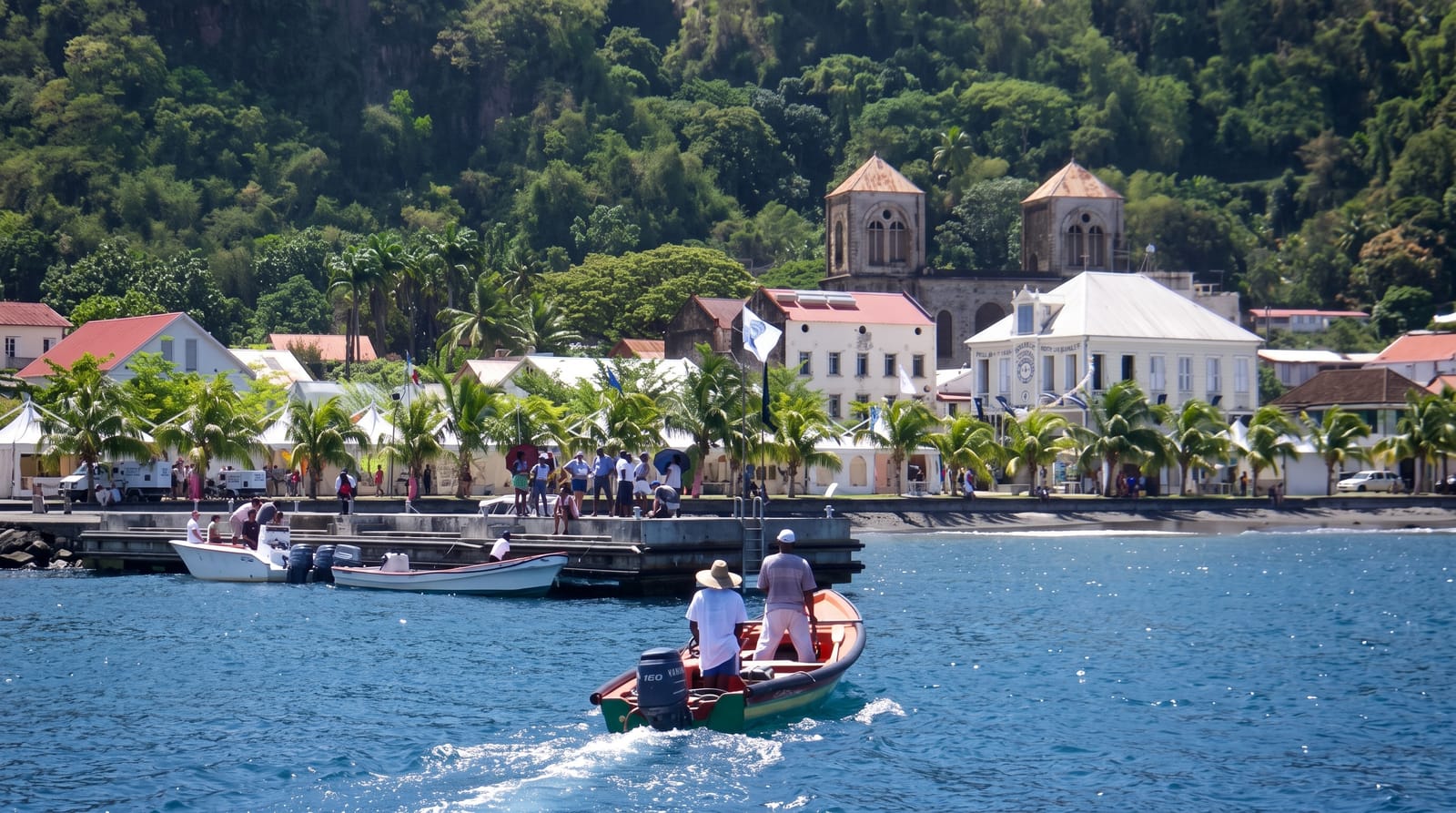
AI illustration
Saint-Pierre, on the northwest coast beneath Mount Pelée, is one of the most poignant and atmospheric places in the Caribbean, often called the Pompeii of the Caribbean. Before 1902, it was the glittering economic and cultural capital of Martinique, a wealthy, sophisticated town known as the Paris of the West Indies, with a theatre, tramways and a vibrant social life. In a matter of minutes on the morning of 8 May 1902, the eruption of Mount Pelée destroyed it utterly and killed nearly all its 30,000 inhabitants. Rebuilt as a modest town, it preserves haunting ruins amid the new, from the theatre steps to the prison cell of a rare survivor, and a moving volcano museum.
History
Pierre Belain d'Esnambuc founded the town in 1635 for the Compagnie des Îles de l'Amérique, and in the 18th century it became the main town of Martinique, a port shipping sugar and coffee. It recovered from the Great Hurricane of 1780, and in the 19th century, with its theatres, cafés and newspapers, it was known as the Paris of the Caribbean (Wikipedia, Saint-Pierre, Martinique).
Highlights
- The ruins - the evocative remains of the theatre, church and buildings.
- The survivor's cell - the dungeon that saved a rare survivor.
- The volcano museum - the moving story of the 1902 disaster.
- The bay - the harbour with sunken ships from the eruption.
When to go
December to April, the drier season, for the most comfortable visit; the ruins and museum are best explored slowly, with time to absorb the history, and a guide or the museum greatly enriches the story of the town and its destruction. The bay is also a noted dive site, with ships sunk in the eruption resting on the seabed.
What to expect
Saint-Pierre is a place of immense tragedy and remembrance rather than conventional sightseeing, so it should be approached with respect, and the ruins, while atmospheric, are scattered through a modest modern town and best understood with the museum or a guide. As a deeply moving and evocative place, the Pompeii of the Caribbean, telling the story of one of history's deadliest eruptions amid haunting ruins, though, Saint-Pierre is a genuinely powerful and significant destination.
Nearby
Mount Pelée, the rainforest and the northern rum distilleries are close by.
What to pack for Saint-Pierre
Chosen from what this place is for. Tap a kit for the full checklist.
- Strong insect repellent - DEET or picaridin; the jungle is where bites and disease risk are highest. Find on Amazon
- Comfortable walking shoes - Sightseeing means kilometres of pavement and cobbles daily. Find on Amazon
- Long, light, quick-dry clothing - Covers skin from insects and sun without cooking you in the humidity. Find on Amazon
- A slim anti-theft daypack - Zips that close properly; keep it in front in crowds and on transit. Find on Amazon
Some links on this page are Amazon affiliate links - if you buy through them we may earn a small commission at no extra cost to you.
All packing kitsPlan your trip
Where to start if Saint-Pierre is going on the list.
Booking links on this page are affiliate links - if you book through them we may earn a small commission at no extra cost to you. It never changes what we write about a place.
Opening times, ticket prices and seasonal closures change - check the official source before you go: official site.