Malaysian Cuisine
One of Asia's great food cultures - a delicious melting pot of Malay, Chinese and Indian flavours, from the national nasi lemak to fragrant laksa, satay and roti, best at a bustling hawker stall.
Updated 29 August 2026
AI illustration
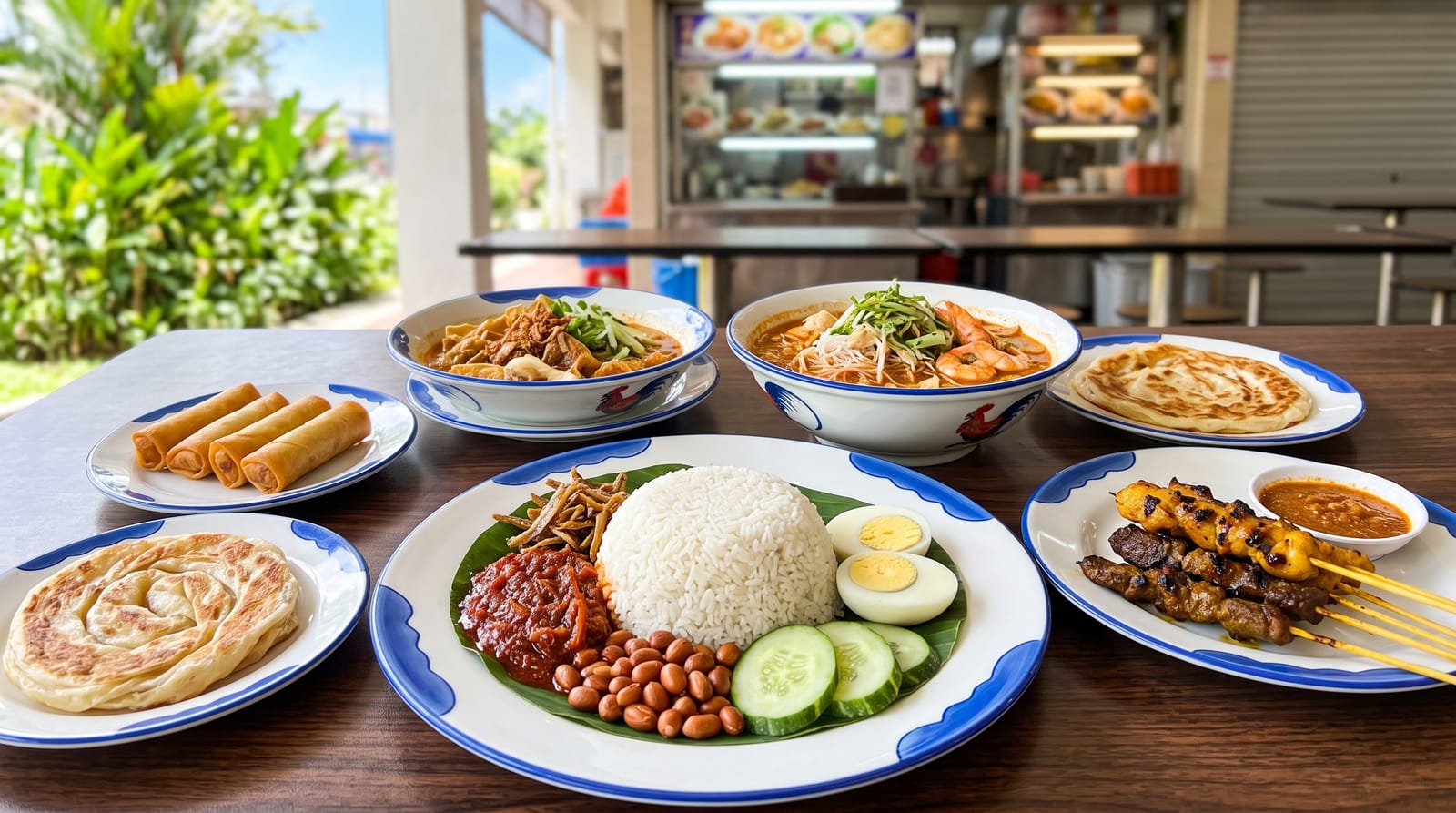
Malaysian cuisine is one of the great food cultures of Asia, a delicious melting pot where Malay, Chinese and Indian traditions have blended and cross-fertilised over centuries. Its unofficial national dish is nasi lemak, coconut rice with spicy sambal and accompaniments, alongside fragrant laksa noodle soups, skewered satay with peanut sauce, Indian-influenced roti canai, char kway teow, and the distinctive Peranakan Nyonya cooking, all at their best and cheapest at a bustling hawker centre.
The main sights
- Nasi lemak - the coconut rice with sambal, the national dish.
- Laksa - the fragrant, spicy noodle soups in regional styles.
- Satay and roti - the grilled skewers and Indian-influenced flatbreads.
- The hawker centres - the food courts of many stalls and cuisines.
When to go
Year-round; the best and cheapest food is at the hawker centres and kopitiam coffee shops, buzzing from morning to late night, and regional specialities, especially in Penang, reward seeking out.
What to expect
The sheer variety and the hawker-stall format can bewilder newcomers, so following the crowds to the busiest stalls is the best guide to quality. Some dishes are spicy, so ask. Street and hawker food is a highlight and generally safe from busy, high-turnover stalls. It is a genuine food paradise, especially in George Town, Penang.
Nearby
Penang is famed as the food capital; every region has its specialities.
What to pack for Malaysian Cuisine
Chosen from what this place is for. Tap a kit for the full checklist.
- A reusable bag or container - For market produce and cutting down on packaging. Find on Amazon
- Wet wipes + hand sanitiser - Street food and washbasins do not always go together. Find on Amazon
Some links on this page are Amazon affiliate links - if you buy through them we may earn a small commission at no extra cost to you.
All packing kitsPlan your trip
Where to start if Malaysian Cuisine is going on the list.
Booking links on this page are affiliate links - if you book through them we may earn a small commission at no extra cost to you. It never changes what we write about a place.
Opening times, ticket prices and seasonal closures change - check the official source before you go: official site.