Otrar
The mound of a great Silk Road oasis city on the Syr Darya, sacked in 1219 and never fully recovered.
Updated 20 October 2026
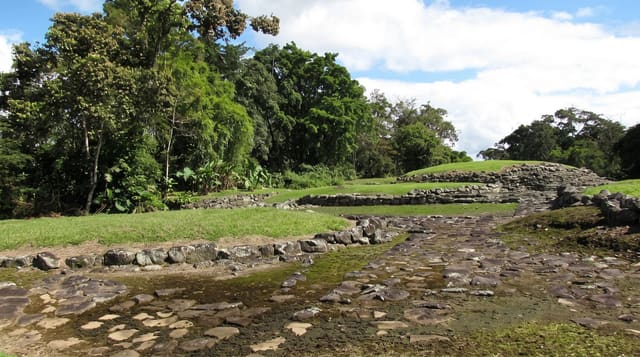
Otrar stood where the Arys meets the Syr Darya, one of the largest oasis cities on the northern Silk Road, a walled settlement with a citadel, bathhouses, mosques and a hinterland of irrigated land, and its name is fixed in history by what happened in 1218 and 1219, when a caravan sent by Genghis Khan was seized and its members killed here, an act that precipitated the Mongol invasion of Central Asia and the destruction of the city after a long siege. It was rebuilt and occupied on a reduced scale for centuries afterward before being abandoned. What survives is a large mound of eroded mudbrick with excavated walls, streets and structures exposed in places, and a small museum in the nearby village.
History
In the time of the Achaemenid Empire the town was known as Parab, from a Persian name for lands irrigated by diverting river water, and by the 13th century Farab on the Jaxartes was known as Otrar. In 1218 its governor, Inalchuq, had a Mongol trade caravan of around 450 men seized as spies, which brought on the Mongol invasion of Central Asia (Wikipedia, Otrar).
The main sights
- The city mound - the eroded mudbrick tell rising above the plain.
- Excavated structures - exposed walls, streets and a bathhouse.
- The citadel area - the raised core of the settlement.
- The site museum - the collections at Shauildir village.
When to go
April to May and September to October; summer on the Syr Darya plain is extremely hot with no shade, and winter is cold and windy. Mornings are best. The site works naturally with Arystan-Bab next door.
Before you go
Everything is eroded mudbrick and takes imagination and reading. Interpretation on site is minimal and mostly in Kazakh and Russian. There is no shade or water. Conservation work has left some reconstruction that is hard to distinguish from original fabric.
Nearby
Arystan-Bab mausoleum stands beside the site; Turkestan lies north.
What to pack for Otrar
Chosen from what this place is for. Tap a kit for the full checklist.
- Comfortable walking shoes - Sightseeing means kilometres of pavement and cobbles daily. Find on Amazon
- Modest clothing - Shoulders and knees covered - the single most common requirement. Find on Amazon
- A slim anti-theft daypack - Zips that close properly; keep it in front in crowds and on transit. Find on Amazon
- A scarf or shawl - To cover the head or shoulders on entry; women especially at mosques. Find on Amazon
Some links on this page are Amazon affiliate links - if you buy through them we may earn a small commission at no extra cost to you.
All packing kitsPlan your trip
Where to start if Otrar is going on the list.
Booking links on this page are affiliate links - if you book through them we may earn a small commission at no extra cost to you. It never changes what we write about a place.
Opening times, ticket prices and seasonal closures change - check the official source before you go: official site.