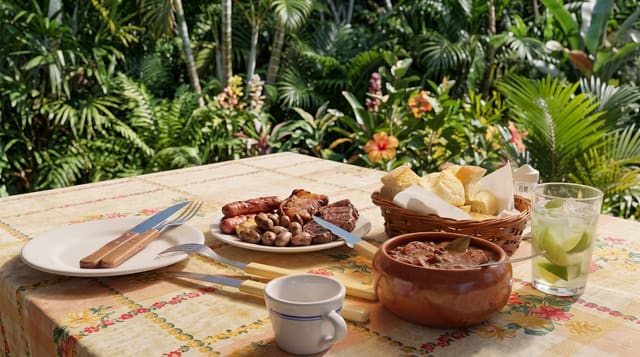
Sendai Gyutan
Beef tongue sliced thick, salted, rested for days and grilled over charcoal - a post-war invention now Sendai's signature.
Updated 29 August 2026
Gyutan as Sendai does it was invented in 1948 by Keishiro Sano, a yakitori cook who was looking for a way to use offcuts that were being discarded and worked out how to treat beef tongue - sliced thick rather than thin, salted or marinated, then rested for two or three days so the texture changes and the salt penetrates, and finally grilled over binchotan charcoal so the outside chars and the inside stays springy. It is served as a set: the tongue, barley rice, oxtail soup and pickled nanban peppers, an arrangement that has barely changed and that every shop follows. The result is nothing like the thin tongue used in Korean grill or the boiled tongue of European cooking - it is chewy in a specific way and salted rather than sauced. Dozens of shops operate in Sendai and a cluster of the best-known ones sits on a floor of the station building.
Highlights
- A 1948 invention - developed to use tongue that was being thrown away.
- Days of resting - thick slices salted and left for two or three days before grilling.
- Charcoal grilling - binchotan, charred outside and springy within.
- A fixed set - tongue, barley rice, oxtail soup and pickled peppers together.
When to go
All year. An hour; lunch or early evening to avoid queues.
Good to know
The texture is chewy and divides people sharply. Popular shops queue for an hour at peak times. It is not cheap - good tongue is expensive. Station-building branches are convenient but not always the best.
Nearby
Zuihoden is south-west; Matsushima Bay is north-east.
What to pack for Sendai Gyutan
Chosen from what this place is for. Tap a kit for the full checklist.
- A reusable bag or container - For market produce and cutting down on packaging. Find on Amazon
- Wet wipes + hand sanitiser - Street food and washbasins do not always go together. Find on Amazon
Some links on this page are Amazon affiliate links - if you buy through them we may earn a small commission at no extra cost to you.
All packing kitsPlan your trip
Where to start if Sendai Gyutan is going on the list.
Booking links on this page are affiliate links - if you book through them we may earn a small commission at no extra cost to you. It never changes what we write about a place.
Opening times, ticket prices and seasonal closures change - check the official source before you go: official site.