Nagatoro
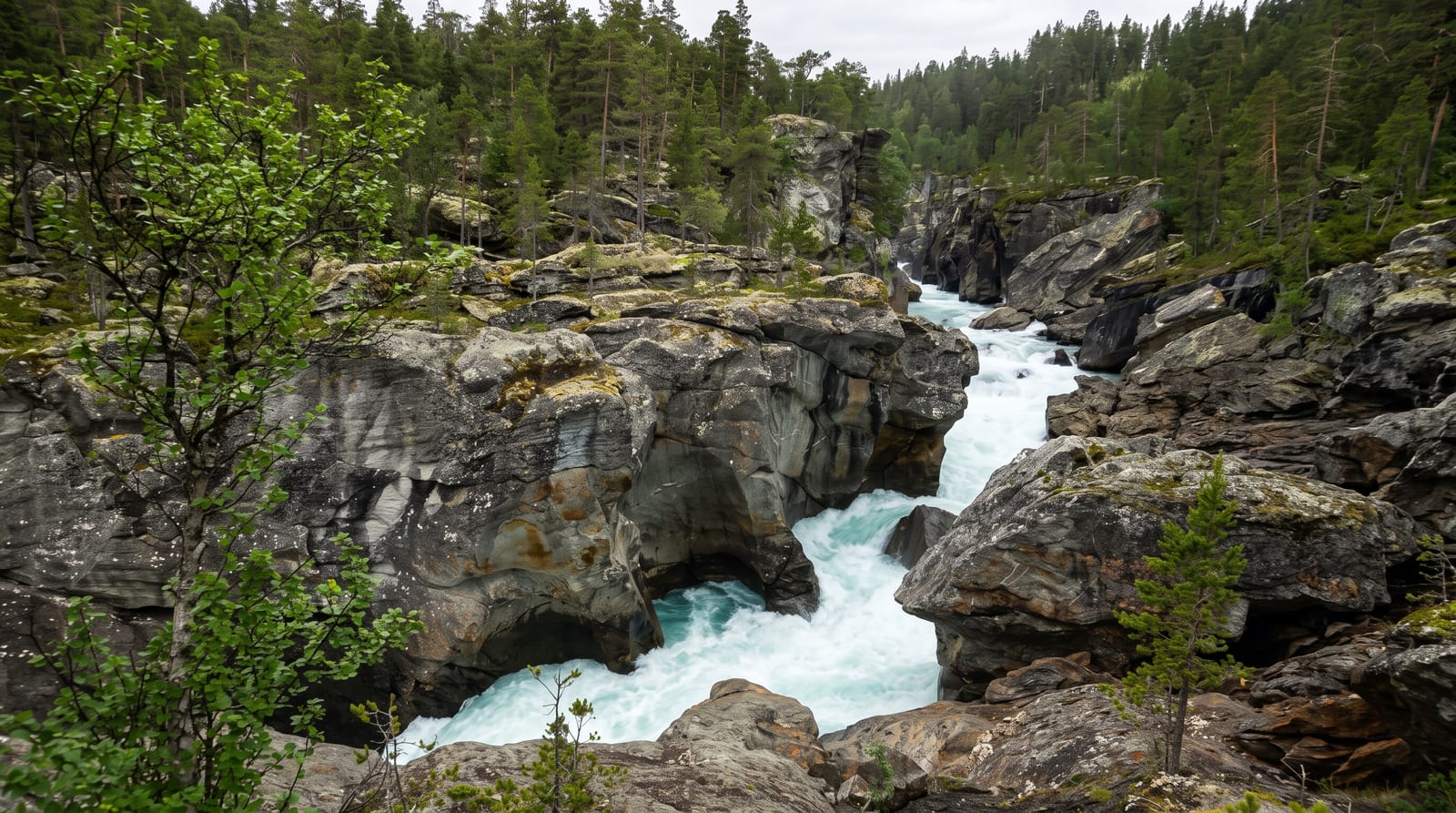
A stretch of the Arakawa where flat wooden boats run the rapids past a shelf of crystalline rock.
Updated 20 October 2026
The Arakawa cuts through a band of crystalline schist at Nagatoro, and the river has scoured the rock into a broad flat shelf along the bank known as Iwadatami, the rock tatami - flat enough to walk out on and step-jointed like matting. The rock is a metamorphic sequence formed at depth and brought to the surface, and the outcrop is significant enough that it has been studied since the nineteenth century and is sometimes called the birthplace of Japanese geology. Traditional flat-bottomed boats, poled by boatmen who read the water rather than steer with engines, run passengers down two sections of rapids in about twenty minutes each; in winter they are enclosed and heated instead. The valley colours in early November and the Chichibu Railway runs a steam locomotive along the line on some days.
History
The village of Nagami was created in 1889 under the new municipal system and became a town in 1940; it took in Higuchi and part of Shiratori in 1943 and changed its name to Nagatoro in 1971 (Wikipedia, Nagatoro, Saitama).
What's there
- Iwadatami - a flat shelf of crystalline schist scoured by the river.
- Poled boats - traditional flat-bottomed craft running two sets of rapids.
- A geology site - an outcrop studied since the nineteenth century.
- The steam train - a locomotive on the Chichibu line on scheduled days.
When to go
April to November; early November for colour. Half a day.
Before you go
Boats do not run in high water after rain. Autumn weekends are congested and queues for boats are long. Trips are short - twenty minutes per section. Winter boats are covered, which limits the experience.
Nearby
Hitsujiyama Park and its shibazakura are south at Chichibu.
What to pack for Nagatoro
Chosen from what this place is for. Tap a kit for the full checklist.
- Broken-in walking shoes or boots - Grip and ankle support matter more than looks; never hike in brand-new boots. Find on Amazon
- Layers + a waterproof shell - Mountain weather turns fast; a packable rain jacket saves the day. Find on Amazon
- Daypack with rain cover - 20-30 litres holds water, snacks, layers and a first-aid kit. Find on Amazon
- Offline maps + a power bank - Download the trail before you lose signal; carry backup charge. Find on Amazon
Some links on this page are Amazon affiliate links - if you buy through them we may earn a small commission at no extra cost to you.
All packing kitsPlan your trip
Where to start if Nagatoro is going on the list.
Booking links on this page are affiliate links - if you book through them we may earn a small commission at no extra cost to you. It never changes what we write about a place.
Opening times, ticket prices and seasonal closures change - check the official source before you go: official site.