Hiroshima Peace Memorial
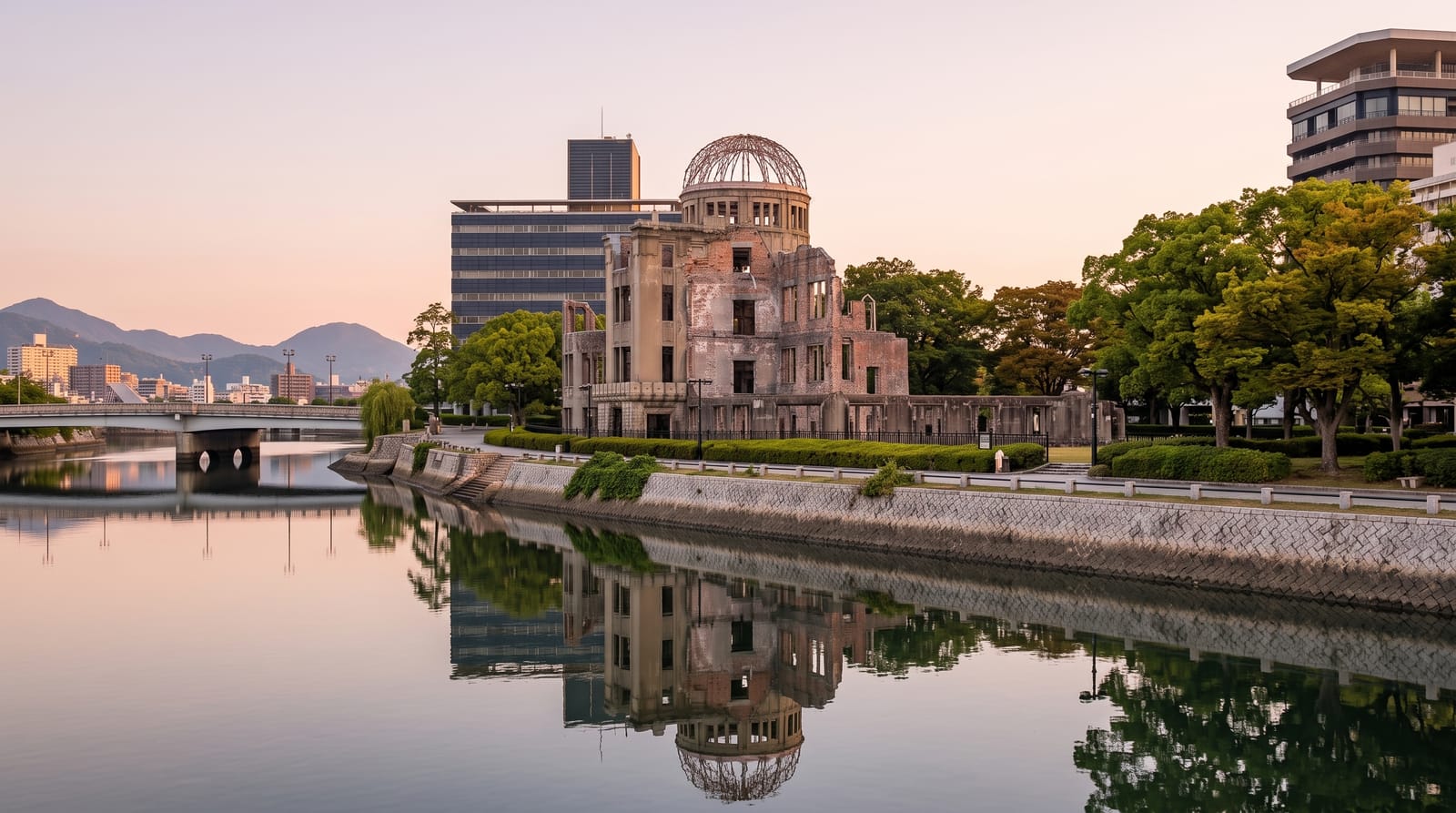
The Atomic Bomb Dome - the skeletal ruin preserved as it stood after the 1945 bombing, at the centre of a memorial park and museum, a UNESCO site.
Updated 22 October 2026
AI illustration
UNESCO World Heritage
The Hiroshima Peace Memorial, known as the Atomic Bomb Dome, is the skeletal ruin of a building left standing almost beneath the atomic bomb dropped on the city in August 1945. Preserved as it stood after the blast, it is the centrepiece of the Peace Memorial Park and its museum and a memorial to the people who died; UNESCO, which lists it, describes it as a symbol of the hope for world peace and the elimination of nuclear weapons.
What you'll find
- The Atomic Bomb Dome - the preserved skeletal ruin near the hypocentre.
- The Peace Memorial Museum - the museum of the bombing and its victims.
- The Cenotaph and eternal flame - the memorial arch and flame in the park.
- The Children's Peace Monument - the memorial hung with paper cranes.
When to go
Year-round; the park is open at all times and the dome is floodlit at night. The anniversary on 6 August brings a memorial ceremony and lantern floating.
Things to know
It is a place of mourning, and the museum shows the effects of the bomb directly; some exhibits are distressing, especially for children.
Nearby
The floating shrine of Miyajima is a short train and ferry away; the city of Hiroshima surrounds the park.
Key facts
Source: Wikidata, item Q231140, read on 18 October 2026.
What to pack for Hiroshima Peace Memorial
Chosen from what this place is for. Tap a kit for the full checklist.
- Comfortable walking shoes - Sightseeing means kilometres of pavement and cobbles daily. Find on Amazon
- Modest clothing - Shoulders and knees covered - the single most common requirement. Find on Amazon
- A slim anti-theft daypack - Zips that close properly; keep it in front in crowds and on transit. Find on Amazon
- A scarf or shawl - To cover the head or shoulders on entry; women especially at mosques. Find on Amazon
Some links on this page are Amazon affiliate links - if you buy through them we may earn a small commission at no extra cost to you.
All packing kitsPlan your trip
Where to start if Hiroshima Peace Memorial is going on the list.
Booking links on this page are affiliate links - if you book through them we may earn a small commission at no extra cost to you. It never changes what we write about a place.
Opening times, ticket prices and seasonal closures change - check the official source before you go: official site.